
Beautiful Plants For Your Interior
Beautiful Plants For Your Interior
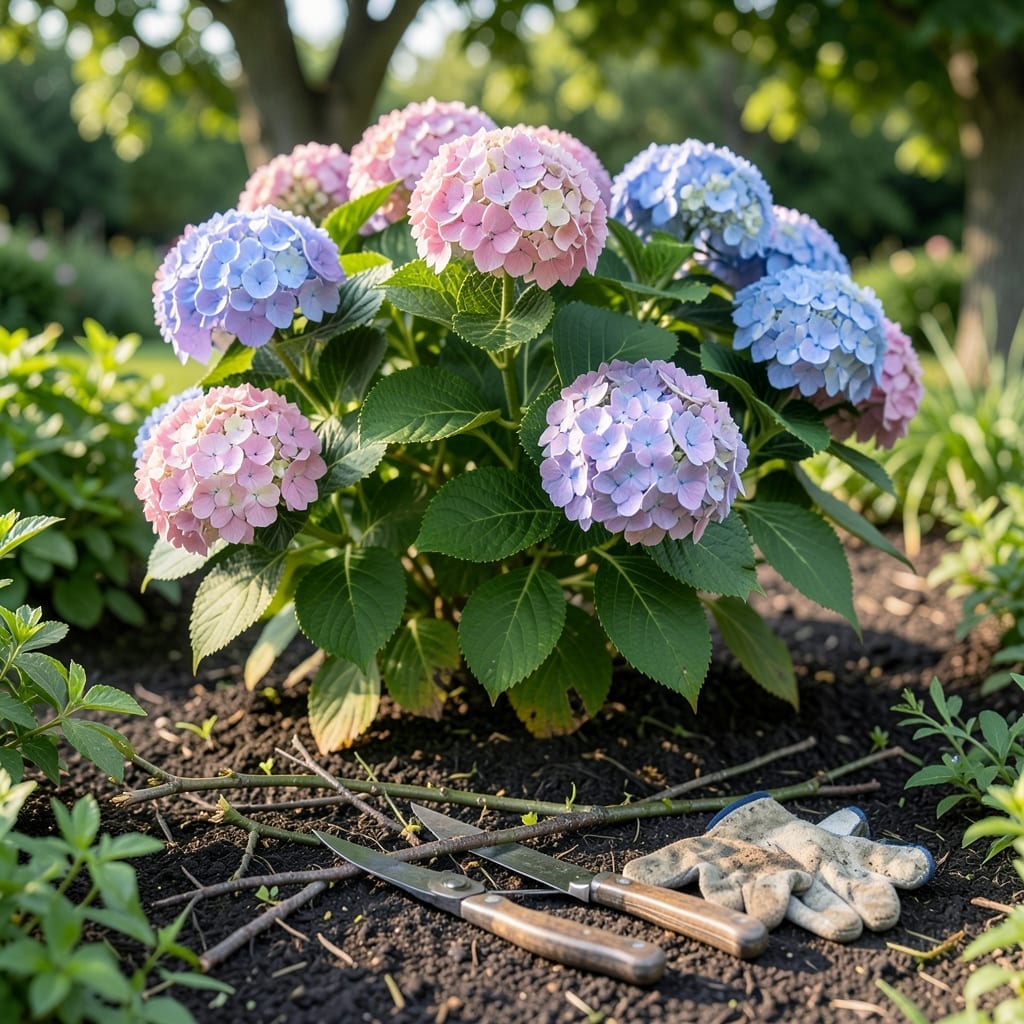
Trimming hydrangeas at the wrong time can cost you a season of blooms. I learned this the hard way when my 🌸 Hydrangea failed to flower one summer.
The secret lies in understanding your shrub type. Old wood bloomers need different timing than new wood varieties.
Getting this right means more flowers and healthier plants. I’ll show you exactly when to make those cuts.
Discover the simple schedule that works for every Hydrangea type in your garden. Let’s make next year your best blooming season yet.
I’ve found that timing is everything when pruning hydrangeas. Each variety has a unique blooming cycle that determines when you should trim. Bigleaf and oakleaf hydrangeas bloom on old wood, while panicle types flower on new wood. 🌸
This means bigleaf hydrangeas need pruning right after they finish blooming in summer. Cutting them back in spring would remove the flower buds forming on last year’s growth. Oakleafs follow the same rule as bigleafs since they’re also old wood bloomers. ✂️
| Hydrangea Type | Bloom Wood | When to Prune |
|---|---|---|
| Bigleaf | Old wood | After blooming in summer |
| Oakleaf | Old wood | After blooming in summer |
| Panicle | New wood | Late winter or early spring |
For panicle hydrangeas, like the popular ‘Limelight’ variety, you can prune in late winter or early spring. Since they bloom on new wood, you won’t risk cutting off flower buds by trimming before growth starts.
I always recommend marking your calendar after your hydrangeas finish blooming. For old wood varieties, this is your signal to prune. For new wood types, set a reminder for late winter when the plant is still dormant. 🌿
Remember that oakleaf hydrangeas have the added benefit of beautiful fall foliage. I prune mine in July or August after the flowers fade but before the leaves start changing color.
If you’re unsure about your hydrangea type, look at the flower shape. Bigleafs have large, round flower heads, oakleafs have cone-shaped clusters, and panicles have elongated, cone-like blooms.
For reblooming hydrangeas like ‘Endless Summer‘, I use a two-step approach. I do a light pruning after the first bloom cycle and then a more thorough pruning in late winter to shape the plant. ☀️
Always use sharp pruning shears to make clean cuts. I find that cutting at a 45-degree angle just above a leaf node helps prevent water from pooling on the cut surface.
After pruning, I give my hydrangeas a balanced fertilizer to encourage new growth. This is especially important for new wood bloomers as it helps them produce more flower buds for the upcoming season.
I’ve learned that timing isn’t the only factor when pruning hydrangeas. Using the right tools and proper technique can make or break your blooming season. Dull blades crush stems, inviting disease and stunting growth.
Always start with clean, sharp bypass pruners to make precise cuts. Sanitize them with rubbing alcohol between plants to prevent spreading pathogens. This simple step keeps your shrubs healthy and thriving. ✂️
For bigleaf hydrangeas, it’s critical to recognize that they bloom on old wood. This means flower buds form in late summer for next year’s blooms. Prune these immediately after flowering, usually in mid to late summer.
On the other hand, panicle hydrangeas bloom on new wood. I prune these in late winter or early spring before new growth starts. This timing ensures I don’t accidentally remove potential blooms.
Always step back frequently while pruning to assess your work. It’s easier to make additional cuts than to fix over-pruning. A balanced shape allows for better air circulation and sunlight penetration.
Finally, remember that less is often more when pruning hydrangeas. Light, thoughtful cuts encourage vigorous growth and abundant blooms without stressing the plant. 🌸