
Beautiful Plants For Your Interior
Beautiful Plants For Your Interior
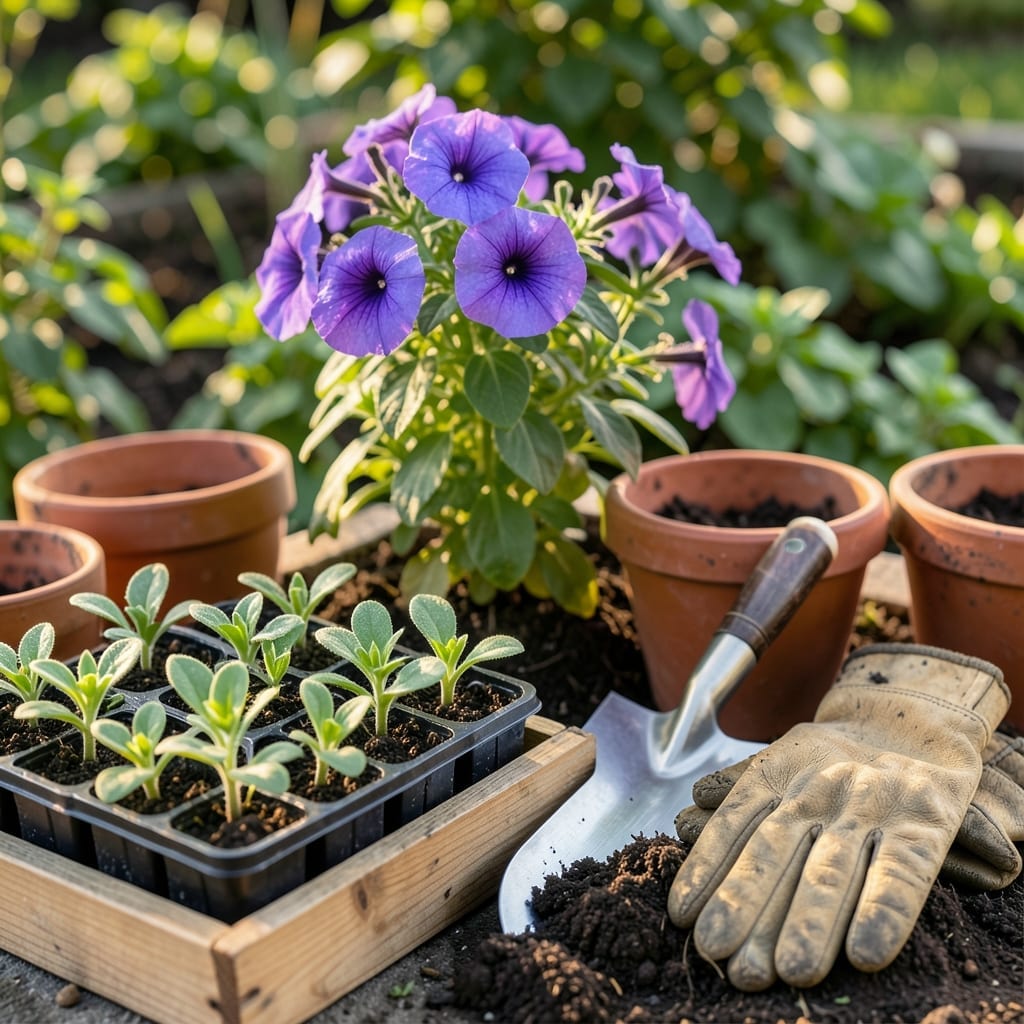
Transplanting Petunia seedlings at the wrong time can stunt their growth or even kill them. Timing is everything when it comes to giving these delicate plants the best start in life.
I’ve learned the hard way that moving them too early or too late can ruin weeks of careful nurturing. The true leaf stage is your green light, but there’s more to consider than just leaf count.
You’ll want to watch for specific signs that your Petunia 🌸 is ready to leave its cozy seed tray. The difference between success and struggle often comes down to just a few critical days.
Discover the perfect window and conditions to ensure your seedlings thrive after the big move. This is where your blooming garden begins.


Knowing when your Petunia seedlings are ready to transplant starts with the true leaf stage. Those first tiny leaves you see are cotyledons, not true leaves. They’ll wither away as the seedling matures.
The real action begins when you spot 4-6 true leaves appearing above the cotyledons. These are the leaves that look like miniature versions of mature Petunia foliage, signaling your plant is ready for the next step.
| Stage | Visual Cue | Action |
|---|---|---|
| Cotyledon Stage | First round leaves | Wait |
| 2 True Leaves | Second set appears | Wait |
| 4-6 True Leaves | Fully formed leaves | Transplant |
| Height | 2-3 inches tall | Ready |
I always check for seedling height too. Your Petunias should be 2-3 inches tall before moving them. Any smaller, and they’re too fragile to handle the stress of transplanting.
The true leaf stage matters because it indicates your seedlings have developed a strong enough root system to handle the move. Without this, they’ll struggle to establish in their new home.
Don’t rush the process. If your seedlings are still small or only have a couple of true leaves, give them more time. I’ve found that patience at this stage always pays off with healthier plants.
Another sign of readiness is when the seedlings have outgrown their containers. If roots are circling the bottom of the tray or poking out of drainage holes, it’s definitely time to transplant.
Remember, environmental conditions matter just as much as plant development. Wait until all danger of frost has passed and soil temperatures are consistently above 60°F.
In my experience, transplanting at the right stage and under the right conditions makes all the difference. Your Petunias will reward you with vibrant blooms and strong growth all season long. 🌸
If you’re unsure, err on the side of waiting a little longer. It’s better to transplant slightly late than too early when seedlings are most vulnerable to shock. 🌱
Knowing when to move your Petunia seedlings starts with recognizing the true leaf stage. Those first two leaves you see? They’re called cotyledons and don’t count.
The real sign is when you spot 4-6 true leaves and your seedlings reach 2-3 inches tall. This means they’ve developed the strength to handle transplant shock.
| Seedling Stage | Characteristics |
| Cotyledons | First leaves, not true leaves |
| True Leaves | 4-6 present, seedling 2-3″ tall |
| Root System | Well-developed, white roots visible |
At this stage, your Petunia has built a strong root system that can support the move. The true leaves are broader and more defined than the initial cotyledons.
I always check for firm stems too—if they’re sturdy enough to hold their shape when lightly touched, they’re ready. This stage typically occurs 6-8 weeks after germination.
Don’t rush the process. Transplanting too early can lead to stunted growth or even seedling death. Patience here pays off with healthier plants and more vibrant blooms later.
Remember, the true leaf stage is just the first requirement. You’ll also need to consider soil temperature and weather conditions before making the move. 🌱