
Beautiful Plants For Your Interior
Beautiful Plants For Your Interior
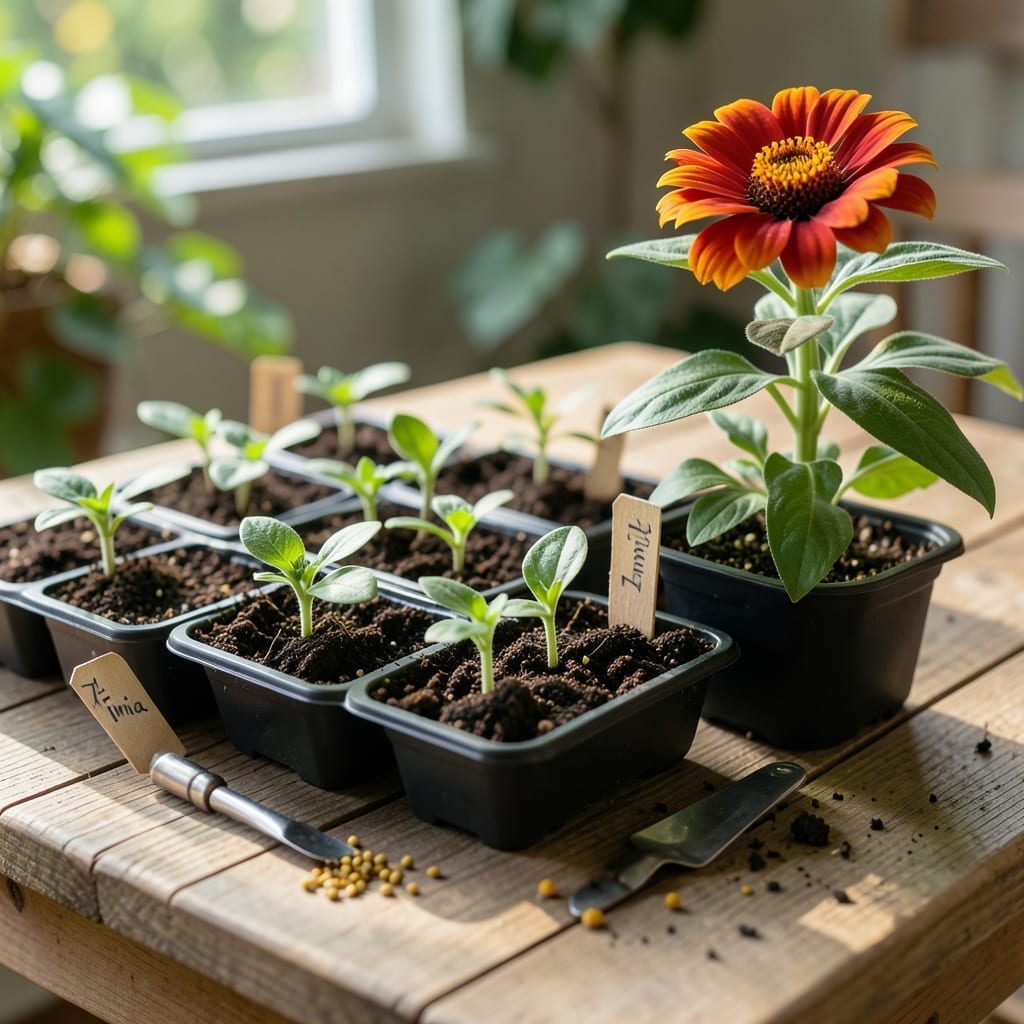
Timing is everything when starting Zinnia seeds indoors—plant too early and they’ll outgrow their space, too late and you’ll miss the best blooming window.
I’ve learned that getting this right means vibrant 🌼 Zinnia flowers that thrive all season. Whether you’re in zone 6a or adjusting for your local climate, nailing the timing sets you up for success.
Discover the perfect window to start your seeds so you can enjoy early blooms without the guesswork.
I always start my zinnia seeds indoors about 4-6 weeks before the last frost date. This timing ensures strong seedlings ready for transplanting when the weather warms up.
Your USDA hardiness zone plays a huge role in determining the best window. In cooler zones, you’ll start earlier, while warmer climates can wait a bit longer.
| Zone | Start Indoors | Transplant Outdoors |
|---|---|---|
| Zones 3-4 | Mid-March | Mid-May |
| Zones 5-6 | Late March | Early May |
| Zones 7-8 | Early April | Late April |
| Zones 9-10 | Late February | Mid-March |
For zone 6a, like where I garden, I aim for late March to start seeds indoors. This gives my zinnias a head start before the last frost date around April 15.
If you’re in a warmer climate, like zone 9, you can start as early as late February. The key is counting back from your region’s last frost date.
Don’t forget to check your local weather patterns. A late frost can set back even the hardiest seedlings, so keep an eye on forecasts.
I’ve found that using a heat mat can speed up germination, especially in cooler zones. It keeps the soil warm and encourages faster sprouting.
Once your seedlings have 2-3 true leaves, they’re ready to be hardened off. This process acclimates them to outdoor conditions before transplanting.
Remember, zinnias grow quickly, so don’t start them too early. Overgrown seedlings can become leggy and weak, making them more susceptible to transplant shock.
For the best results, use a well-draining seed starting mix and keep the soil consistently moist but not soggy. Too much water can lead to damping off, a common issue with seedlings.
With the right timing and care, you’ll have strong, healthy zinnia seedlings ready to burst into color when planted outside 🌼
I’ve found that starting zinnia seeds indoors is easiest with the right setup. Begin by selecting high-quality seeds from a trusted supplier for the best germination rates.
Use a seed-starting mix that’s light and well-draining. I always avoid garden soil, as it can compact and prevent proper root growth.
I place my seed trays under grow lights for 14-16 hours daily. If using a windowsill, choose a south-facing window for maximum light exposure.
Maintain consistent moisture by misting the soil surface. I use a spray bottle to avoid disturbing the seeds. The soil should stay damp but never soggy.
Once seedlings emerge, I remove any plastic covers to prevent mold. At this stage, good air circulation is key to preventing damping off disease.
When my zinnias develop 2-3 true leaves, I begin fertilizing with a diluted liquid fertilizer. This gives them the nutrients they need for strong growth.
About 1-2 weeks before transplanting, I harden off my seedlings by gradually exposing them to outdoor conditions. This step is crucial for preventing transplant shock 🌱