
Beautiful Plants For Your Interior
Beautiful Plants For Your Interior
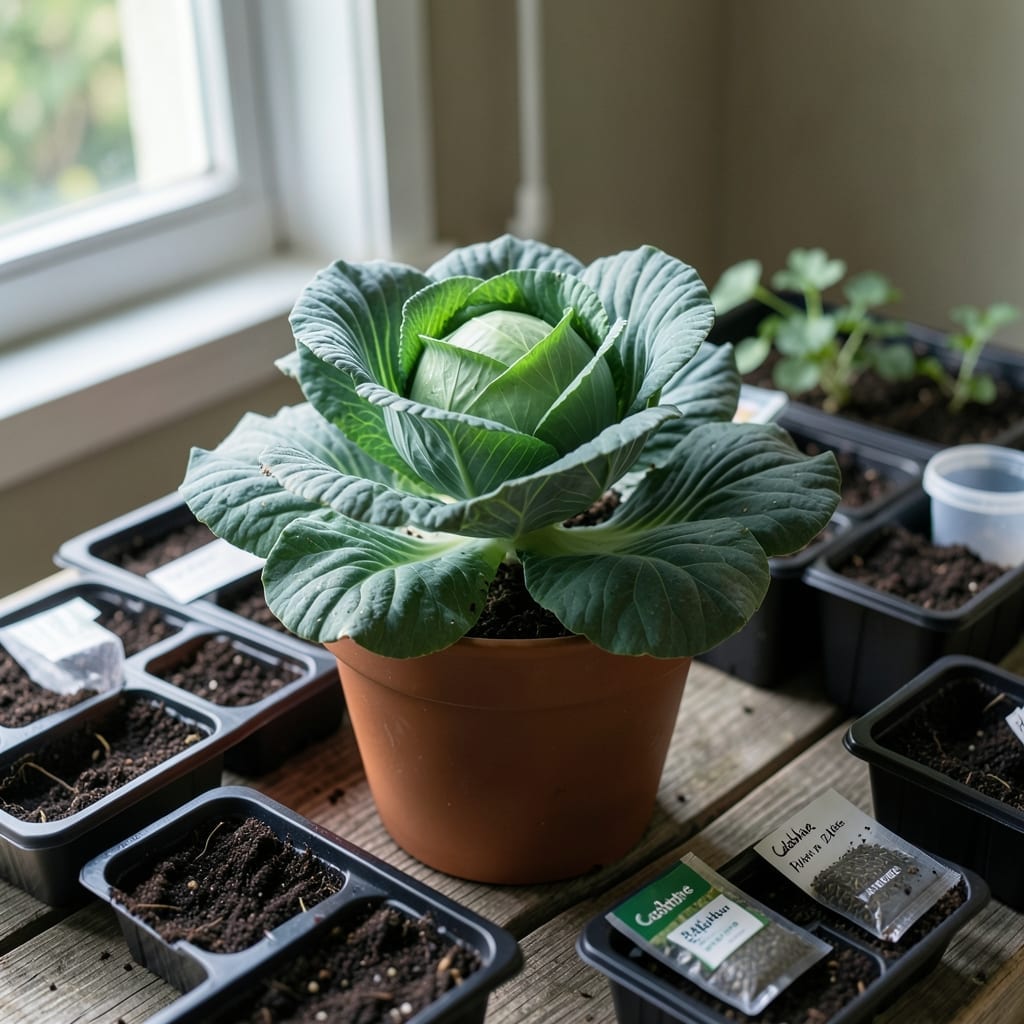
Timing is everything when starting Cabbage 🥬 seeds indoors. Plant too early or too late, and you risk stunted growth or missed harvests.
This guide reveals the exact timing for your hardiness zone to ensure strong, healthy seedlings ready for transplant. We’ll help you avoid common pitfalls that derail even the most eager gardeners.
Discover how to align your planting schedule with frost dates and variety specifics for a more efficient growing season.
Getting cabbage seeds started indoors at the right time ensures strong seedlings ready for transplant. The key is aligning your sowing date with your last frost date and the variety’s days to maturity.
For most gardeners, starting 6-8 weeks before the last frost works well. But I’ll break it down by USDA hardiness zones so you can nail the timing perfectly.
| Zone | Start Indoors | Last Frost Date |
|---|---|---|
| 1-2 | 12-14 weeks before | May – June |
| 3-4 | 10-12 weeks before | April – May |
| 5-6 | 8-10 weeks before | March – April |
| 7-8 | 6-8 weeks before | March – April |
| 9-11 | 4-6 weeks before | January – February |
Early cabbage varieties like Golden Acre mature in 60-70 days, so I start them closer to 6 weeks before transplant. For late varieties like Storage #4, I give them the full 8 weeks.
In Zone 5, where I garden, I aim for mid-February to start seeds indoors. This gives my seedlings 8 weeks to grow before our last frost around April 15.
Zone 7-8 gardeners can start seeds as late as March since their frost dates are earlier. I’ve found that late February works well for savoy cabbage in these zones.
If you’re in Zone 9-11, you can even start cabbage seeds in January for a winter harvest. Just be sure to protect seedlings from cold snaps if they occur.
Remember, these are guidelines. I always check my local weather and adjust if we’re having an unusually cold spring or warm winter. It’s better to wait an extra week than to rush.
For the best results, I use a heat mat to maintain 70-75°F soil temperature. This ensures faster germination and stronger seedlings. 🌱
Once your seedlings have 2-3 true leaves, they’re ready to be hardened off. I’ll cover that process in the next section, but timing your start right is the first step to successful cabbage. 🌿
Starting cabbage seeds indoors gives you a head start on the growing season. I’ve found that using a seed-starting mix and maintaining consistent moisture are key to success.
Sow seeds ¼ inch deep in trays or small pots. I use a spray bottle to keep the soil moist without disturbing the seeds. The ideal soil temperature for germination is 70-75°F. 🌱
I place my seed trays under grow lights about 2-3 inches above the soil. As the seedlings grow, I raise the lights to maintain this distance. This prevents leggy seedlings that struggle after transplanting.
Once the seedlings develop their first true leaves, I begin fertilizing with a diluted liquid fertilizer. I use a balanced 10-10-10 formula at half strength every 2 weeks. This gives them the nutrients they need without burning tender roots.
Hardening off is crucial to prepare seedlings for outdoor conditions. I start by placing them outside for 1-2 hours in a shaded area, gradually increasing time and sun exposure over 7-10 days.
Watch for signs of stress like wilting or yellowing leaves. If this happens, I bring the seedlings back indoors and reduce the hardening off time. Patience here prevents transplant shock and ensures stronger plants.
With these steps, your cabbage seedlings will be ready to thrive when planted out after the last frost. The effort you put into these early stages pays off with healthy, productive plants. 🌿