
Beautiful Plants For Your Interior
Beautiful Plants For Your Interior
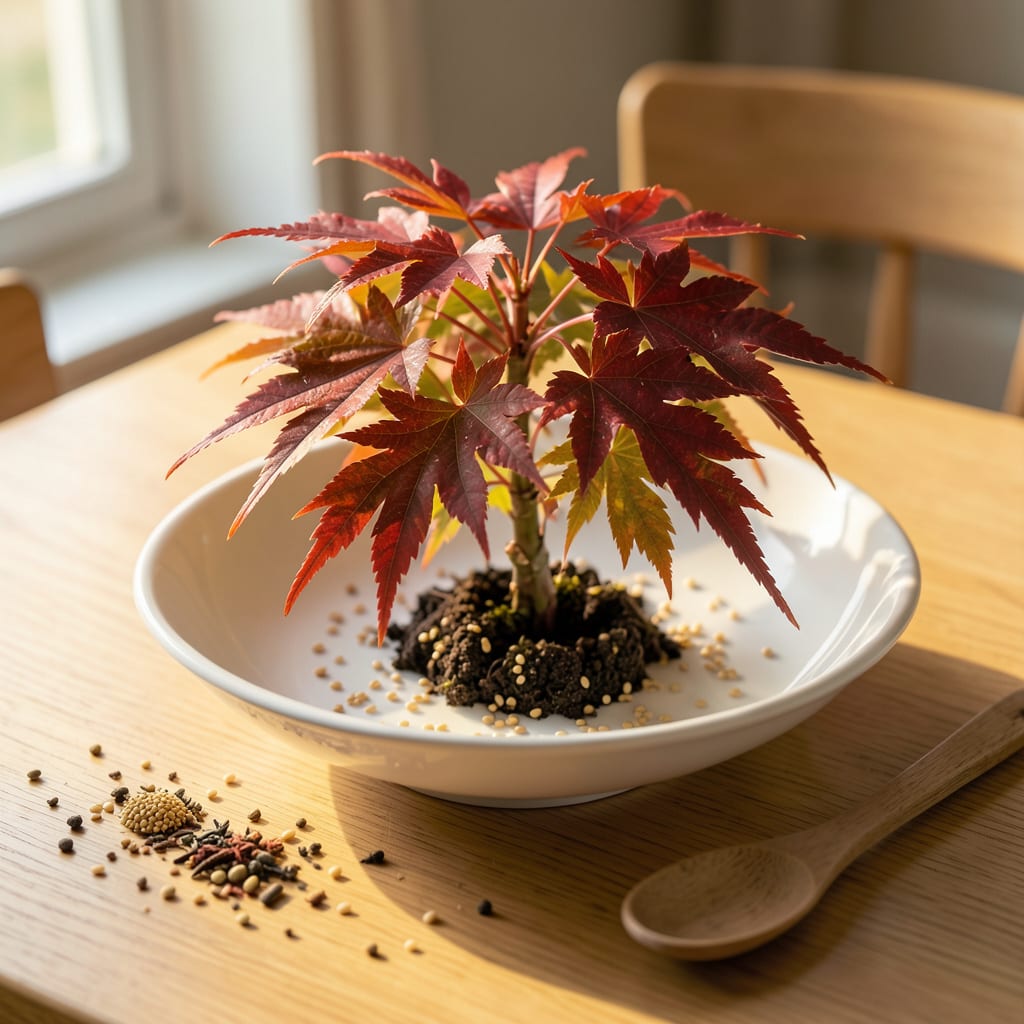
As spring awakens your Japanese Maple 🌳, you’ll want to give it the nutrients it needs to thrive. Fertilizing at the right time is crucial for maintaining its vibrant foliage and overall health throughout the growing season in USDA Zone 6.
Learn how to fertilize your tree effectively and keep it looking its best by understanding the optimal fertilization schedule and choosing the right type of fertilizer for your tree’s needs.

Fertilizing your Japanese maple at the right time is crucial for maintaining its vibrant foliage and overall health throughout the growing season 🌳. The key is to understand the tree’s growth cycle and seasonal needs to provide the necessary nutrients at the right time.
Japanese maples typically start their growth cycle in early spring, making it an ideal time to fertilize. A balanced fertilizer applied during this period helps promote healthy growth and development.
The fertilization schedule for Japanese maples is closely tied to their growth cycle. In the spring, when the tree starts to produce new leaves, it’s essential to provide a boost of nutrients to support this growth 🌿.
A balanced fertilizer with an NPK ratio of 10-10-10 is recommended for Japanese maples. This type of fertilizer provides equal amounts of nitrogen, phosphorus, and potassium, which are essential for the tree’s overall health and development 💪.
When applying fertilizer, it’s crucial to follow the manufacturer’s instructions and take into account the tree’s specific needs. A slow-release fertilizer can provide nutrients to the tree over an extended period, reducing the need for frequent applications.
Key considerations when fertilizing Japanese maples include soil quality, tree age, and environmental conditions. Young trees, for example, may require more frequent fertilization than mature trees 🌱.
It’s also important to avoid over-fertilizing, as this can cause more harm than good. Too much fertilizer can lead to excessive growth, making the tree more susceptible to disease and pests.
In addition to fertilization, other factors such as watering and pruning play a critical role in maintaining the health and appearance of Japanese maples. Proper care and attention to these details can help ensure the tree thrives in its environment 🌻.
By understanding the optimal fertilization schedule and providing the right nutrients at the right time, you can help your Japanese maple tree grow strong and healthy, with vibrant foliage that enhances your garden or landscape 🌳.
Regular monitoring of your tree’s health and adjusting your fertilization schedule as needed can help prevent common problems and ensure the long-term success of your Japanese maple.
Fertilizing your Japanese maple is just one aspect of its overall care. By combining proper fertilization with other essential care practices, you can enjoy the beauty and benefits of this stunning tree for years to come 🌸.
Fertilizing your Japanese maple effectively requires careful consideration of several factors, including the type of fertilizer to use, application methods, and timing 🌳.
When it comes to choosing a fertilizer for your Japanese maple, a balanced fertilizer with an NPK ratio of 10-10-10 is recommended. This type of fertilizer provides equal amounts of nitrogen, phosphorus, and potassium, which are essential for the tree’s overall health and development.
For optimal results, use a slow-release fertilizer that provides nutrients to the tree over an extended period, reducing the need for frequent applications 🔥.
To apply fertilizer effectively, follow the manufacturer’s instructions and take into account the tree’s specific needs. A soil test can help determine the nutrient levels in the soil and identify any deficiencies 🌱.
Key considerations when fertilizing Japanese maples include soil quality, tree age, and environmental conditions. Young trees, for example, may require more frequent fertilization than mature trees 🌟.
It’s also important to avoid over-fertilizing, as this can cause more harm than good. Too much fertilizer can lead to excessive growth, making the tree more susceptible to disease and pests 🚨.
In addition to fertilization, other factors such as watering and pruning play a critical role in maintaining the health and appearance of Japanese maples. Proper care and attention to these details can help ensure the tree thrives in its environment 🌻.
By following these tips and understanding the optimal fertilization schedule, you can help your Japanese maple tree grow strong and healthy, with vibrant foliage that enhances your garden or landscape 🌸.
In addition to proper fertilization, understanding the seasonal care requirements for your Japanese maple is crucial for maintaining its health and vibrant foliage 🌳.
During the growing season, it’s essential to maintain a consistent watering schedule. Japanese maples prefer consistent moisture, especially during hot summer months. Water your tree deeply once or twice a week, depending on weather conditions 💧.
To keep your Japanese maple healthy, focus on consistent watering, appropriate pruning, and protection from extreme weather conditions throughout the year.
Pruning is another critical aspect of Japanese maple care. Prune your tree during the dormant season (winter or early spring) to maintain its shape and promote healthy growth. Remove any dead or damaged branches to prevent disease and encourage new growth ✂️.
Protecting your Japanese maple from extreme weather conditions is also vital. Mulch around the base of the tree to retain moisture and regulate soil temperature. During harsh winters, consider providing additional protection, such as burlap wrapping, to shield the tree from wind and frost ❄️.
By combining proper fertilization with these seasonal care tips, you can ensure your Japanese maple remains healthy and thrives in your garden or landscape 🌸.
Regular monitoring of your tree’s health and adjusting your care routine as needed will help prevent common problems and ensure the long-term success of your Japanese maple 🌟.
Fertilize your Japanese maple in early spring when it starts producing new leaves. Use a balanced fertilizer (10-10-10 NPK) to promote healthy growth and development. This timing supports the tree’s natural growth cycle.
Fertilize your Japanese maple every 4-6 weeks during the growing season (spring and summer). Use a diluted fertilizer during summer months to maintain growth without over-fertilizing. Adjust based on soil quality and tree age.
No, it’s best to skip fertilizing your Japanese maple in the fall. Fertilizing before winter can cause new growth that may not have time to harden off before cold weather arrives. This can make the tree more susceptible to damage.
A balanced, slow-release fertilizer with an NPK ratio of 10-10-10 is recommended for Japanese maples. This type of fertilizer provides equal amounts of nitrogen, phosphorus, and potassium, supporting overall tree health. Consider a soil test to determine specific nutrient needs.
