
Beautiful Plants For Your Interior
Beautiful Plants For Your Interior
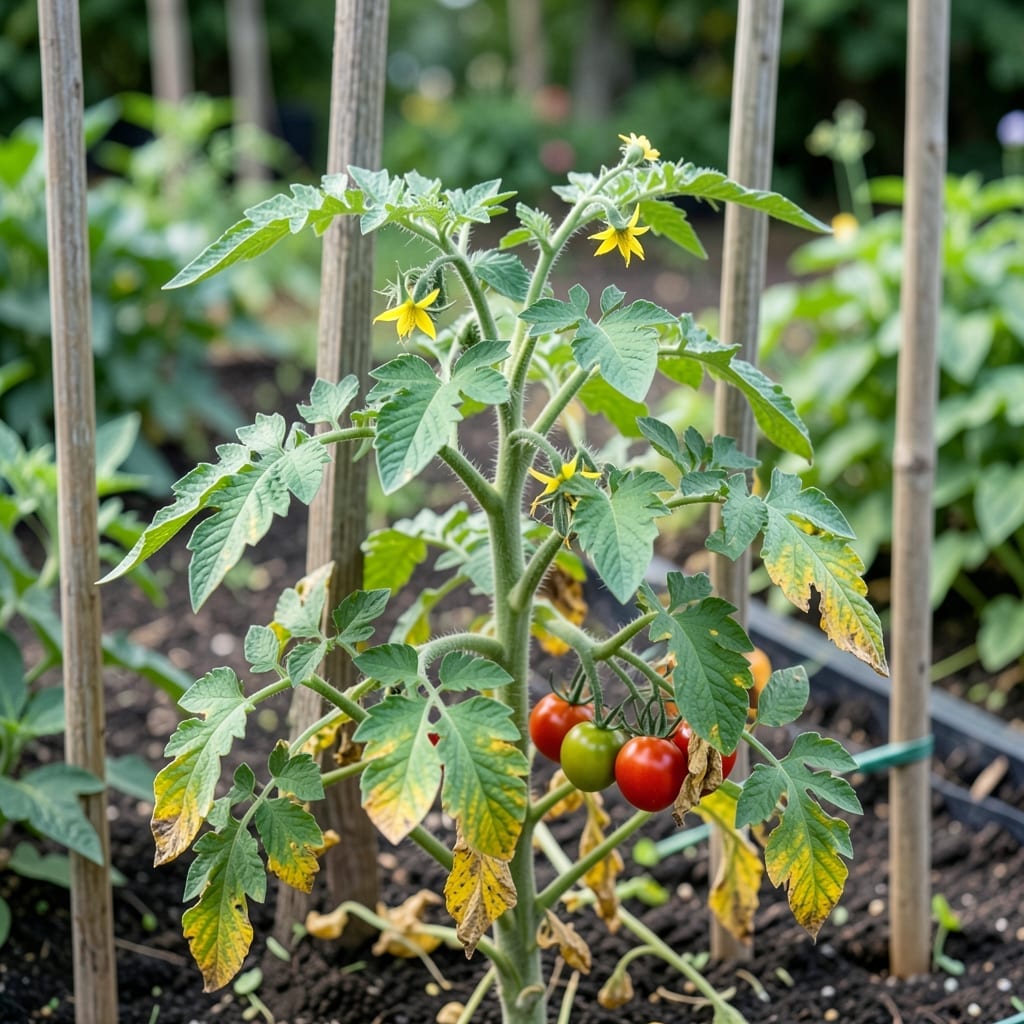
Yellow leaves on tomato plants always send my stomach sinking. I’ve seen entire crops go from vibrant green to sad yellow overnight, and the causes aren’t always obvious.
Sometimes it’s too much love—overwatering drowns roots, cutting off their oxygen. Other times, it’s not enough: nitrogen or magnesium deficiencies show up as yellow patterns between veins. Pests can do this too.
Here’s the thing—most fixes are simple once you know what you’re dealing with. A soil test, adjusted watering, or targeted fertilizer can turn things around in days.
We’ll walk through how to diagnose the problem and get your plants back to their healthy green selves fast.
Yellowing leaves on tomato plants, known as chlorosis, signal an underlying issue disrupting chlorophyll production. Below are the most common causes, each with a clear scientific basis and actionable insights.
Tomatoes are heavy feeders, and a lack of key nutrients often triggers yellowing. Nitrogen deficiency starts with older leaves turning pale yellow as the plant redistributes nitrogen to newer growth. Magnesium deficiency causes interveinal chlorosis—yellowing between leaf veins—while iron deficiency affects younger leaves first. A soil test can confirm which nutrient is lacking.
Improper watering disrupts root function, leading to poor nutrient uptake. Overwatering suffocates roots, reducing oxygen availability and causing a general yellowing, often accompanied by wilting. Underwatering stresses the plant, leading to dry, crispy yellow edges on leaves. Check soil moisture 1–2 inches deep; it should feel like a wrung-out sponge.
Pathogens like Fusarium or Verticillium wilt block the plant’s vascular system, preventing water and nutrient flow. Early signs include yellowing between veins, often on one side of the plant. Early blight causes concentric brown spots with yellow halos. Remove infected leaves immediately and avoid overhead watering to limit spread.
Sap-sucking pests like aphids, whiteflies, and spider mites drain plant nutrients, causing stippled yellowing or curled, distorted leaves. Check the undersides of leaves for tiny insects or webbing. Introduce beneficial insects like ladybugs or apply neem oil for organic control.
Extreme temperatures—either too hot (above 90°F) or too cold (below 50°F)—can inhibit chlorophyll production. Heat stress often causes upper leaves to yellow and curl, while cold stress stunts growth and turns leaves pale. Use shade cloth for heatwaves and row covers for unexpected cold snaps.
Here’s how to tackle each common cause of yellowing tomato leaves with simple, actionable fixes—and how to prevent them from returning.
If the issue is nitrogen (uniform yellowing on lower leaves), apply a balanced fertilizer (10-10-10) or a nitrogen-rich option like fish emulsion. For magnesium (yellowing between veins), sprinkle Epsom salt (1 tbsp per gallon of water) at the base. Prevention tip: 💡 Test soil annually and amend with compost before planting.
Let the top inch of soil dry between waterings. If roots are waterlogged, improve drainage by mixing in perlite or sand. For potted plants, ensure containers have drainage holes. Prevention tip: ✨ Water deeply but less frequently—early morning is ideal.
If leaves yellow on the side facing the sun, create shade with a shade cloth (30-50% coverage) during peak hours. Mulch around the base to retain moisture. Prevention tip: 🌡️ Harden off seedlings gradually before transplanting to full sun.
For aphids or whiteflies, spray with neem oil or insecticidal soap. If fungal (e.g., early blight), remove affected leaves and apply copper fungicide. Prevention tip: 🎯 Rotate crops yearly and avoid overhead watering to reduce disease risk.
Lower leaves yellowing first? It’s normal. Simply prune them to redirect energy to fruit. Use clean shears to avoid spreading disease. Prevention tip: ✨ Stake or cage plants early to improve air circulation.
Yes, overwatering can cause rapid yellowing, often within 24-48 hours. Roots suffocate without oxygen, leading to wilting and chlorosis. Check soil moisture before watering—it should feel like a wrung-out sponge.
Look for patterns: nitrogen affects older leaves first, while magnesium creates yellow patches between veins. A soil test provides the most accurate diagnosis. Start with a balanced fertilizer if unsure.
Only if caught early and the cause is corrected. Severely damaged leaves won’t recover, but new growth will be healthy. Focus on fixing the root issue to prevent further yellowing.
Sap-sucking pests like aphids and spider mites drain nutrients, causing stippled yellowing or curled leaves. Check leaf undersides and treat with neem oil if found.