
Beautiful Plants For Your Interior
Beautiful Plants For Your Interior
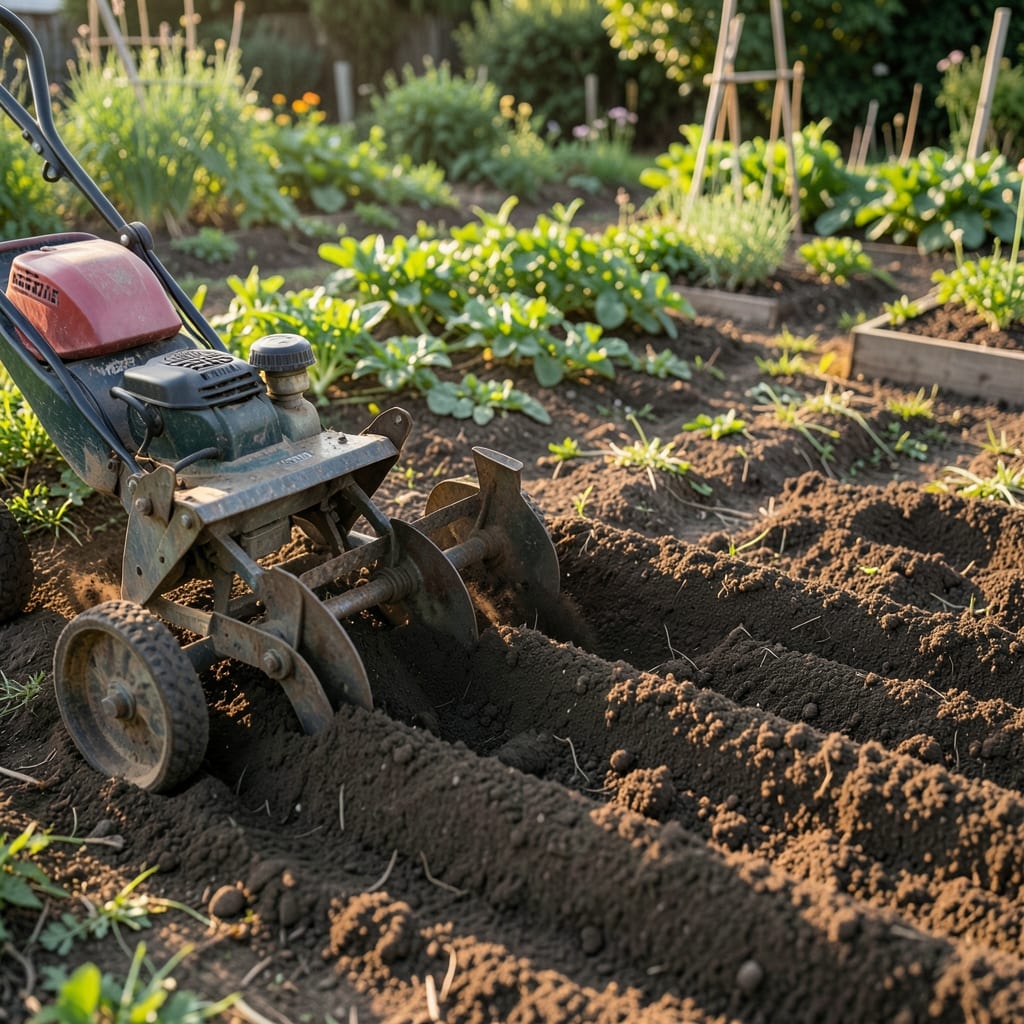
Till farming is a soil preparation method that involves mechanically breaking up and turning over the top layer of soil to improve aeration, drainage, and seedbed conditions for planting crops.
I’ve found this practice transforms stubborn, compacted earth into a welcoming space for seeds to thrive. It’s particularly effective for breaking up hardpan layers that can suffocate roots and trap water. 🔥 The process also helps incorporate organic matter like compost, giving plants a nutrient boost right from the start.
💡 In This Article
The mechanical action of tilling shatters compacted soil clumps, creating air pockets that allow roots to breathe and water to drain. This process typically works the soil to a depth of 6-12 inches, which is ideal for most vegetable crops.
The turning action also buries weeds and crop residue, reducing competition for nutrients while speeding decomposition.
Here’s what’s actually happening beneath the surface: the tillage blades fracture soil aggregates, increasing surface area for microbial activity. This boosts the soil’s cation exchange capacity—its ability to hold and release nutrients to plants. In fact, properly tilled soil can see a 20-30% increase in water infiltration rates compared to compacted earth. 🌟
What most people don’t realize is that tillage also stimulates microbial populations. The sudden influx of oxygen triggers dormant bacteria and fungi to wake up and process organic matter. However, over-tilling can disrupt these communities, so timing is everything—spring tilling when soil temps reach 50°F gives microbes their optimal working conditions.
For root development, the loose soil structure means young plants can establish themselves 40% faster than in untilled ground. The improved aeration prevents root rot while allowing roots to explore a larger volume of soil for water and nutrients.
This is particularly noticeable with deep-rooted crops like carrots and parsnips, which can reach their full potential in properly prepared soil.
Consider the texture change: hard, dense soil transforms into a crumbly, friable medium that’s easier to work with and more hospitable to seeds. The incorporation of organic matter during tilling also improves soil’s water-holding capacity by up to 25%, making it more drought-resistant. ✨
For small gardens, a mantis tiller or broadfork works well. Larger areas may require a rear-tine tiller. Always choose equipment that matches your plot size and soil type.
Till in spring when soil reaches about 50°F and is dry enough to crumble in your hand. Avoid working soggy soil, as it can create hard clumps.
Most vegetables need a tilling depth of 6-8 inches. For root crops like potatoes or carrots, go deeper to 12 inches for optimal growth.
Yes, over-tilling can disrupt soil structure and harm beneficial earthworms. Stick to necessary sessions and let soil rest for 2-3 days after tilling before planting.