
Beautiful Plants For Your Interior
Beautiful Plants For Your Interior
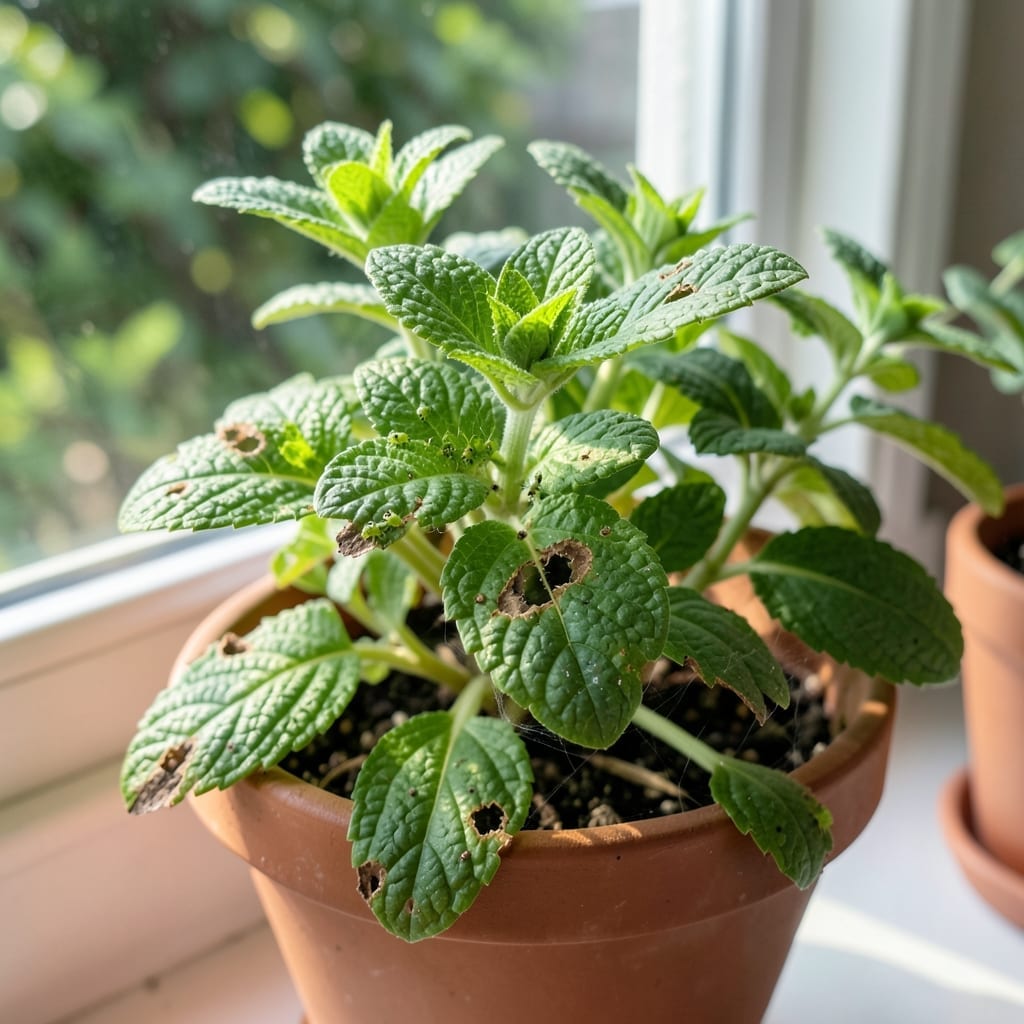
My mint went from lush to lacy overnight. It happens fast—one day you have a thriving patch, the next you’re staring at skeletonized leaves and wondering what’s feasting on your plants.
Slugs, spider mites, and aphids love mint as much as we do. Each leaves a different calling card: slime trails, fine webbing, or sticky residue. The good news? These pests are predictable, and their damage is 100% fixable with the right approach.
I’ve tested every organic solution in the book. Some work, some don’t. The methods I’m sharing here stopped the damage in 48 hours and kept my mint healthy for the rest of the season.
No chemicals, no guesswork—just simple, proven fixes that protect your plants and the pollinators that visit them.
Mint plants are a magnet for pests and problems, often due to their lush growth and strong scent. Here’s why your mint might be getting munched on:
Aphids, spider mites, and whiteflies are common culprits. These tiny pests are drawn to the tender new growth of mint, piercing the leaves to feed on sap. Aphids, in particular, thrive in over-fertilized soil, while spider mites prefer dry, dusty conditions. Their feeding weakens the plant and can introduce diseases.
These slow-moving pests are nocturnal feeders, leaving behind irregular holes and slime trails on leaves. They’re especially active in moist, shaded environments, which mint often provides. Overwatering or poor drainage can create the perfect habitat for them.
Larger pests like grasshoppers and caterpillars (e.g., mint moth larvae) can devour entire sections of leaves overnight. They’re attracted to the high moisture content in mint and often target plants in open, sunny areas where they can easily access fresh foliage.
While not “eating” in the traditional sense, powdery mildew or leaf spot can cause discoloration and holes as infected tissue dies. These thrive in humid conditions with poor air circulation, often exacerbated by overhead watering or crowded plantings.
Deer, rabbits, and even pets may nibble on mint, especially in garden beds without barriers. Mint’s strong aroma doesn’t always deter them, and its rapid growth makes it an easy target for opportunistic feeders.
Use a strong stream of water to dislodge aphids from your mint leaves. Repeat every few days until they’re gone. For stubborn infestations, spray with neem oil or insecticidal soap (1 tbsp soap per quart of water). Prevention tip: 💡 Attract ladybugs—natural aphid predators—by planting companion flowers like marigolds.
Create a physical barrier with copper tape around pots or sprinkle diatomaceous earth around the base of plants. Beer traps (shallow dishes filled with beer) also work wonders. Prevention tip: 🌡️ Water in the morning so soil dries by evening, discouraging these nighttime feeders.
Spider mites thrive in dry conditions. Mist your mint regularly or place a tray of water near the plant to boost humidity. Wipe leaves with a damp cloth to remove mites. Prevention tip: ✨ Keep plants well-hydrated and avoid over-fertilizing, which can stress mint and attract pests.
Inspect leaves daily and drop beetles into soapy water. For larger infestations, apply kaolin clay spray to create a protective film. Prevention tip: 🎯 Rotate crops annually and remove plant debris where beetles overwinter.
Hang yellow sticky traps near your mint to catch adult whiteflies. Introduce parasitic wasps (available at garden centers) for long-term control. Prevention tip: 🔥 Avoid overcrowding plants—good airflow deters whiteflies.
Look for irregular holes in leaves and silvery slime trails on the plant or soil. These pests feed at night, so check with a flashlight after dark for confirmation.
Aphids love new growth and over-fertilized soil. Reduce nitrogen-heavy fertilizers and rinse leaves with water every 2-3 days to disrupt their lifecycle.
Neem oil is safe when used correctly at dusk, as bees are less active. Avoid spraying flowers directly, and apply only to affected leaves for targeted control.
Yes! Crushed eggshells deter slugs, and a garlic/chili spray can repel many insects. These are gentle but require reapplication after rain.