
Beautiful Plants For Your Interior
Beautiful Plants For Your Interior
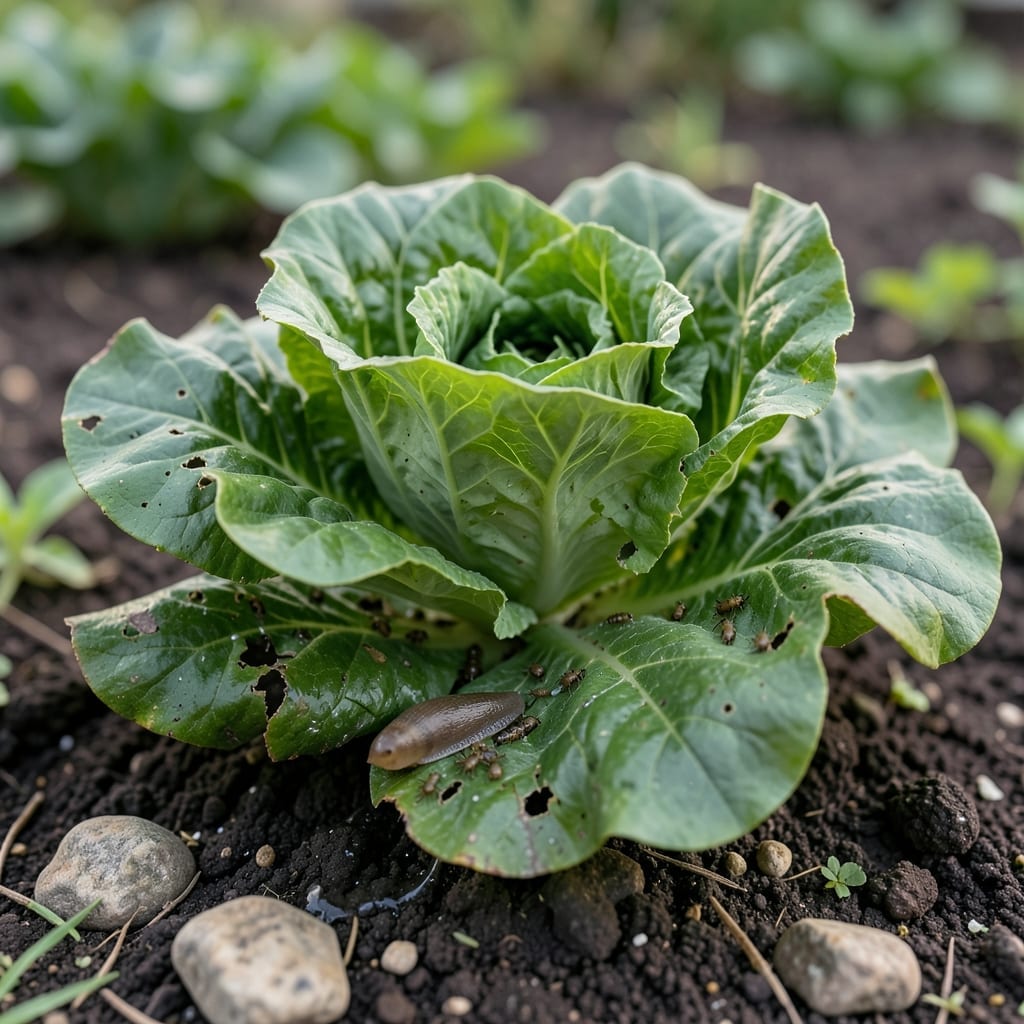
Common pests like slugs, snails, aphids, or rabbits often chew lettuce leaves, leaving holes or ragged edges. Check for slime trails, tiny bugs, or bite marks to identify the culprit.
I’ve noticed that each intruder leaves distinct evidence behind. Slugs and snails create irregular holes with silvery slime trails, while aphids leave behind sticky residue. Rabbits tend to make clean cuts at the base of plants. 🔥
Early morning inspections often reveal the most activity, as many pests feed at night or dawn. Taking action quickly prevents widespread damage to your garden.
💡 In This Article
Each garden pest leaves a unique fingerprint on lettuce leaves. Slugs and snails create irregular holes with glistening slime trails, often feeding at night when humidity is highest. Their damage looks like someone took a hole punch to your leaves, but with jagged edges. 🔥
Aphids, tiny green or black insects, cluster on undersides of leaves and suck plant juices, causing curling or yellowing rather than neat holes. They also excrete honeydew, a sticky substance that attracts ants and promotes sooty mold growth. Check leaf undersides with a magnifying glass to spot these 1-3mm pests. ✨
Rabbits make clean, sharp cuts at the base of plants, often severing entire stems. Unlike insect damage, their bites are precise—almost surgical. Deer damage is similar but on a larger scale, with ragged tears from their larger mouths. Both animals tend to feed at dawn or dusk.
Caterpillars like cabbage loopers chew large, irregular holes in leaf centers, often leaving behind dark green frass (insect poop). Their damage appears overnight as they’re most active after dark. Look for 1-inch green worms with a looping gait. 💫
Earwigs create small, shallow holes along leaf edges, preferring older leaves. They’re nocturnal and hide under mulch or debris during the day. Their damage is less extensive but can add up over time if populations grow. Check moist, dark areas to find these 0.5-1 inch pests with distinctive pincers.
Look for irregular holes with jagged edges and silvery slime trails on leaves or soil. Slugs feed at night, so check early morning for fresh damage. They leave a distinct glistening path behind.
Small holes often come from earwigs or flea beetles. Earwigs make shallow edge holes, while flea beetles create shot-hole patterns across leaves. Inspect at dusk when earwigs are active.
Rabbits or deer are likely culprits. Rabbits make precise 1-2 inch cuts, while deer leave ragged tears. Both feed at dawn/dusk—install chicken wire barriers for protection.
Yes—aphids secrete honeydew, a sticky substance that attracts ants. Check leaf undersides for clusters of tiny 1-3mm green or black insects. A soap spray can remove them effectively.