
Beautiful Plants For Your Interior
Beautiful Plants For Your Interior
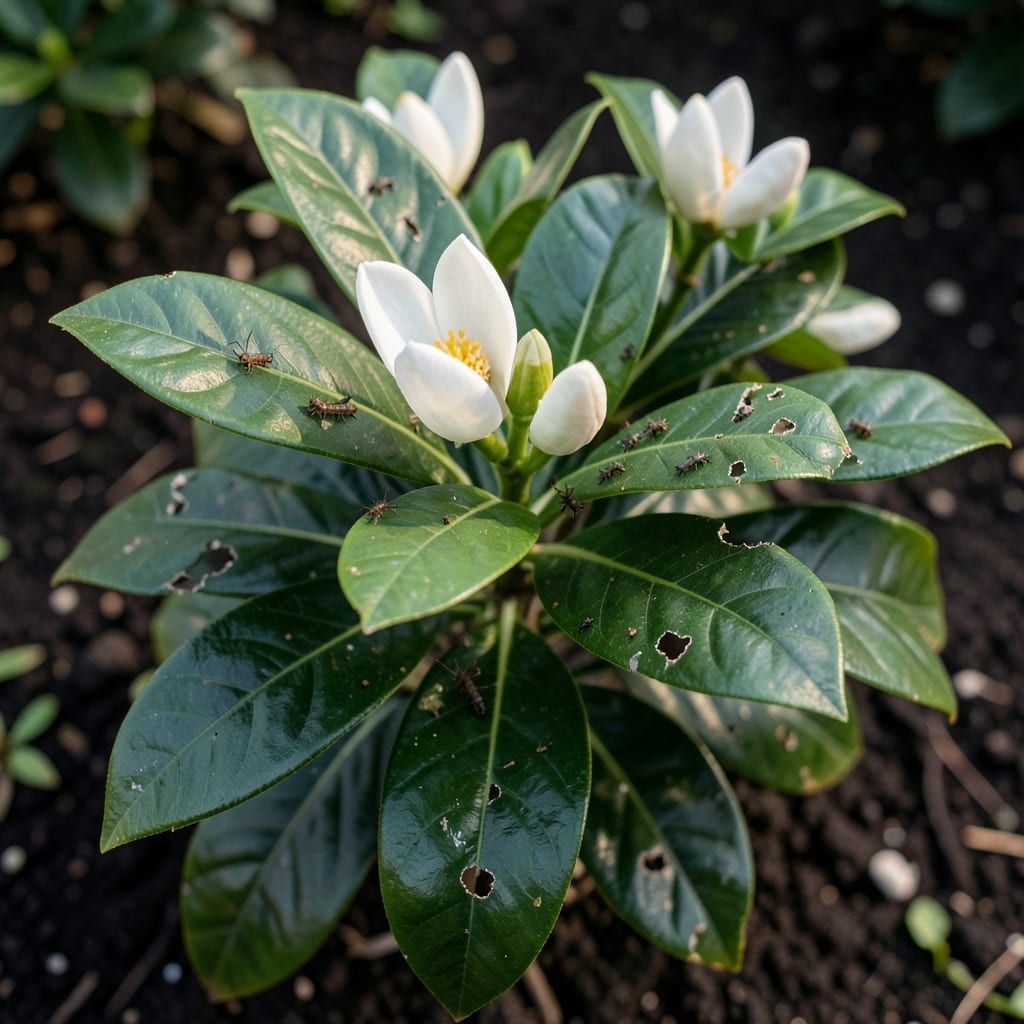
Common culprits include aphids, spider mites, whiteflies, and scale insects. Slugs, snails, and caterpillars may also chew leaves, leaving ragged edges or holes. Check undersides for pests or damage patterns.
I notice these invaders often target gardenias because of their soft, waxy foliage, which provides both food and shelter. 🔥 The tiny piercing insects like aphids and mites drain plant juices, while larger pests such as slugs leave visible slime trails. Early morning inspections with a flashlight often reveal the most activity, especially after rain when conditions are ideal for these garden nuisances.
💡 In This Article
Aphids create tiny, pale yellow spots where they’ve pierced the leaf surface to feed on sap. These 1-3mm green or black insects cluster on new growth and leaf undersides, often leaving behind sticky honeydew that attracts ants and black sooty mold. 🔥
Spider mites produce a distinctive stippling pattern—tiny white or yellow specks across the leaf surface. Their webbing, visible with a magnifying glass, appears in leaf axils. These 0.5mm red or yellow mites thrive in hot, dry conditions, often turning leaves bronze as damage progresses. ⚡
Whiteflies cause irregular yellowing and leaf curling, with white, moth-like adults flying up when disturbed. Their nymphs, found on leaf undersides, excrete honeydew that makes leaves sticky. Scale insects appear as small, immobile bumps (2-5mm) that can be white, brown, or black, often clustered along leaf veins. ✨
Slugs and snails leave irregular holes with smooth edges and characteristic slime trails, often feeding at night. Caterpillars create larger, ragged holes and may roll or fold leaves, with their green or brown bodies (1-3 inches) visible during daytime inspections. 💫
For accurate identification, examine leaves with a 10x magnifying glass at dawn or dusk when pests are most active. Focus on leaf undersides and new growth where most gardenia pests congregate. The pattern of damage often reveals the culprit before you spot the insect itself.
Look for clusters of tiny 1-3mm green or black insects on new growth and leaf undersides. They leave pale yellow spots and sticky honeydew residue that attracts ants.
This stippling pattern typically indicates spider mites. Check for fine webbing in leaf axils and bronze discoloration as damage progresses. These pests thrive in hot, dry conditions.
Yes! Mix 1 tablespoon of neem oil with 1 gallon of water and 1 teaspoon of mild soap. Spray at dusk, focusing on leaf undersides, and reapply every 7-10 days.
Slugs or snails are likely the culprits. They feed at night, leaving irregular holes and slime trails. Use copper tape barriers or beer traps for effective control.