
Beautiful Plants For Your Interior
Beautiful Plants For Your Interior
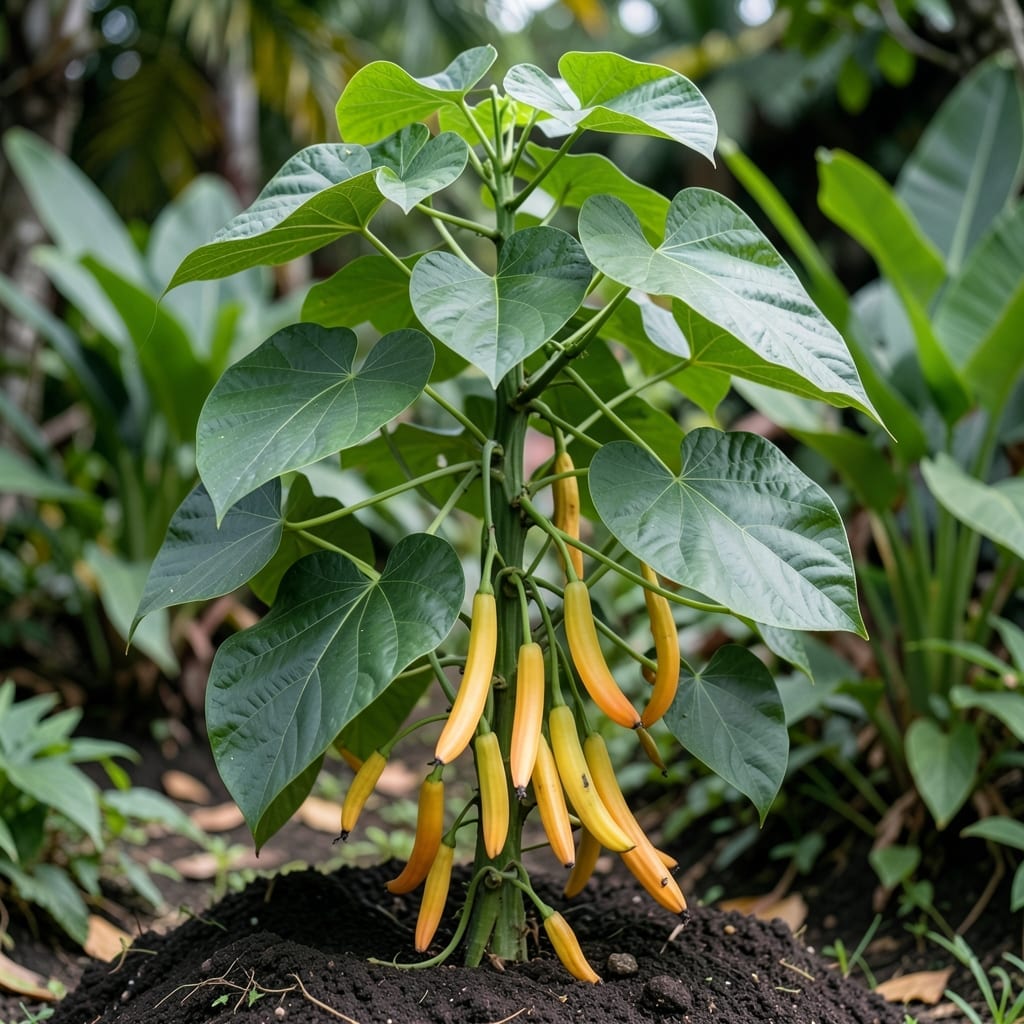
Curuba is a tropical fruit from the Passiflora family, known for its sweet-tart flavor and vibrant orange rind. It grows on vines and is popular in South American cuisines.
I love how this fruit stands out with its unique combination of tangy and sweet notes, making it a favorite in desserts and juices. Its fast-growing vines thrive in warm climates, producing fruit that ripens to a bright orange hue. In Colombia and Venezuela, it’s often used in traditional recipes that highlight its refreshing taste. ✨
💡 In This Article
The curuba vine, scientifically known as Passiflora ligularis, climbs aggressively with tendrils that can reach up to 20 feet under ideal conditions. Its glossy, deep green leaves feature three distinct lobes, measuring 4-6 inches across, which help distinguish it from other passionflower varieties.
The plant’s vigorous growth comes from its tropical origins, thriving in USDA zones 10-12 where temperatures rarely dip below 50°F. 🌟
What makes curuba unique among passion fruits is its flower structure. The blossoms are large, measuring 3-4 inches in diameter, with striking white petals and purple filaments that create a star-like appearance. These flowers produce a sweet, jasmine-like fragrance at night to attract pollinators like bats and hummingbird moths.
The fruit itself grows from these flowers, developing its signature orange rind that turns slightly wrinkled when fully ripe.
The fruit’s internal structure reveals another distinguishing feature: the yellow-orange pulp surrounds 200-300 small, flat, black seeds. Unlike some passion fruits with thick rinds, curuba’s skin is relatively thin—about 1/8 inch—but tough enough to protect the juicy interior.
This thin rind makes it easier to crack open compared to its cousin, the giant granadilla, which has a much harder shell.
Curuba leaves have a unique adaptation: tiny glandular dots along the leaf margins that secrete nectar. This feature attracts beneficial ants that help protect the plant from herbivores. The vines also produce coiled tendrils every 4-6 inches that wrap around supports with incredible strength, allowing the plant to climb vertical surfaces efficiently.
This climbing habit makes curuba ideal for trellises in home gardens.
The fruit’s flavor profile develops from a complex balance of sugars (about 12-15% by weight) and acids, primarily citric and malic. This chemical composition creates its characteristic sweet-tart taste that intensifies as the fruit ripens.
The pulp’s texture is jelly-like, with a consistency similar to passion fruit but slightly more fibrous due to the seed arrangement.
Look for a fully orange rind with slight wrinkles. The fruit should feel heavy and give slightly when pressed.
Curuba thrives in USDA zones 10-12 where temperatures stay above 50°F. It needs full sun and warm conditions to produce fruit.
It has a sweeter, more complex flavor than most passion fruits. The pulp is jelly-like with a balance of 12-15% sugars and tart acids.
With proper care, vines typically produce fruit within 1-2 years of planting. Regular pruning and support help speed up this process.