
Beautiful Plants For Your Interior
Beautiful Plants For Your Interior
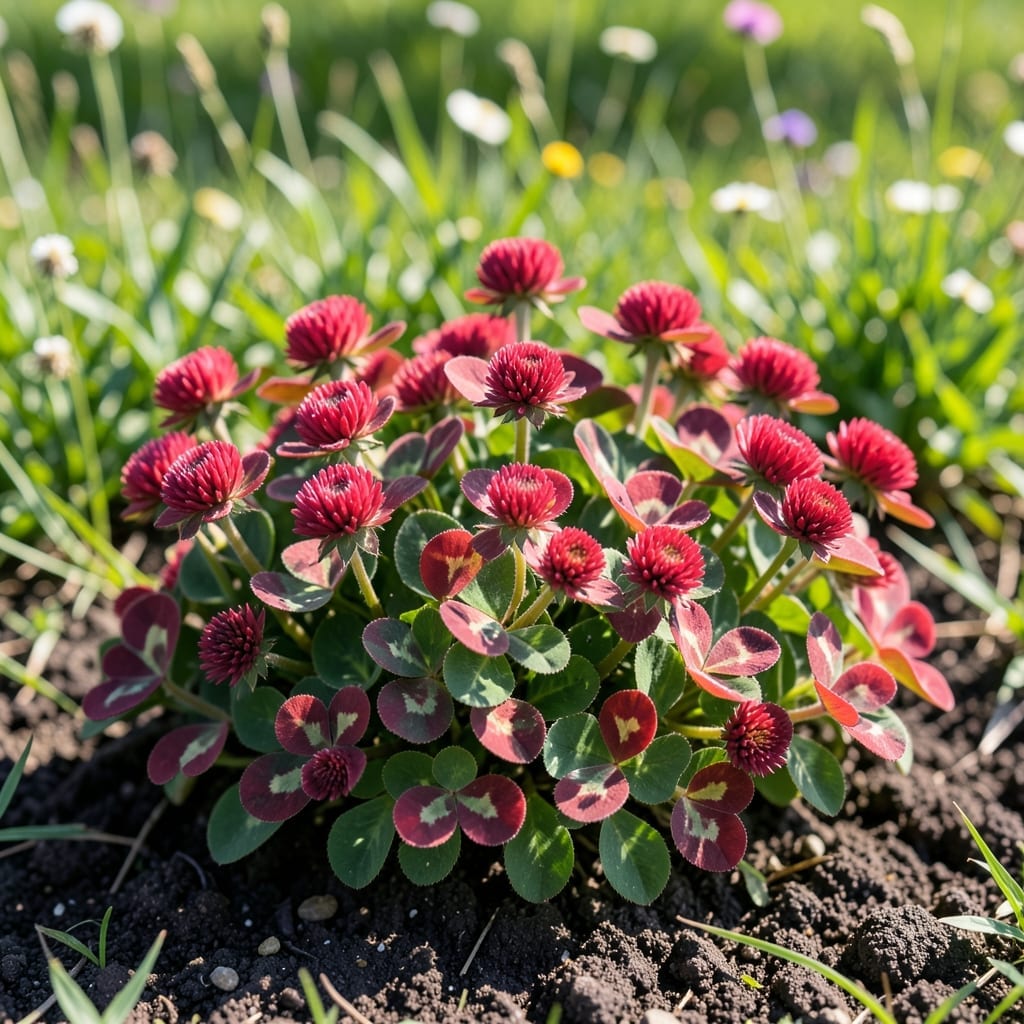
Crimson clover is a fast-growing annual legume with bright red flowers, prized for nitrogen fixation, soil improvement, and as a pollinator-friendly cover crop in gardens and farms.
I’ve used this plant in my own garden to naturally boost soil fertility without harsh chemicals. It forms a symbiotic relationship with beneficial bacteria to pull nitrogen from the air, enriching the earth for other plants. Plus, its vibrant blooms attract bees and butterflies, making it a dual-purpose powerhouse for eco-conscious gardeners. ✨
💡 In This Article
Crimson clover works its magic through a partnership with Rhizobium bacteria in its roots. These microscopic allies form nodules that convert atmospheric nitrogen into plant-usable ammonium, a process that can add 70-150 pounds of nitrogen per acre to the soil annually. This natural fertilization reduces the need for synthetic inputs while improving soil structure.
The plant’s deep taproot system breaks up compacted soil, creating channels for air and water to penetrate. As the roots decompose, they leave behind organic matter that boosts soil’s water-holding capacity by up to 20%.
The dense foliage also acts as a living mulch, suppressing weeds and preventing erosion by protecting bare soil from wind and rain impact. 🔥
What most gardeners notice first is how crimson clover transforms poor, sandy soils. In my raised beds, I’ve seen it turn lifeless dirt into rich, crumbly loam within a single growing season.
The plant’s ability to scavenge nutrients from deep in the soil profile brings up phosphorus and potassium that would otherwise remain inaccessible to shallow-rooted crops.
Beyond chemistry, crimson clover improves the biological health of your soil. Its flowers attract beneficial insects that prey on garden pests, while the root exudates feed soil microbes. This creates a more balanced ecosystem where plants grow stronger and resist diseases better.
The difference in vegetable vitality after a crimson clover cover crop is often dramatic and immediate. ✨
For best results, plant in early spring or fall when soil temperatures are between 50-65°F. The bacteria need this moderate range to establish effectively. In cooler climates, it can overwinter, providing early spring nitrogen before your main crops go in. This timing allows maximum benefit from both the living plant and its residue after incorporation.
It naturally adds 70-150 pounds of nitrogen per acre through root bacteria. The deep roots also break up compacted soil and add organic matter as they decompose.
Sow seeds in early spring or fall when soil reaches 50-65°F. This temperature range helps the beneficial bacteria establish effectively before growth.
The bright red blooms are a magnet for bees and butterflies. This makes it perfect for supporting local ecosystems while improving your garden.
Yes, but choose deep containers for the taproot. Use well-draining soil and ensure it gets full sun for best results.