
Beautiful Plants For Your Interior
Beautiful Plants For Your Interior
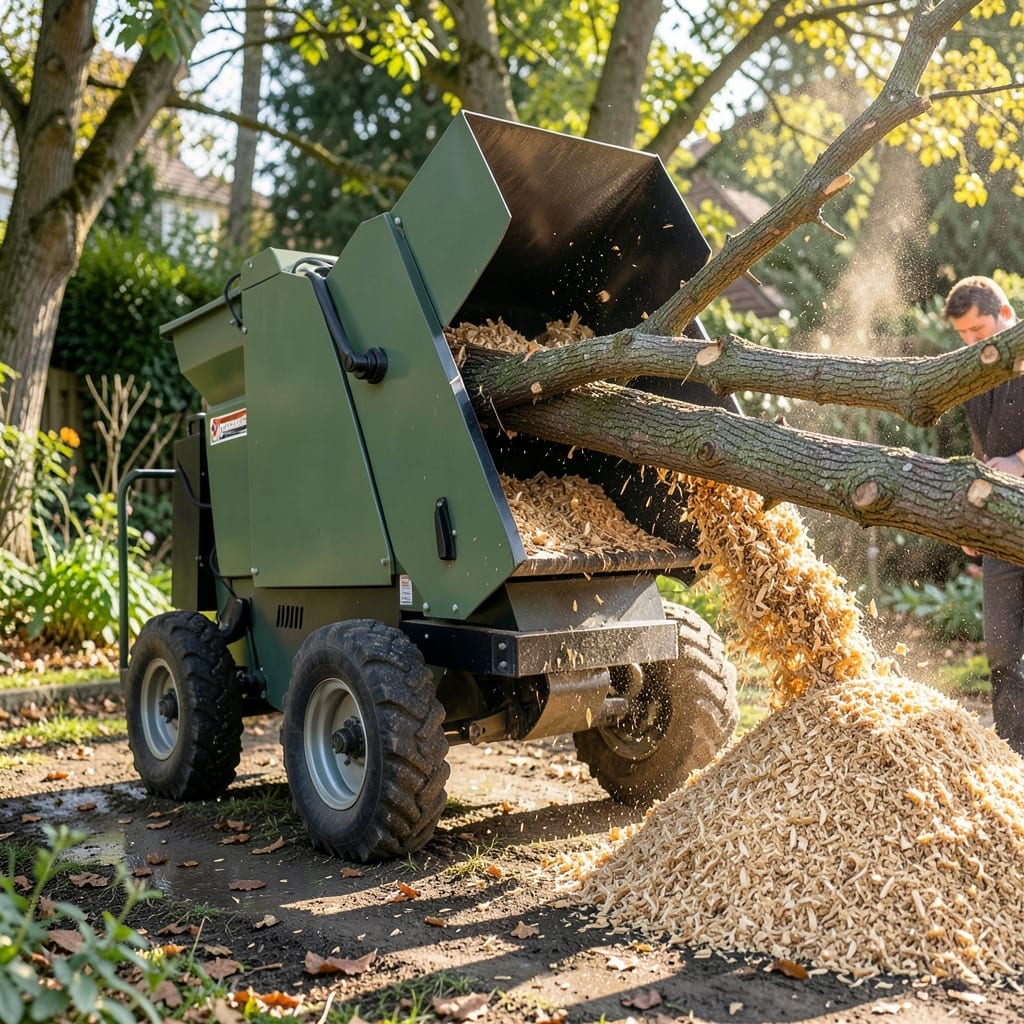
A woodchipper is a powerful machine that shreds branches, leaves, and other yard waste into smaller wood chips for mulch, compost, or disposal.
I rely on these machines to transform bulky garden debris into manageable material for my projects. 🌿 They use sharp blades and high-speed mechanisms to break down organic matter quickly, which is especially useful for maintaining large landscapes. What I appreciate most is how they turn waste into resources that can enrich soil or create pathways in gardens.
💡 In This Article
At the heart of every woodchipper is a high-speed cutting mechanism that turns bulky waste into uniform chips. The two main designs are disc chippers and drum chippers, each using different blade configurations to slice through wood fibers.
Disc models feature a spinning steel plate with mounted knives, while drum types use a cylinder with parallel blades that pull material through as it rotates.
Material feed rate and chip size are controlled by the machine’s horsepower (typically 3-100 HP) and blade sharpness. Soft green waste like leaves processes almost instantly, while hardwood branches up to 6 inches in diameter may require slower feeding.
The resulting chips range from fine 1/4-inch particles to coarse 2-inch pieces, depending on the screen size. 🌿
What most don’t realize is the physics involved: the infeed rollers exert 500-1000 psi of pressure to compress material against the blades. This compression, combined with the 4000-6000 RPM blade speed, creates the clean cuts that define quality wood chips.
The chips then exit through a discharge chute, often with a 360-degree rotation capability for directed output.
Different materials require different approaches. Green waste benefits from high-speed chipping at 3000+ RPM to prevent clogging, while dry hardwood needs slower speeds to avoid excessive dust. The moisture content also matters – wood at 20-30% moisture chips most efficiently. This versatility is why commercial models often include adjustable anvil settings. ✨
Modern chippers incorporate safety features like automatic feed stop when the hopper is opened and reverse feed to clear jams. The best models also have vibration dampening to reduce operator fatigue during extended use. These innovations make them indispensable for both professional landscapers and serious gardeners.
They process soft green waste like leaves instantly, while hardwood branches up to 6 inches may need slower feeding. Material moisture affects efficiency, with 20-30% being ideal for clean cuts.
Always wear safety goggles, ear protection, and heavy-duty gloves to shield against debris. Avoid loose clothing that could get caught in moving parts.
Yes, but green waste requires high-speed chipping at 3000+ RPM to prevent clogging. Wet wood creates finer chips but may dull blades faster than dry material.
Inspect blades after every 10-20 hours of use. Dull blades reduce efficiency and create uneven chips. Regular maintenance extends the machine’s lifespan significantly.