
Beautiful Plants For Your Interior
Beautiful Plants For Your Interior
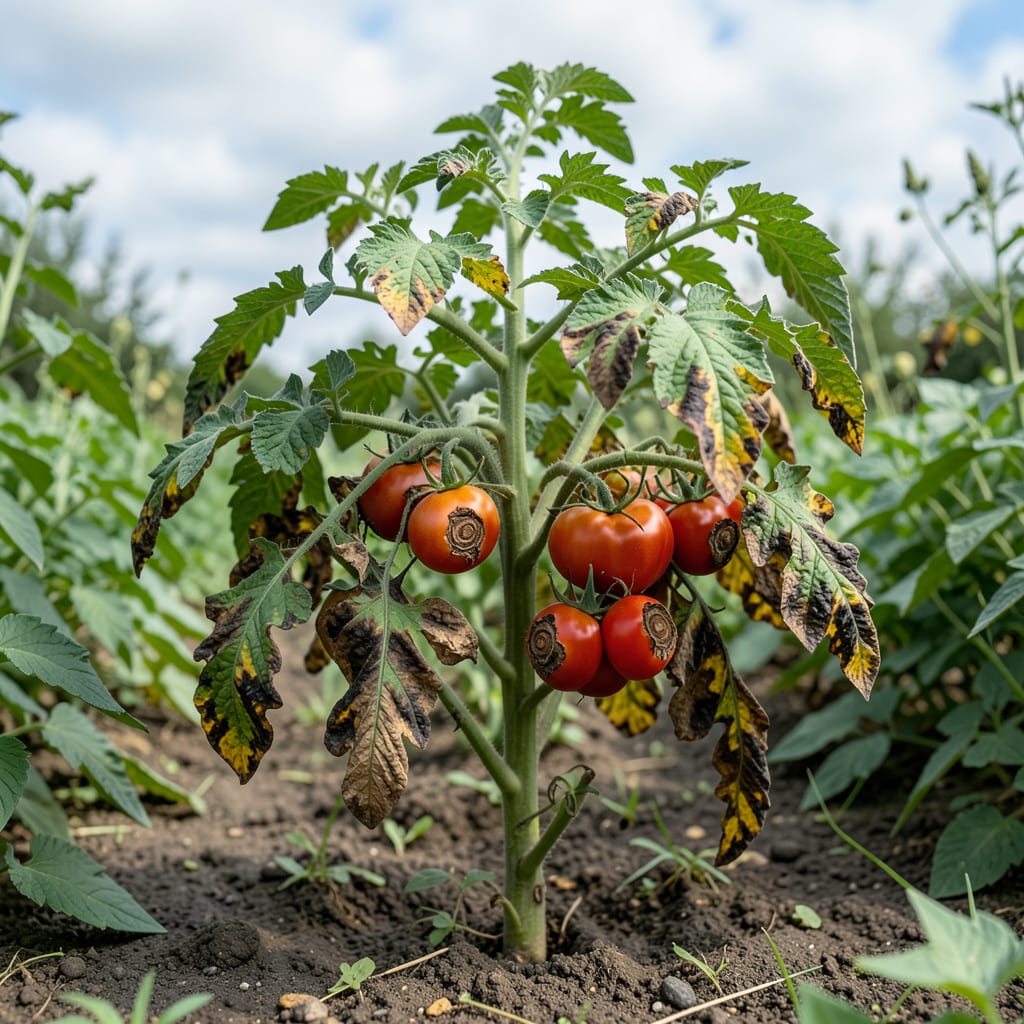
Brown spots spreading like wildfire on your tomato leaves? I’ve been there—watching healthy plants turn crispy overnight. It’s blight, and catching it early saves your harvest.
Starts with tiny dark spots on lower leaves, then yellow halos appear. Within days, entire stems blacken and wilt. The leaves look like they’ve been scorched by fire, but it’s actually fungal damage.
Fruit gets hard brown patches that rot from the inside out. Left unchecked, it’ll take down every tomato plant in your garden. Trust me, I lost an entire crop one summer.
Good news: you can spot it before it spreads. Here’s exactly what to look for.
Tomato plant blight doesn’t appear out of nowhere—it’s usually the result of specific environmental or biological triggers. Understanding these causes helps you prevent outbreaks and protect your crop. Here’s a breakdown of the primary culprits:
Most blight cases stem from fungal infections, particularly Phytophthora infestans (late blight) and Alternaria solani (early blight). These fungi thrive in cool, wet conditions (60–70°F with high humidity) and spread via spores in water, soil, or infected plant debris. Overhead watering or crowded plants create ideal breeding grounds.
Dense foliage or improper spacing traps moisture on leaves, accelerating fungal growth. Tomatoes need good airflow to dry quickly after rain or irrigation. Staking or pruning your plants can drastically reduce infection risk.
Blight fungi can survive in soil or on gardening tools for years. Using unsterilized tools or planting in contaminated beds introduces spores to healthy plants. Rotate crops and disinfect tools with a 10% bleach solution to break the cycle.
Actionable tip: Remove and destroy (don’t compost!) infected plants to prevent further spread.
Blight can be frustrating, but these targeted solutions can help save your tomato plants. Address each type of blight with the right approach to stop its spread and restore plant health.
For early blight, start by pruning affected leaves immediately—use clean shears to avoid spreading spores. Remove all fallen leaves and debris around the plant, as the fungus overwinters in soil. Prevent future outbreaks by rotating crops: don’t plant tomatoes or related crops (peppers, potatoes) in the same spot for at least 2 years. Apply a copper-based fungicide as a preventive spray every 7–10 days during wet weather.
Late blight spreads fast, so remove and destroy infected plants entirely—do not compost them. If caught early, prune affected areas and apply chlorothalonil or potassium bicarbonate sprays. Improve air circulation by spacing plants 2–3 feet apart and staking them. Water at the base (never overhead) to keep leaves dry. Prevention tip 💡: Plant blight-resistant varieties like ‘Mountain Merit’ or ‘Defiant PhR’.
Tackle Septoria leaf spot by removing infected lower leaves first, as the fungus starts there. Disinfect tools with rubbing alcohol between cuts. Mulch with straw to prevent soil splashing onto leaves. Prevent it next season by solarizing soil (covering with clear plastic for 4–6 weeks in summer) to kill fungus. Weekly sprays of neem oil or baking soda solution (1 tbsp baking soda + 1 tsp dish soap per gallon of water) can slow its progress.
Universal Prevention Tips ✨:
Late blight can destroy a plant in 2-3 days under wet conditions. Early blight moves slower, taking 1-2 weeks to show severe damage.
Yes, fungal spores overwinter in soil and plant debris. Rotate crops and remove all infected material to prevent next year’s outbreak.
Check lower leaves for tiny brown spots with yellow halos. These appear before wilting or stem darkening begins.
Yes, fruit develops hard brown patches that rot internally. Infected tomatoes aren’t safe to eat.
