
Beautiful Plants For Your Interior
Beautiful Plants For Your Interior
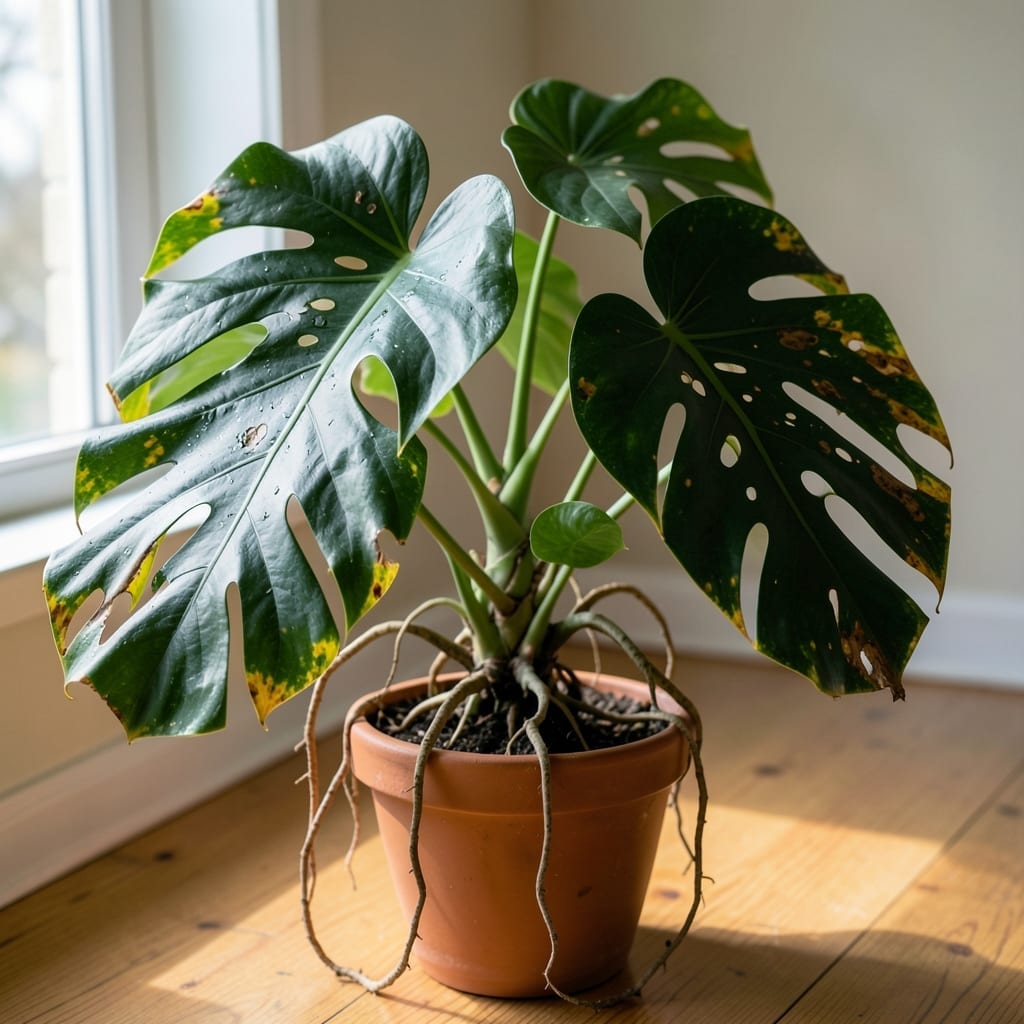
Yellow leaves and drooping stems are the first red flags. I’ve seen healthy monsteras turn into sad, soggy messes overnight when watered too much.
The leaves start yellowing at the edges, then turn mushy. Stems lose their stiffness and flop over like they’ve given up. It’s not pretty, but it’s fixable if you catch it early.
Root rot is the silent killer here. The roots turn brown and mushy instead of white and firm. If you see this, it’s time to act fast before the damage spreads.
Adjust your watering schedule and check the drainage. A few simple changes can bring your monstera back to its glorious, split-leaf self.
Overwatering your Monstera deliciosa usually stems from a few common missteps. Understanding these causes can help you adjust your care routine and prevent damage. Here’s why it happens:
Monstera plants thrive when their soil dries out slightly between waterings. Watering too often—especially without checking soil moisture—leads to waterlogged roots. The roots suffocate in saturated soil, unable to absorb oxygen, which triggers stress responses like yellowing leaves and drooping stems.
Pots without drainage holes or soil that retains too much moisture (e.g., dense, clay-heavy mixes) trap water around the roots. Over time, this creates anaerobic conditions, promoting root rot. Always use well-draining soil and containers with drainage holes to allow excess water to escape.
Larger pots hold more soil, which stays wet longer after watering. While it might seem like a good idea to give your Monstera “room to grow,” an oversized pot can lead to overwatering because the soil doesn’t dry out quickly enough. Stick to pots just 1-2 inches wider than the root ball.
In low-light or cooler environments, Monstera plants use water more slowly. If you water on the same schedule as in brighter or warmer conditions, the soil stays soggy. Adjust your watering frequency based on the plant’s environment—less in winter or dim spaces, more in summer or bright areas.
If your monstera is showing signs of overwatering, don’t panic—it’s often fixable with the right steps. Here’s how to nurse your plant back to health, tailored to the most common issues.
Stop watering immediately and let the soil dry out completely. Check the top 2-3 inches of soil with your finger—if it feels damp, wait longer. Once dry, resume watering only when the soil is dry at that depth. Use a well-draining potting mix (add perlite or orchid bark) to prevent future soggy soil. Pro tip: 💡 Water less frequently in cooler months when growth slows.
If the stems are limp or mushy, the roots may be suffocating. Gently remove the plant from its pot and inspect the roots. Trim any black, mushy roots with clean scissors, then repot in fresh, dry soil. Ensure the pot has drainage holes—no exceptions! Prevention: ✨ Always empty the saucer under the pot after watering to avoid root rot.
Increase air circulation around your monstera to help the soil dry faster. Move it to a brighter spot with indirect light and avoid crowded spaces. A small fan on low can help, but avoid direct drafts. If black spots appear, it’s a sign of fungal issues—treat with a copper fungicide and reduce humidity temporarily.
If you notice mold on the soil or a sour smell, the plant needs a fresh start. Remove it from the pot, discard the old soil, and clean the pot with a 1:10 bleach-water solution. Repot with sterile, well-draining mix. Prevention: 🌡️ Avoid over-potting—monsteras prefer being slightly root-bound, which reduces excess moisture retention.
With these fixes, your monstera should bounce back in a few weeks. Consistency is key—stick to a watering schedule based on the plant’s needs, not a fixed calendar!
Check the top 2-3 inches of soil before watering. If it’s damp, wait. Yellow leaves and drooping stems are clear signs to cut back.
Black leaves or spots indicate root rot spreading. This happens when roots sit in water too long and can’t absorb oxygen. Act fast to save the plant.
Yes, if caught early. Trim affected roots, repot in fresh, dry soil, and ensure the pot has drainage holes. Avoid watering for 1-2 weeks.
Water every 1-2 weeks in summer, less in winter. Always check soil moisture first. Overwatering is more harmful than underwatering.