
Beautiful Plants For Your Interior
Beautiful Plants For Your Interior
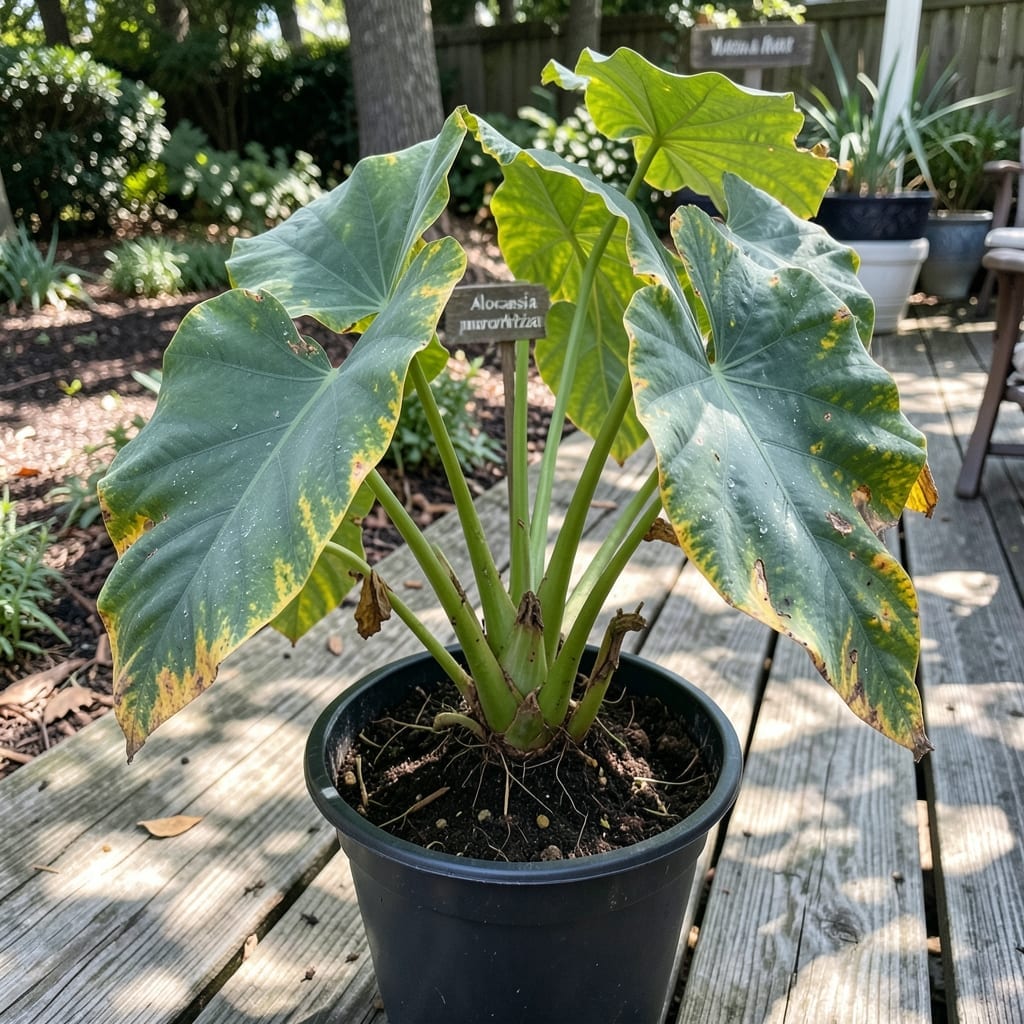
Yellow leaves and droopy stems are your elephant’s ear crying for help. I’ve rescued mine from overwatering more times than I’d like to admit, and the signs are always the same at first.
The leaves turn bright yellow starting at the edges, then the stems get soft and mushy. If you press the soil, it stays soggy for days. Meanwhile, the roots underneath are drowning, not drinking.
Catch it early and you can save the plant. The key is letting the soil dry out completely between waterings. These tropical beauties can handle brief dry spells better than constant moisture.
Within a week of proper care, you’ll see new growth pushing through. The yellow leaves won’t recover, but the rest of the plant will bounce back stronger.
Overwatering your elephant’s ear (Colocasia or Alocasia) disrupts its natural balance, leading to visible distress. Here’s why it occurs, broken down by the most common causes:
When soil lacks proper drainage, water pools around the roots, suffocating them. Elephant’s ear plants thrive in moist but not waterlogged conditions. Compacted or clay-heavy soil prevents excess water from escaping, creating an anaerobic environment where roots can’t absorb oxygen. This leads to root rot, which manifests as yellowing leaves and mushy stems.
These tropical plants love humidity, but frequency matters more than volume. Watering too often—especially before the top 1-2 inches of soil dry out—drowns the roots. The plant’s cells become oversaturated, causing them to burst. This results in soft, drooping stems and leaves that turn yellow or brown at the edges.
Non-porous pots (like plastic or glazed ceramic) trap moisture, while pots without drainage holes eliminate any escape route for excess water. Even well-meaning gardeners can overwater when the container doesn’t allow for natural evaporation or runoff. Switch to terracotta or ensure your pot has drainage holes to prevent soggy soil.
Elephant’s ear plants in dim or cool conditions (below 60°F/15°C) use water more slowly. If you water on the same schedule as in warm, bright conditions, the soil stays wet for too long. Reduced evaporation and slower metabolic activity mean the roots sit in dampness, increasing the risk of fungal infections and rot.
If your elephant’s ear is showing signs of overwatering, don’t worry—it’s often fixable! Below are targeted solutions for common symptoms, along with prevention tips to keep your plant thriving. 🌿
Prevention tip: Water only when the top inch of soil is dry. Use a moisture meter for accuracy! 💡
Prevention tip: Avoid overcrowding plants—give them space to breathe. ✨
Prevention tip: Add perlite or sand to soil for better drainage. 🎯
Overwatered leaves turn bright yellow and feel soft, while underwatered ones turn crispy brown. Overwatering also causes soggy stems and soil that stays wet for days.
Yes, trim yellow leaves with clean scissors to help the plant focus energy on healthy growth. This also prevents potential spread of rot or disease.
Stop watering, improve drainage, and let the soil dry completely. Most plants bounce back within 1-2 weeks if root rot hasn’t set in.