
Beautiful Plants For Your Interior
Beautiful Plants For Your Interior
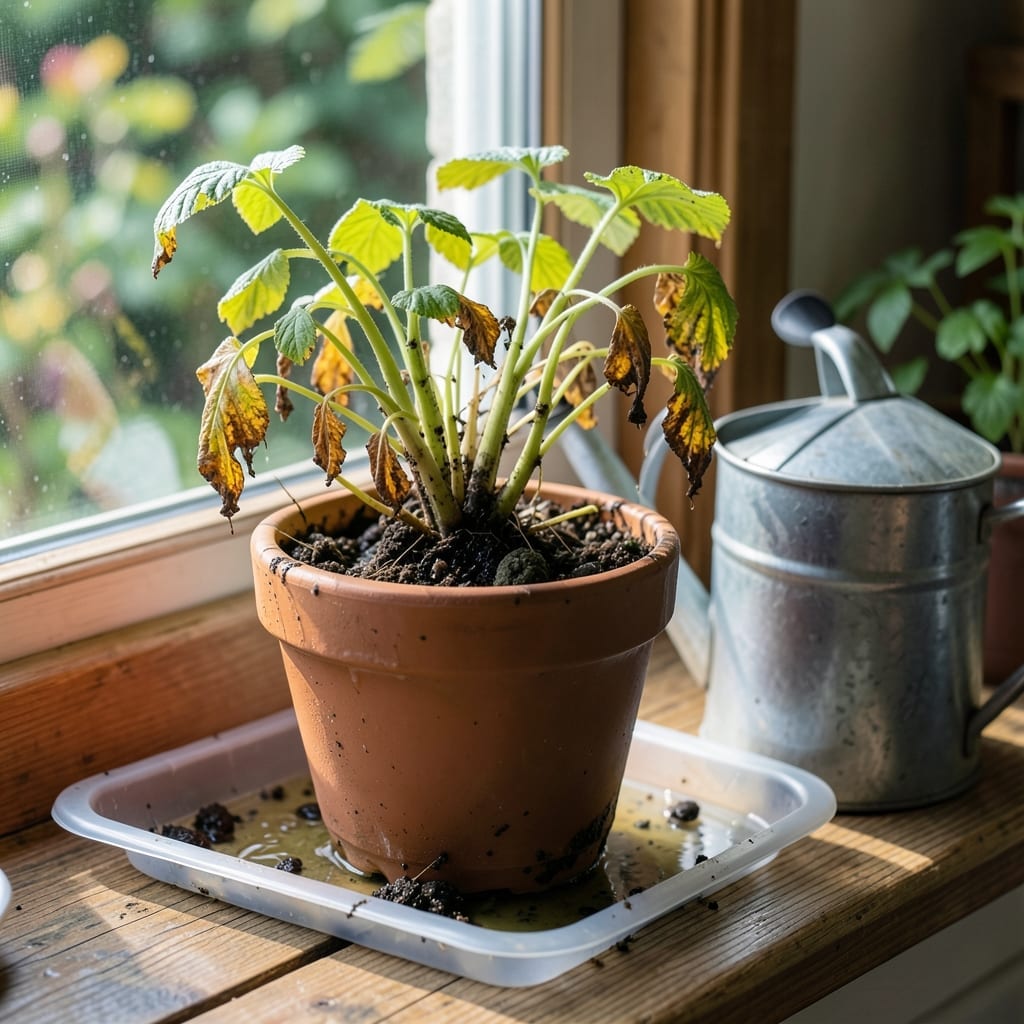
Yellow leaves and mushy stems are your first red flags. I’ve saved countless plants by catching overwatering early—before the roots turn to sludge in soggy soil.
The classic signs don’t stop at color: wilting despite wet soil, leaf drop, and that distinct damp smell mean your plant is drowning. Most people water on autopilot rather than checking moisture first.
Here’s the thing—overwatering looks different in succulents versus ferns. But the fix starts the same: stop watering immediately and let the soil dry out completely before the next drink.
With quick action, most plants bounce back within 1-2 weeks. The key is adjusting your routine, not your plant’s resilience.
Overwatering doesn’t always mean you’re giving your plant too much water—it often means the plant can’t use what you’re giving it. Here’s why it happens, broken down by the root causes:
When pots lack drainage holes or use dense, compacted soil, water can’t escape. This creates a saturated root zone, suffocating the roots and preventing oxygen uptake. Root rot follows quickly, as anaerobic bacteria and fungi thrive in waterlogged conditions. Always use pots with drainage and a well-aerated soil mix (e.g., perlite or sand for succulents).
Many gardeners water on a rigid schedule (e.g., “every Monday”) instead of checking soil moisture. Plants’ needs vary by species, season, and environment. A moisture meter or the finger test (stick your finger 1–2 inches into the soil) can prevent guesswork. Most plants prefer the top inch of soil to dry out between waterings.
A pot that’s too large holds excess moisture the plant can’t absorb. Roots only grow where they’re needed, so a small plant in a giant pot sits in soggy soil for days. Opt for a container just 1–2 inches wider than the root ball. Terracotta pots also help by wicking away moisture through their porous walls.
Plants in cool, dim environments use water slowly. If you water them as frequently as a sun-loving plant, the soil stays wet. For example, a ZZ plant in a dark corner may only need water every 3–4 weeks, while the same plant in bright light needs it weekly. Adjust your routine to match the plant’s metabolism.
Don’t panic—your plant can bounce back with the right care. Start by addressing the root of the problem (literally!) with these targeted fixes.
If the soil feels like a swamp, stop watering immediately. Gently remove the plant from its pot and inspect the roots. Trim any mushy, black, or foul-smelling roots with clean scissors. Repot in fresh, well-draining soil and a container with drainage holes. Let the soil dry out completely before watering again.
Yellow leaves are often a sign of stress from overwatering. Use sterilized shears to remove damaged foliage—this redirects the plant’s energy to healthy growth. Hold off on watering until the top 1-2 inches of soil are dry. For severe cases, skip watering for a week or more to let the roots recover.
If rot has set in, act fast. Remove the plant, rinse the roots under lukewarm water, and trim away all affected areas. Repot in a clean container with cactus or succulent mix (for better drainage) and avoid watering for at least 5-7 days. A sprinkle of cinnamon on the roots can help prevent fungal growth.
Prevention Tips: 💡
Yellowing leaves can show up within 2-3 days in sensitive plants, while root rot may take 1-2 weeks. Wilting often appears within 24-48 hours of waterlogging.
Excess water blocks oxygen from reaching roots, preventing nutrient absorption. This stress causes chlorophyll breakdown, leading to yellowing. The effect starts on lower leaves first.
Yes, if you act fast! Stop watering, repot in fresh soil, and trim rotten roots. Most plants show improvement in 1-2 weeks with proper care.
Overwatered plants have yellow, mushy leaves and soggy soil. Underwatered plants show crispy, dry leaves and bone-dry soil. Always check moisture before watering.