
Beautiful Plants For Your Interior
Beautiful Plants For Your Interior
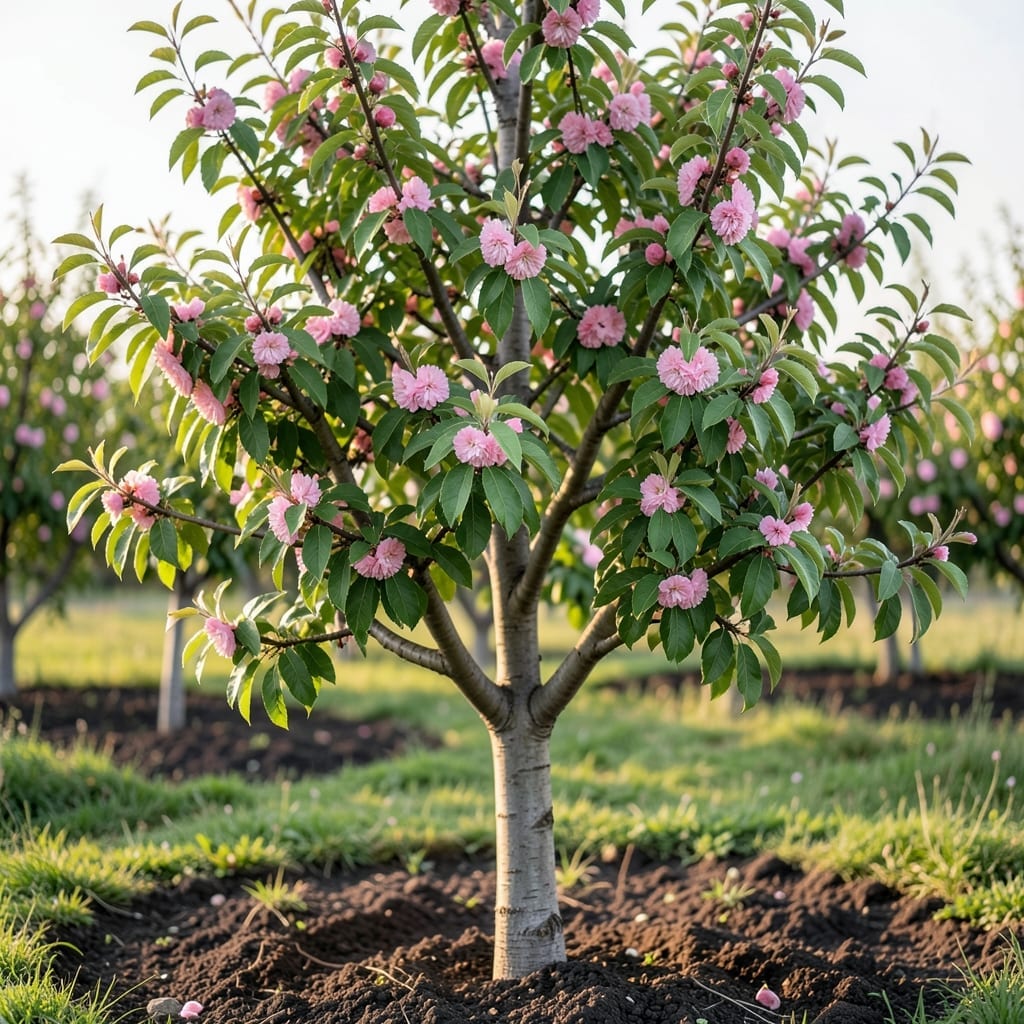
Peach tree leaves are lance-shaped with finely serrated edges, typically 3-6 inches long. They emerge reddish in spring, turn deep green in summer, and develop yellow or orange hues in fall.
I love how these leaves transform with the seasons, almost like a natural calendar. The serrated edges give them a distinct look compared to smoother fruit tree varieties. 🌟 What’s fascinating is their adaptive color palette—vibrant reds signal new growth, while autumn’s golds indicate dormancy preparation.
Their elongated shape helps maximize sunlight exposure for fruit production. This design is nature’s way of ensuring peach trees thrive in diverse climates.
💡 In This Article
The lance-shaped form of peach leaves isn’t random—it’s an evolutionary adaptation. This elongated design with a pointed tip and wider base creates an efficient surface area for photosynthesis while allowing rainwater to run off quickly. The finely serrated edges, with 10-20 teeth per inch, help reduce wind resistance. 🔥
What’s truly remarkable is the leaf’s vein pattern. The central midrib is prominently raised, with 6-8 pairs of lateral veins branching out at 45-60° angles. This creates a distinctive pinnate venation that’s visible from both sides, though more pronounced on the underside.
The texture is slightly leathery, with a smooth upper surface and slightly downy underside.
Size variations exist between cultivars. Dwarf peach trees often have leaves at the smaller end of the 3-4 inch range, while standard varieties can reach 6 inches or more. The petiole (leaf stem) is another identifier—it’s typically 0.5-1 inch long with a slight groove on top. ✨
Seasonal changes are most dramatic in autumn. As temperatures drop, chlorophyll breaks down revealing hidden carotenoids (yellows) and anthocyanins (reds). The timing varies by climate, but in temperate zones, expect the most vibrant colors in late October when days are 50-60°F and nights dip below 40°F. 💫
New growth emerges with a distinctive red-purple tint due to anthocyanin production, which protects the tender leaves from UV damage. This pigment fades as chlorophyll production ramps up in late spring. The transition period creates a beautiful two-tone effect where new and mature leaves coexist on the same branch.
New growth is red-purple due to anthocyanin production, which protects tender leaves from UV damage. This pigment fades as chlorophyll develops in late spring.
Peach leaves are longer (3-6 inches) with fine serrations, while cherry leaves are smaller (2-4 inches) and glossier. Peach tips are sharply pointed; cherry often has a tiny notch.
Yes! The upper surface is smooth, while the underside is slightly downy. The central midrib is prominently raised with 6-8 pairs of lateral veins.
In temperate zones, expect vibrant yellows and oranges in late October when days are 50-60°F and nights drop below 40°F. The transition reveals hidden carotenoids.