
Beautiful Plants For Your Interior
Beautiful Plants For Your Interior
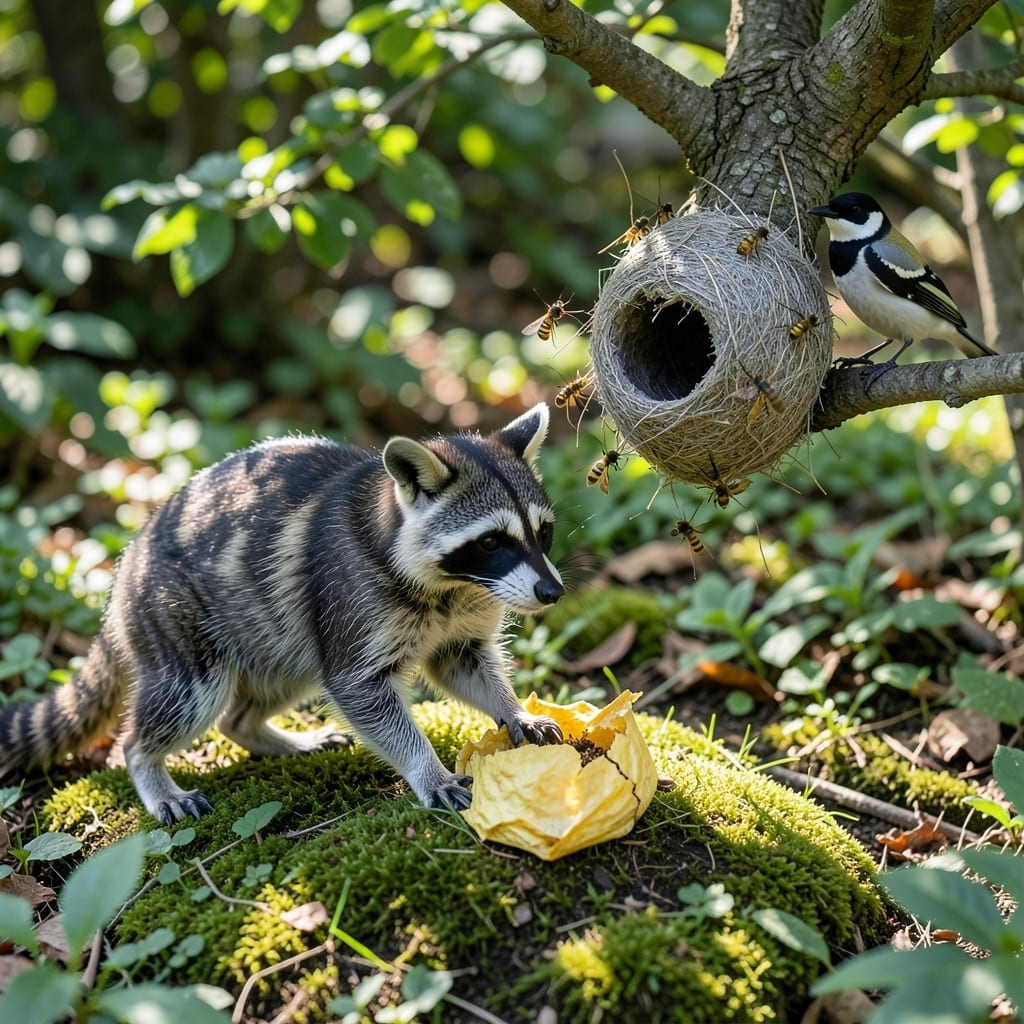
Birds like woodpeckers and starlings, mammals such as raccoons and skunks, and even other insects like praying mantises and dragonflies prey on yellow jackets.
Nature has its own pest control system when it comes to these aggressive wasps. I’ve noticed that woodpeckers and starlings often target yellow jacket nests for their high-protein larvae, while raccoons will dig up underground hives for a hearty meal. Even smaller hunters like praying mantises ambush adult wasps mid-flight. 🔥
This balance helps keep yellow jacket populations in check without human intervention. ✨
💡 In This Article
Yellow jackets pack a powerful protein punch for predators. Their larvae contain up to 60% protein, making them a prime food source for nesting birds like woodpeckers, which feed them to their chicks during peak breeding season. Adult wasps, while more dangerous, still provide high-energy meals for opportunistic hunters that can overcome their stings. 🔥
Woodpeckers use their strong beaks to tear open paper nests, accessing the defenseless larvae inside. Skunks and raccoons employ a different strategy—they dig into underground nests at night when yellow jackets are less active, using their thick fur as protection against stings. This timing reduces their risk of getting attacked by the colony’s workers.
Insect predators have evolved specialized hunting techniques. Praying mantises use their lightning-fast reflexes to snatch yellow jackets mid-air, while dragonflies target them during flight with 95% accuracy. These smaller hunters often consume just the head and thorax, avoiding the stinger-laden abdomen. ✨
This predator-prey relationship maintains ecological balance. When yellow jacket populations explode in late summer, their increased activity attracts more predators, naturally controlling their numbers. The wasps themselves play a role by preying on other pests like caterpillars and flies, creating a complex food web. 💫
Interestingly, some predators develop immunity to the venom. Honeybees, for instance, can withstand multiple stings during their “heat balling” defense, where they surround and overheat individual yellow jackets. This collective behavior protects their hives from invasion. ⚡
Woodpeckers tear open nests to access the protein-rich larvae, feeding them to their chicks during breeding season. Their strong beaks make quick work of paper nests.
Yellow jackets are less active after dark, and raccoons’ thick fur protects them from stings. Their nocturnal digging lets them safely access the high-protein larvae below.
Yes, mantises ambush adults in mid-air, often biting the head first to disable them. They typically avoid the stinger-laden abdomen entirely.
While predators help control populations, they won’t completely eradicate them. For severe infestations, natural predators combined with professional removal may be needed.