
Beautiful Plants For Your Interior
Beautiful Plants For Your Interior
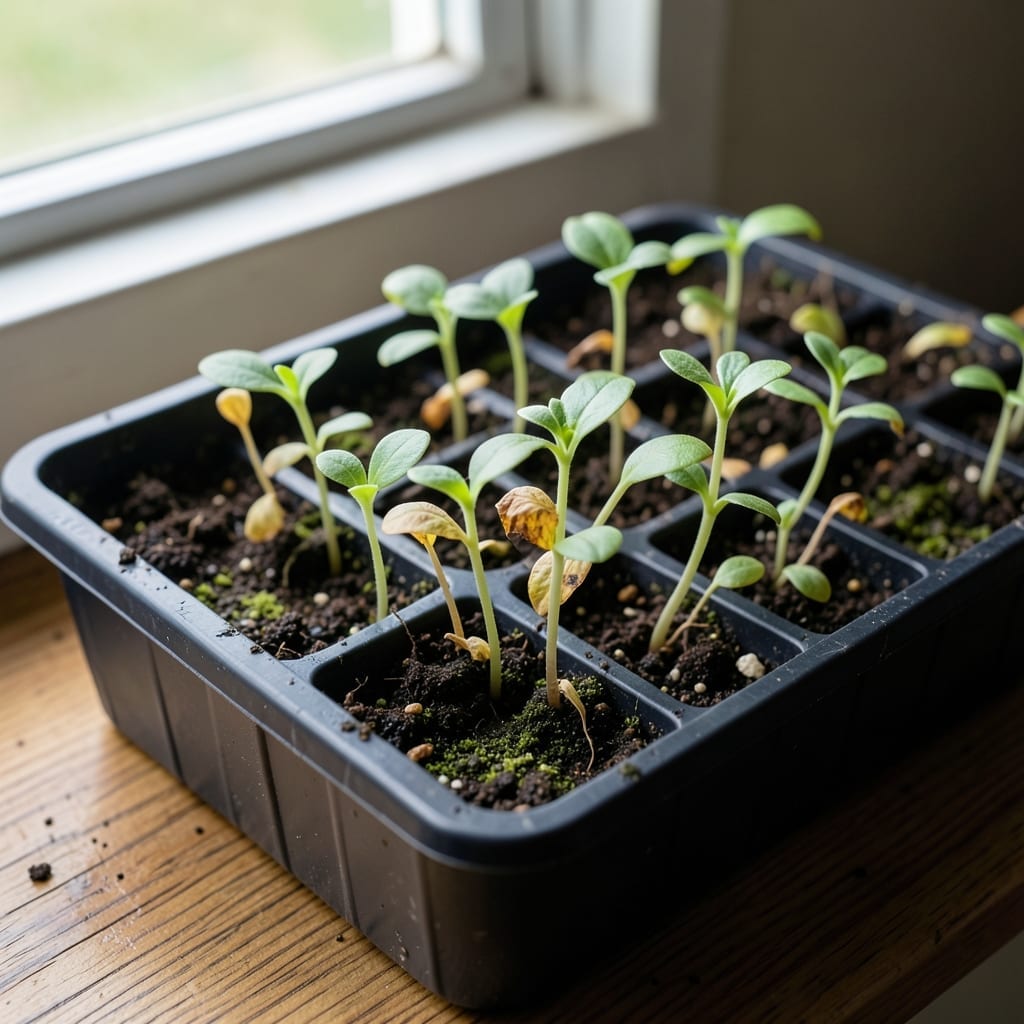
Yellow leaves and floppy stems are the first red flags. I’ve lost count of how many trays I’ve ruined by being too generous with the watering can, thinking more moisture meant faster growth.
Overwatered seedlings often look drowned—soft stems, pale or yellowing leaves, and soil that stays soggy for days. Mold on the surface or a foul smell means you’ve crossed the line from careful to careless.
Here’s the thing—seedlings need consistent moisture, not a swamp. Most issues fix themselves once you back off and let the soil dry slightly between waterings.
The recovery is fast if you catch it early. In 2-3 days, perked-up stems and greener leaves prove you’ve nailed the balance.
Understanding the root causes of overwatering helps prevent the telltale signs of drooping, yellowing, or moldy seedlings. Here’s what’s really going on beneath the soil:
Seedlings thrive in well-draining soil, but compacted or clay-heavy mixes trap water around the roots. This suffocates the root system, preventing oxygen uptake—a condition called hypoxia. Without oxygen, roots can’t respire, leading to rot and nutrient absorption failure.
Many gardeners water on a rigid schedule (e.g., daily) rather than checking soil moisture. Seedlings in small containers or humid environments often need less frequent watering. Overdoing it washes away nutrients and fosters fungal growth like Pythium, which causes damping-off disease.
Containers without drainage holes or saucers that collect standing water create a drowning effect. Even with good soil, stagnant water at the bottom promotes root rot. Always ensure pots have holes and empty excess water from trays after watering.
Cool, damp conditions slow evaporation, keeping soil soggy longer. Seedlings in unheated greenhouses or shaded areas are especially vulnerable. Pair this with poor airflow, and you’ve got a perfect storm for fungal spores to thrive.
If your seedlings are showing signs of overwatering—like yellowing leaves or mushy stems—don’t panic! Here’s how to nurse them back to health, with practical fixes for each issue.
These are classic signs of too much water. Stop watering immediately and let the soil dry out. Move the seedlings to a spot with bright, indirect light to help them recover. If the soil is soggy, gently tip the container to drain excess water. For severe cases, transplant the seedlings into fresh, well-draining soil to prevent rot.
Prevention tip: 💡 Water only when the top inch of soil feels dry. Use containers with drainage holes to avoid waterlogging.
Mushy stems often mean root rot. Carefully remove the seedling from the soil and trim any black or slimy roots with clean scissors. Replant in dry, sterile potting mix. If the stem is still firm but weak, provide support with a small stake or toothpick to keep it upright while it recovers.
Prevention tip: 🎯 Use a well-draining seedling mix (like one with perlite or vermiculite) to keep roots healthy and aerated.
White or green mold on the soil surface is a red flag. Scrape off the top layer of soil and replace it with fresh mix. Increase airflow around the seedlings by using a small fan on low or moving them to a breezier location. Avoid misting leaves, as this can encourage fungal growth.
Prevention tip: ✨ Water at the base of the plant, not the leaves, and ensure good air circulation from the start.
If the soil stays wet for days, it’s time to intervene. Poke holes in the soil with a toothpick or skewer to improve drainage. For containers without holes, add a layer of pebbles at the bottom or switch to a pot with drainage. Let the soil dry out completely before watering again.
Prevention tip: 🌡️ Always check moisture levels with your finger—if it feels damp an inch down, wait to water.
Yes, most seedlings bounce back within 2-3 days of withholding water and improving drainage. Remove soggy soil and ensure containers have drainage holes for best results.
Yellowing occurs because roots can’t absorb oxygen or nutrients in waterlogged soil. This leads to chlorophyll breakdown, causing leaves to lose their green color.
Check the soil by inserting your finger 1 inch deep. If it feels dry at that depth, it’s time to water. When in doubt, wait another day.
A well-draining mix with perlite or vermiculite works best. These additives create air pockets, allowing excess water to escape while keeping roots aerated.