
Beautiful Plants For Your Interior
Beautiful Plants For Your Interior
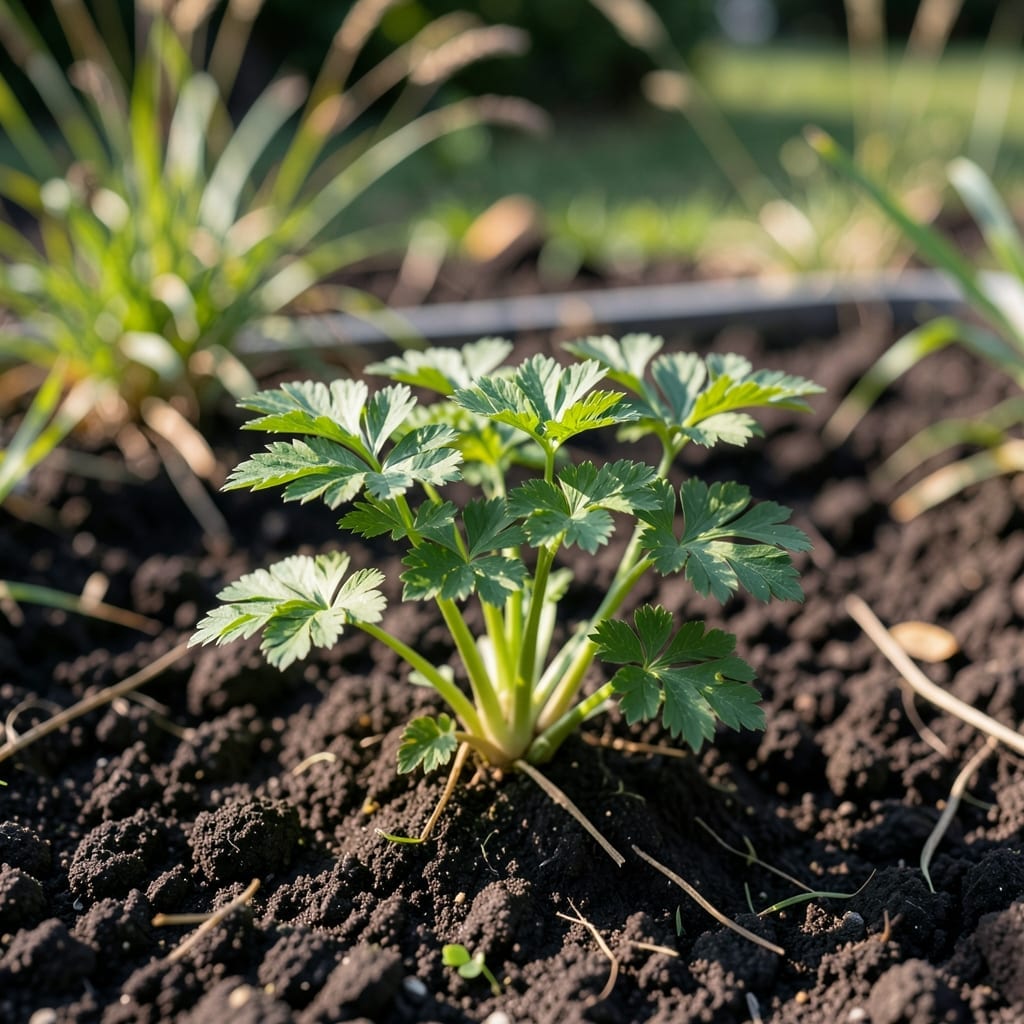
Those first tiny larkspur sprouts will fool you if you’re not looking closely. I mistook them for weeds my first year until they hit 2-3 inches tall and revealed their true identity.
They emerge as slender, grass-like shoots with needle-thin leaves, often tinged with a faint purple at the base. The first true leaves are fern-like, deeply lobed, and arranged in a tight rosette close to the soil.
Unlike weeds, they grow in neat clusters where you planted them, with a delicate blue-green color that darkens as they mature. The stems stay soft and hairless, never woody like some imposters.
At this stage, keep the soil moist but not soggy, and protect them from harsh sun. They’ll reward you with rapid growth once they establish their taproot.
Larkspur seedlings can look slightly different depending on several key factors. Understanding these causes helps gardeners identify healthy growth and troubleshoot issues early. Here’s why variations occur:
Larkspur (Delphinium) species and cultivars naturally exhibit subtle differences in seedling appearance. For example, annual larkspurs (like D. consolida) often have finer, more feathery cotyledons, while perennial types (e.g., D. elatum) may develop broader first leaves. Hybrid varieties can also produce seedlings with unique leaf shapes or colors due to cross-pollination.
Light, temperature, and moisture levels directly impact seedling morphology. Low light can cause elongated, pale stems (etiolation) as seedlings stretch toward a light source. Conversely, cool temperatures (below 60°F/15°C) may slow growth, resulting in compact, dark green seedlings. Overwatering can lead to damping-off, where seedlings collapse due to fungal pathogens like Pythium.
Poor soil quality or nutrient deficiencies can alter seedling appearance. Nitrogen-deficient soil may produce stunted, yellowish seedlings, while excess nitrogen can cause overly lush but weak growth. Well-draining, loamy soil with a pH of 6.5–7.0 supports ideal larkspur seedling development—dark green, sturdy, and upright.
If your larkspur seedlings don’t match the expected appearance—tall, feathery leaves with a slightly bluish-green tint—here’s how to troubleshoot common problems:
Cause: Insufficient light forces seedlings to stretch toward the sun. Fix: Move them to a brighter spot or use a grow light for 12–14 hours daily. Thin crowded seedlings to 6 inches apart to reduce competition. Prevention: Start seeds in a sunny windowsill or under lights from day one.
Cause: Overwatering or poor drainage leads to root rot. Fix: Let the soil dry slightly between waterings and ensure pots have drainage holes. Transplant soggy seedlings into fresh, well-draining soil. Prevention: Use a moisture meter to check soil before watering—aim for damp, not soaked.
Cause: Pests like slugs or aphids are feasting. Fix: Handpick slugs at dawn/dusk or spray seedlings with neem oil for aphids. Protect with a cloche or row cover. Prevention: Keep the garden clean of debris where pests hide.
Cause: Nutrient-poor soil or cold temperatures slow development. Fix: Feed with a balanced liquid fertilizer (10-10-10) and move seedlings to a warmer spot (60–70°F). Prevention: Use a quality seed-starting mix and harden off seedlings gradually before transplanting.
💡 Pro Tip: Larkspur thrives in cool weather—if seedlings look weak, a move to a shadier, cooler area can revive them!
You’ll typically see sprouts in 10-14 days under ideal conditions. Keep the soil consistently moist and at 60-70°F for fastest germination. Cooler temps may delay emergence by a few days.
Variations often come from different larkspur species or growing conditions. Annual types have finer leaves, while perennials may appear broader. Check light and soil quality if they seem stunted or discolored.
It’s best to wait until they develop 3-4 true leaves and reach about 2-3 inches tall. This ensures they’ve established a strong root system. Handle gently to avoid shocking the delicate roots.