
Beautiful Plants For Your Interior
Beautiful Plants For Your Interior
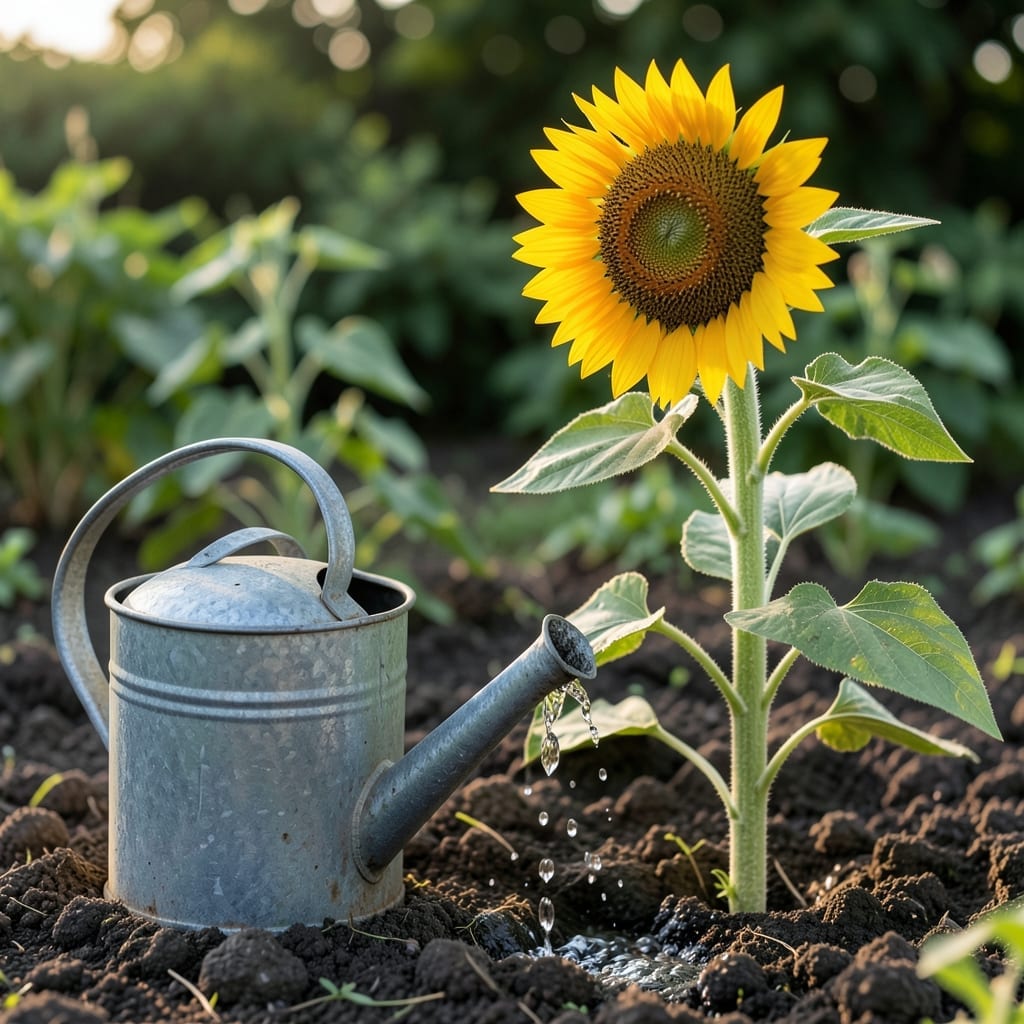
Most gardeners don’t realize they’re slowly killing their sunflowers with daily light sprinkles. The truth is, these towering beauties need a completely different approach to thrive.
I learned this the hard way when my first batch of 🌻 Sunflowers kept toppling over. The problem wasn’t the wind or weak stems – it was my watering method working against their growth.
What changed everything was switching to deep but infrequent watering. This simple shift transformed my weak, struggling plants into sturdy giants that could weather any storm.
Let me show you exactly how to water your Sunflowers the right way, from seedling to full bloom. Your plants will thank you with stronger roots and brighter faces.
Getting sunflower watering right starts with understanding their deep root system. Unlike shallow-rooted plants, sunflowers need infrequent but thorough watering to encourage strong growth. I’ve found that 1-2 inches of water per week works best for most climates.
For newly planted sunflower seeds, keep the soil consistently moist until they sprout. Once established, reduce frequency but increase depth. This mimics natural rainfall, which sunflowers love in their native habitats.
| Growth Stage | Water Frequency | Water Amount |
|---|---|---|
| Seedling | Daily | Keep soil moist |
| Young Plant | Every 2-3 days | 1 inch per watering |
| Mature Plant | Weekly | 1-2 inches per watering |
| Drought Conditions | Every 3-4 days | 2 inches per watering |
In hot, dry climates, I water my sunflowers every 3-4 days with 2 inches of water. The key is to water deeply so the moisture reaches the entire root zone. Shallow watering leads to weak stems that can’t support those heavy blooms.
For container-grown sunflowers, check the soil daily. Potted plants dry out faster, so they may need water every 2-3 days. Always water until it drains from the bottom of the pot to ensure full saturation.
Soil type dramatically affects watering needs. Sandy soil drains quickly and may need more frequent watering. Clay soil holds moisture longer, so I water less often but monitor for waterlogging. A simple finger test helps: if the top 1-2 inches are dry, it’s time to water.
During the flowering stage, sunflowers need consistent moisture to support bloom development. I notice my sunflowers droop slightly in extreme heat, which is their way of saying they need a deep drink. They perk up within hours after watering.
Morning watering is ideal because it allows foliage to dry before evening, reducing disease risk. I avoid overhead watering, especially in humid climates, to prevent fungal issues on the leaves and stems.
To conserve moisture and keep roots cool, I always apply a 2-3 inch layer of organic mulch around the base. This also helps prevent weed competition, which can steal water and nutrients from your sunflowers.
Remember, overwatering is just as harmful as underwatering. Yellowing leaves, root rot, and stunted growth are signs you’re giving your sunflowers too much love. When in doubt, check the soil before reaching for the hose.
With the right approach, your sunflowers will reward you with strong stems and vibrant blooms that stand tall all season long 🌻
I see too many gardeners accidentally harm their sunflowers with poor watering habits. The most common mistake is daily light sprinkling, which encourages shallow roots instead of the deep root system these plants need to grow tall and sturdy.
Another frequent issue is watering the foliage instead of the base, which can lead to fungal diseases like powdery mildew. Always aim your watering can or hose at the soil level to keep leaves dry and healthy.
⚠️ Watch Out!
Overwatering causes yellowing leaves and root rot. Underwatering leads to drooping stems. Check soil moisture 1-2 inches deep before watering.
Many gardeners also overlook poor drainage in their planting area. Sunflowers hate waterlogged roots, so if your soil is heavy clay, consider amending it with compost or planting in raised beds to improve drainage.
Timing matters too. Evening watering might seem convenient, but it leaves moisture on leaves overnight, increasing disease risk. Always water in the early morning to give your plants the best chance to thrive.
Finally, remember that container-grown sunflowers dry out faster than those in the ground. Check them daily in hot weather and water when the top inch of soil feels dry to the touch. With these adjustments, you’ll avoid the most common pitfalls.