
Beautiful Plants For Your Interior
Beautiful Plants For Your Interior
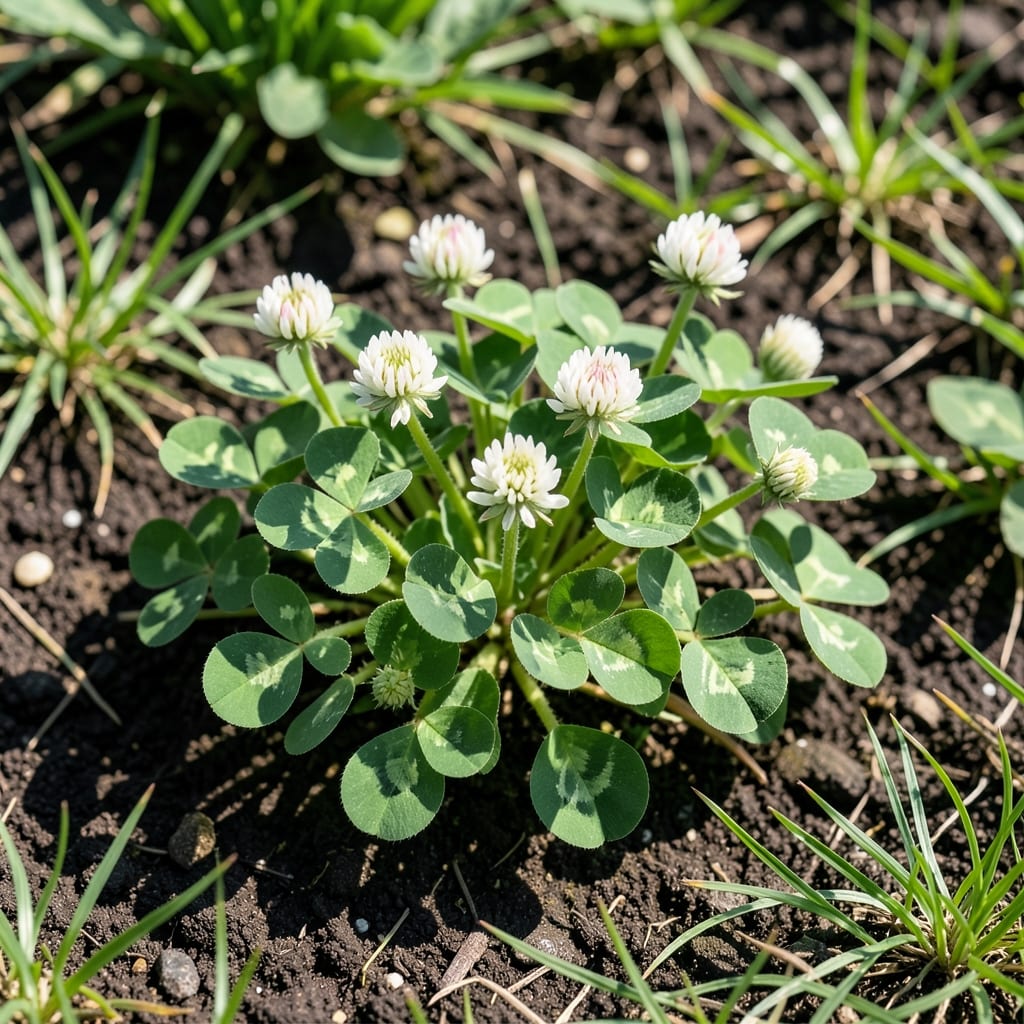
Trifolium repens, commonly known as white clover, is a perennial legume with white flower clusters and three-leaflets. It enriches soil with nitrogen and attracts pollinators, making it a valuable garden plant.
I love how this plant thrives in poor soil while improving it through nitrogen fixation, a process where it converts atmospheric nitrogen into a form plants can use. 🌟 Its creeping growth habit creates a natural living mulch that suppresses weeds and prevents erosion. Gardeners often use it as a ground cover or companion plant because it requires minimal maintenance once established.
💡 In This Article
White clover features a fibrous root system that spreads horizontally through stolons, allowing it to form dense mats. Each stem typically grows 4-8 inches tall, with compound leaves composed of three oval leaflets. The leaflets often display a pale crescent-shaped marking, a distinctive trait of Trifolium repens. 🌟
The flowers appear as round, puffball-like clusters composed of 40-80 individual white florets. These blooms emerge from spring through fall, with each flower head measuring about 0.5-1 inch in diameter. The petals often have a slight pink tint at their base, adding subtle color variation.
This perennial plant follows a prostrate growth habit, meaning it grows flat against the ground rather than upward. The stolons can extend 12-18 inches in length, rooting at nodes to create new plants. This vegetative reproduction allows white clover to spread rapidly under ideal conditions. ✨
Leaves are typically 0.5-1 inch long with finely serrated edges. The plant’s ability to close its leaves at night (nyctinasty) is another fascinating characteristic. This movement helps conserve moisture and may protect against herbivory.
White clover thrives in USDA zones 3-10, demonstrating remarkable adaptability. Its leaves contain high protein levels (about 20-25% dry weight), making it nutritious for both wildlife and livestock. The plant’s low-growing nature creates excellent habitat for beneficial insects. 💫
Unlike many plants, white clover can fix atmospheric nitrogen at rates of 50-150 lbs/acre/year. This process occurs through symbiotic relationships with Rhizobium bacteria in root nodules. The nitrogen enrichment benefits not only the clover but also neighboring plants.
Under ideal conditions, it can spread 1-2 feet per month via stolons. This rapid growth makes it excellent for filling bare spots in lawns or gardens.
This natural movement (nyctinasty) helps conserve moisture and may deter night-feeding pests. The leaves reopen with morning sunlight, following the plant’s internal rhythm.
It tolerates partial shade but thrives best in full sun (6+ hours daily). In deep shade, growth becomes sparse and flowering reduces significantly.
Yes, white clover is non-toxic to dogs and cats. In fact, it’s often used in pet-friendly lawns and provides edible greens for rabbits.