
Beautiful Plants For Your Interior
Beautiful Plants For Your Interior
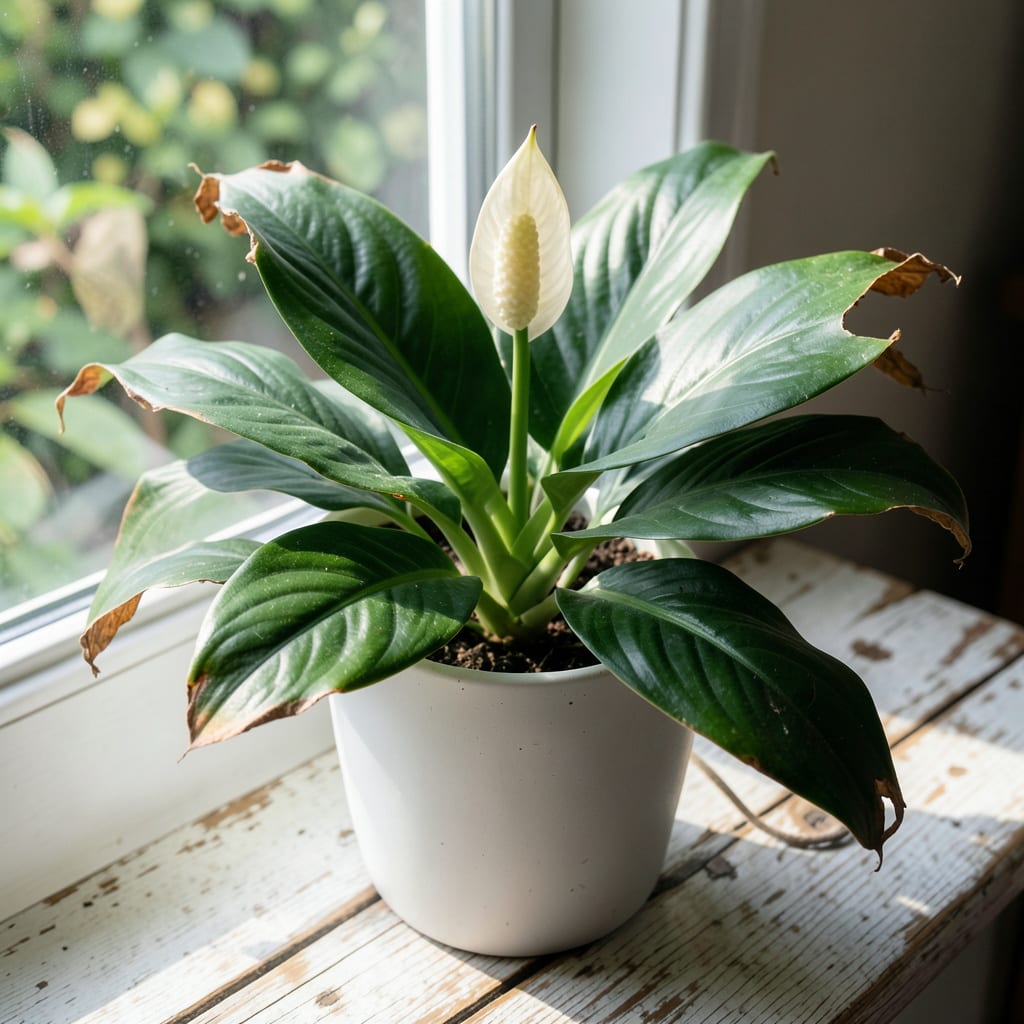
Brown tips on your peace lily are trying to tell you something. I ignored mine for weeks until the damage spread, and learned the hard way that these plants are surprisingly vocal about their needs.
More often than not, it’s either too much water or not enough humidity. The roots drown in soggy soil while the leaves crisp up in dry air. Both problems show the same symptom but need opposite fixes.
With a few simple adjustments—like checking the soil before watering and grouping plants together—you’ll see new growth coming in healthy and green within weeks.
No fancy equipment required, just consistent attention to what your plant is asking for.
The brown tips on your peace lily leaves are usually a sign of stress, and several common factors can trigger this issue. Below are the most likely causes, explained scientifically and with actionable insights.
Peace lilies (Spathiphyllum) thrive in moist but well-drained soil. Overwatering leads to root asphyxiation, where excess water displaces air in the soil, starving roots of oxygen. This causes root rot, a fungal or bacterial infection that prevents the plant from absorbing nutrients. As a result, the oldest leaves often develop brown tips first as the plant prioritizes new growth. Check the soil: if it feels soggy or smells foul, overwatering is likely the culprit.
Native to tropical rainforests, peace lilies require 40-60% humidity to flourish. When indoor air is too dry (common in winter or air-conditioned spaces), the plant loses moisture faster than it can absorb it through its roots. This transpiration stress causes the leaf tips to dry out and turn brown. Look for crispy edges—a telltale sign of low humidity.
Tap water often contains chlorine, fluoride, or dissolved salts, which accumulate in the soil over time. These compounds disrupt osmoregulation in the roots, making it harder for the plant to take up water and nutrients. The tips of leaves, being the farthest from the roots, are the first to suffer, turning brown due to tip burn. Flushing the soil with distilled water every few months can help.
While peace lilies tolerate low light, direct sunlight or proximity to heat sources (like radiators) can scorch their leaves. High temperatures increase evapotranspiration, leading to dehydration. The leaf tips, being the most exposed, brown first. Ideal conditions: bright, indirect light and temperatures between 65-80°F (18-27°C).
Peace lilies are resilient, but brown tips can signal they need a little extra care. Here’s how to address the most common causes and restore your plant’s lush green leaves.
Fix: Let the soil dry out between waterings. Stick your finger about an inch into the soil—if it feels damp, wait a few more days. If root rot is suspected (mushy roots, foul smell), trim affected roots and repot in fresh, well-draining soil. Use a pot with drainage holes to prevent waterlogging.
Prevention: Water only when the top inch of soil is dry. Consider using a moisture meter for precision.
Fix: Increase humidity around your peace lily by misting the leaves daily or placing a humidifier nearby. A pebble tray filled with water under the pot can also help—just ensure the pot isn’t sitting directly in water.
Prevention: Group plants together to create a microclimate or move your peace lily to a naturally humid room, like a bathroom with good light.
Fix: Move your plant to a spot with bright, indirect light, like near a north- or east-facing window. If the leaves show signs of scorching (brown, crispy edges), trim the damaged tips with clean scissors to encourage new growth.
Prevention: Rotate your plant occasionally for even light exposure and use sheer curtains to diffuse harsh sunlight.
Fix: Flush the soil with distilled or rainwater to remove excess salts and chemicals. If using tap water, let it sit out overnight to allow chlorine to evaporate before watering.
Prevention: Use a balanced, diluted liquid fertilizer every 6-8 weeks during the growing season. Avoid over-fertilizing, as peace lilies are light feeders.
Fix: Keep your peace lily in a stable environment, away from cold drafts, AC vents, or heaters. Ideal temperatures range between 65–80°F (18–27°C).
Prevention: Avoid sudden temperature changes and keep the plant in a consistent spot away from doors or windows that open frequently.
With these adjustments, your peace lily should bounce back, flaunting its glossy, vibrant leaves in no time! 🌿
Water when the top 1-2 inches of soil feel dry. Typically, this means watering every 7-10 days, but check soil moisture first. Overwatering is a common cause of brown tips.
Tap water is fine if left out overnight to let chlorine evaporate. For sensitive plants, use filtered or distilled water to avoid chemical buildup that can cause tip burn.
Yes! Use clean scissors to trim only the brown portion, following the leaf’s natural shape. This improves appearance and allows the plant to focus energy on healthy growth.
Aim for 40-60% humidity. Use a humidifier, pebble tray, or group plants together to maintain this range, especially in dry indoor environments.
