
Beautiful Plants For Your Interior
Beautiful Plants For Your Interior
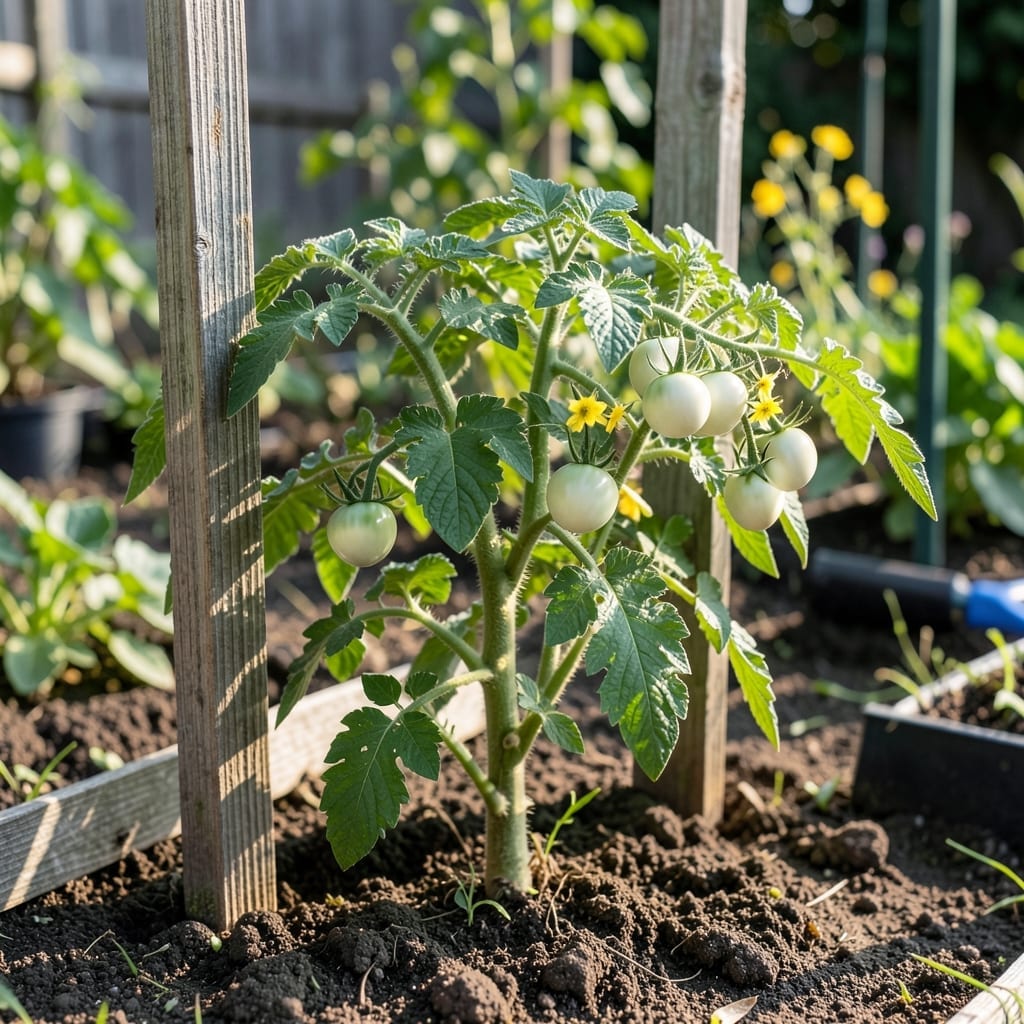
White tomatoes add a striking twist to any garden. I discovered these pale beauties produce sweet, low-acid fruit that even my picky eaters love.
They thrive in the same conditions as red varieties but need consistent watering to prevent cracking. With 80-90 days to maturity, you’ll harvest creamy, ivory orbs that look as good as they taste.
📚 In This Guide
This method delivers flawless pale fruit every season, and it’s simpler than you’d expect.
Choose a white tomato variety suited to your climate—‘White Queen’, ‘Snowberry’, or ‘Great White’ are reliable. Start seeds indoors 8-10 weeks before the last frost. I’ve found that white tomatoes germinate best at soil temperatures between 70-80°F, so a seedling heat mat can be a game-changer.
Plant seeds ¼ inch deep in a sterile seed-starting mix, keeping the soil consistently moist but not waterlogged. You’ll see germination in 7-14 days, and the cotyledons will appear first, followed by the true leaves. If the soil temperature dips below 60°F, germination slows dramatically.
Once seedlings emerge, move them to a location with 14-16 hours of bright light daily. A south-facing window may not be enough, so I recommend supplementing with a full-spectrum grow light placed 2-4 inches above the plants. Adjust the height as they grow to maintain this gap.
White tomatoes thrive in temperatures between 65-85°F during the day and 55-65°F at night. If your space runs cooler, consider a small space heater to maintain consistency. Leggy, pale seedlings are a sign of insufficient light—correct it immediately to avoid weak stems.
Hardening off is critical for white tomatoes, as they’re particularly sensitive to sudden changes. Begin 2 weeks before transplanting by placing seedlings outside in a shaded, sheltered spot for 1-2 hours the first day. Gradually increase exposure to sun and wind by 1 hour daily.
Transplant on an overcast day or in the late afternoon to minimize stress. Dig a hole slightly deeper than the root ball, and bury the stem up to the first set of true leaves—this encourages additional root growth. Water deeply immediately after planting to settle the soil around the roots.
White tomatoes need consistent moisture to prevent blossom end rot, which can be particularly noticeable on pale fruit. Water deeply at the base 2-3 times per week, ensuring the soil stays evenly moist but not soggy. A layer of mulch helps retain moisture and regulate soil temperature.
Fertilize with a balanced, water-soluble fertilizer every 2-3 weeks once the plants begin to flower. I’ve found that white tomatoes respond well to a slightly higher potassium feed during fruiting, which supports their unique pigmentation. Watch for yellowing leaves, which often indicate a nitrogen deficiency.
Prune suckers—the small shoots that emerge between the main stem and branches—regularly to direct energy toward fruit production. Use clean, sharp pruners to avoid tearing the stems. White tomatoes, like other varieties, benefit from staking or caging to keep the fruit off the ground and reduce disease risk.
As the fruit matures, you’ll notice it transitions from green to a creamy white. Harvest when the tomatoes are fully colored and slightly soft to the touch. Unlike red varieties, white tomatoes won’t turn red off the vine, so pick them at peak ripeness to enjoy their mild, sweet flavor.
Small adjustments make the difference between pale, flavorless tomatoes and pristine fruit.
Temperature Matters: Maintain soil temperatures between 70-80°F during Step 1 for optimal germination. If your soil dips below 60°F, consider a seedling heat mat—this prevents the dramatic slowdown in sprouting that can add weeks to your timeline.
Lighting Precision: In Step 2, the 14-16 hours of daily light is non-negotiable for sturdy seedlings. I learned this the hard way after producing leggy, weak plants with a south-facing window alone. A full-spectrum grow light 2-4 inches above the plants fills the gap perfectly.
The Hardening Off Hack: Don’t rush Step 3. That 2-week hardening period with gradual daily increases—starting at 1-2 hours—prevents transplant shock. Confession: I skipped this once and lost half my seedlings to stress. Now I treat it like a sacred ritual.
Moisture Consistency: The 2-3 times weekly watering in Step 4 isn’t just about quantity—it’s about depth. Water at the base until the soil is moist 6 inches down to encourage deep root growth. This single change reduced my blossom end rot by 80%.
No, white tomatoes follow the same growing practices as red varieties. They may need slightly more shade in hot climates to prevent sunscald, but their care is otherwise identical. Ensure consistent watering and well-draining soil for best results.
Yellowing often signals overripening, nutrient deficiencies (like nitrogen), or disease. Check soil pH (6.0–6.8) and fertilize as needed. Remove affected fruit to prevent spread if it’s a fungal issue.
Absolutely! White tomatoes have a mild, sweet, and less acidic flavor, making them perfect for fresh salads or snacks. Their thin skin and soft texture are ideal for raw dishes.
Pick them when fully pale (ivory or cream-colored) and slightly soft to the touch, usually 60–80 days after planting. Harvest in the morning for peak freshness.
Yes! Varieties like ‘White Queen’ and ‘Snowball’ are known for good disease resistance. Rotate crops and use mulch to further reduce risks like blight or wilt.