
Beautiful Plants For Your Interior
Beautiful Plants For Your Interior
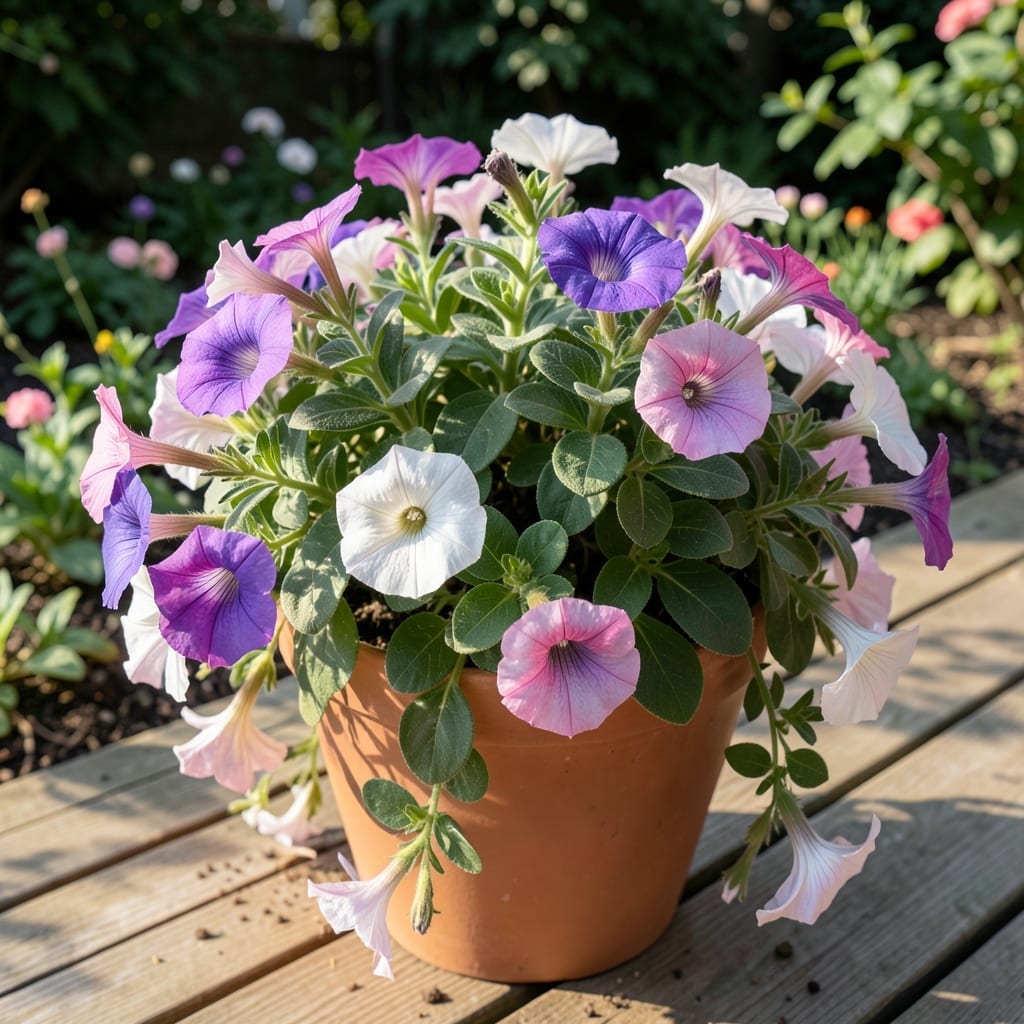
I fell for SuperCal petunias the first time I saw them bounce back from rain without a single droopy bloom. These plants don’t just survive—they thrive, pumping out wave after wave of color from spring until frost.
Their secret? Breeding that laughs at heat, humidity, and most diseases. With basic care—sun, water, occasional feed—you get a low-maintenance showstopper that outlasts most annuals. No deadheading, no fuss.
📚 In This Guide
Here’s the method I use every season to coax maximum blooms from these heat-tolerant stars.
Choose a location with full sun exposure—at least 6-8 hours of direct sunlight daily. Super Cals thrive in heat but need protection from strong afternoon winds that can shred their delicate petals. I always check the site at different times of day to confirm consistent light.
Soil should be well-draining with a pH between 6.0 and 7.0. If your garden has heavy clay, amend with compost before planting. The better the drainage, the less you’ll battle root rot during sudden summer downpours.
Loosen the soil to a depth of 12-15 inches and mix in 2-3 inches of organic matter. This creates the loose, fertile base Super Cals love. Remove any weeds completely—these aggressive growers need all available nutrients.
Space plants 12-18 inches apart. While they may look sparse initially, this spacing allows air circulation that prevents fungal issues. I mark my planting spots with small flags to maintain even distribution.
Dig holes slightly larger than the root ball. Place each plant so the top of the root ball sits ½ inch above the surrounding soil level—this prevents water from pooling around the stem. Super Cals are sensitive to crown rot.
Water thoroughly after planting until the soil is moist to 6 inches deep. Then hold off on watering again until the top inch of soil feels dry. This encourages deep root establishment rather than shallow surface roots.
Once established, water deeply 2-3 times weekly during dry periods rather than light daily watering. Always water at the base to keep foliage dry and prevent disease. The plants will tell you they’re thirsty—leaves will wilt slightly in the late afternoon.
Fertilize every 2-3 weeks with a balanced, water-soluble formula. Super Cals are heavy feeders and respond dramatically to regular nutrition. I’ve found liquid fertilizers work best because they’re immediately available to the roots.
Deadhead spent blooms weekly by pinching them off at the base. This prevents seed formation and redirects energy into new flowers. The plants will reward you with continuous blooms until the first hard frost.
Trim back leggy stems by one-third in midsummer to encourage bushier growth. This rejuvenation cut always surprises me with how quickly the plants bounce back with fresh, compact growth and more abundant flowers.
These practical insights will help you avoid the most common pitfalls when growing these vibrant flowers.
The Sunlight Essential: Step 1’s requirement for 6-8 hours of direct sunlight isn’t just a suggestion—it’s critical. I’ve seen plants struggle with fewer than 6 hours, producing sparse blooms and leggy growth. If your garden has partial shade, consider container planting so you can move pots to follow the sun throughout the day.
Soil Preparation Secret: In Step 2, when loosening soil to 12-15 inches deep, don’t rush this process. Super Cals develop extensive root systems that need room to spread. The 2-3 inches of organic matter isn’t just for nutrients—it improves drainage, which is just as important as the pH range of 6.0-7.0 mentioned in Step 1.
Planting Depth Matters: That ½ inch above soil level specification in Step 3 prevents crown rot, a common issue with these plants. I learned this the hard way after losing several plants to overwatering. The slight elevation allows water to drain away from the sensitive stem base.
Watering Wisdom: The 6 inches deep initial watering in Step 3 establishes deep roots, but the real key is the follow-up instruction to wait until the top inch feels dry. This encourages roots to grow downward in search of moisture, making plants more drought-resistant in the long run.
Water them deeply once or twice a week, depending on the weather. Ensure the soil is moist but not soggy, as overwatering can lead to root rot. In extreme heat, daily watering may be needed.
Plant them in spring after the last frost when soil temperatures reach at least 60°F. They thrive in warm weather and will bloom until the first frost of fall.
Consider Wave Petunias, Supertunias, or Calibrachoa for similar vibrant, trailing blooms. These are also low-maintenance and great for containers or garden beds.
Lack of sunlight, improper watering, or nutrient deficiency could be the cause. Ensure they get 6-8 hours of sun, consistent moisture, and a balanced fertilizer every 2-3 weeks.
Yellow leaves often indicate overwatering, poor drainage, or nitrogen deficiency. Check soil moisture, improve drainage, and use a balanced fertilizer to restore healthy growth.