
Beautiful Plants For Your Interior
Beautiful Plants For Your Interior
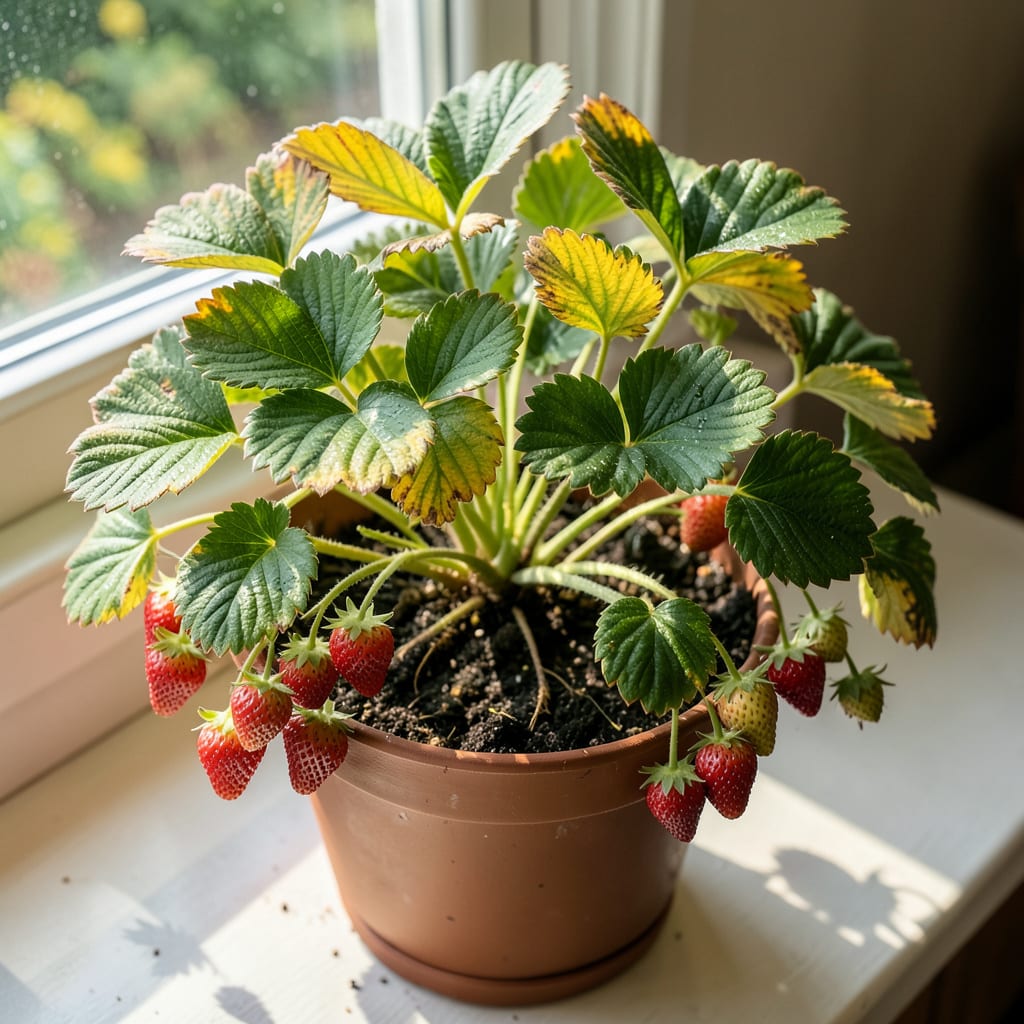
Yellow strawberry leaves always signal something’s off. I’ve seen this in my own patch more times than I’d care to admit—usually right as the first berries start forming.
Most often, it’s nitrogen deficiency or overwatering, but sometimes it’s iron or even a sneaky fungal issue. The fix usually boils down to soil testing, adjusting your watering, or adding the right amendment.
Catching it early means saving your plants before the problem spreads. My strawberries bounce back within 2-3 weeks once I address the root cause.
Works for garden beds, containers, or hanging baskets. Here’s how to diagnose and treat it fast.
Strawberry plants develop yellow leaves for several reasons, often tied to environmental stress or care gaps. Below are the most common causes, explained simply with actionable fixes.
Nitrogen, iron, or magnesium shortages frequently trigger chlorosis (yellowing between leaf veins). Nitrogen deficiency causes uniform yellowing, while iron or magnesium shortages create interveinal patterns. Test soil pH (ideal: 5.5–6.5); acidic or alkaline conditions lock out nutrients. Fix with a balanced fertilizer or chelated iron spray.
Soggy roots suffocate, blocking nutrient uptake. Yellowing often starts at the base of the plant. Check drainage: strawberries need 1–1.5 inches of water weekly in well-draining soil. Raise beds or add compost to improve aeration.
Extreme heat, frost, or sudden temperature swings stress plants, causing yellow edges or spots. Mulch with straw to regulate soil temperature. Shade cloth can protect from scorching sun, while row covers prevent frost damage.
Spider mites, aphids, or fungal infections (e.g., verticillium wilt) sap nutrients or disrupt vascular flow. Inspect leaf undersides for pests; treat with neem oil. For fungi, remove infected foliage and improve airflow.
Addressing yellowing leaves on your strawberry plants starts with identifying the root cause. Here’s how to tackle each common issue with practical solutions and prevention tips.
Fix: Test your soil for deficiencies. Use a balanced fertilizer (10-10-10) or amend with organic matter like compost. For iron or magnesium shortages, apply chelated iron or Epsom salt (1 tablespoon per gallon of water) as a foliar spray.
Prevention: Feed plants with a strawberry-specific fertilizer every 4-6 weeks during the growing season. 💡 Pro tip: Avoid over-fertilizing—it can burn roots and worsen leaf discoloration.
Fix: Check soil moisture with your finger—if it’s soggy, reduce watering. Ensure pots have drainage holes, or improve garden soil with perlite or sand. Trim any black, mushy roots to prevent rot.
Prevention: Water deeply but infrequently (1-2 inches per week) and use mulch to retain moisture without waterlogging. 🌡️ Pro tip: Water in the morning to allow foliage to dry by evening.
Fix: Inspect leaves for pests like aphids or spider mites. Spray with neem oil or insecticidal soap. For fungal issues (e.g., powdery mildew), remove infected leaves and apply a copper-based fungicide.
Prevention: Space plants properly for airflow, and avoid overhead watering. ✨ Pro tip: Rotate crops annually to disrupt pest and disease cycles.
Fix: Shield plants from extreme heat with shade cloth or move potted plants to cooler spots. If cold is the issue, cover plants with frost blankets overnight.
Prevention: Plant strawberries in partial shade in hot climates and use mulch to regulate soil temperature. 🎯 Pro tip: Choose heat-tolerant varieties like ‘Albion’ or ‘Seascape’ for warmer regions.
Once leaves turn yellow, they won’t regain their green color. Focus on fixing the underlying issue to prevent new leaves from yellowing. Healthy new growth is your best sign of recovery.
Water deeply 1–1.5 inches per week, ensuring the soil stays moist but not soggy. Morning watering is ideal to prevent fungal issues. Overwatering can cause yellowing just like drought.
A balanced 10-10-10 fertilizer works well for general deficiencies. For iron or magnesium shortages, try chelated iron or Epsom salt spray. Always test soil first to target the right nutrient.
Yes, prune yellow leaves to redirect energy to healthy growth. Use clean scissors and remove only the affected foliage. This also improves airflow, reducing disease risk.
