
Beautiful Plants For Your Interior
Beautiful Plants For Your Interior
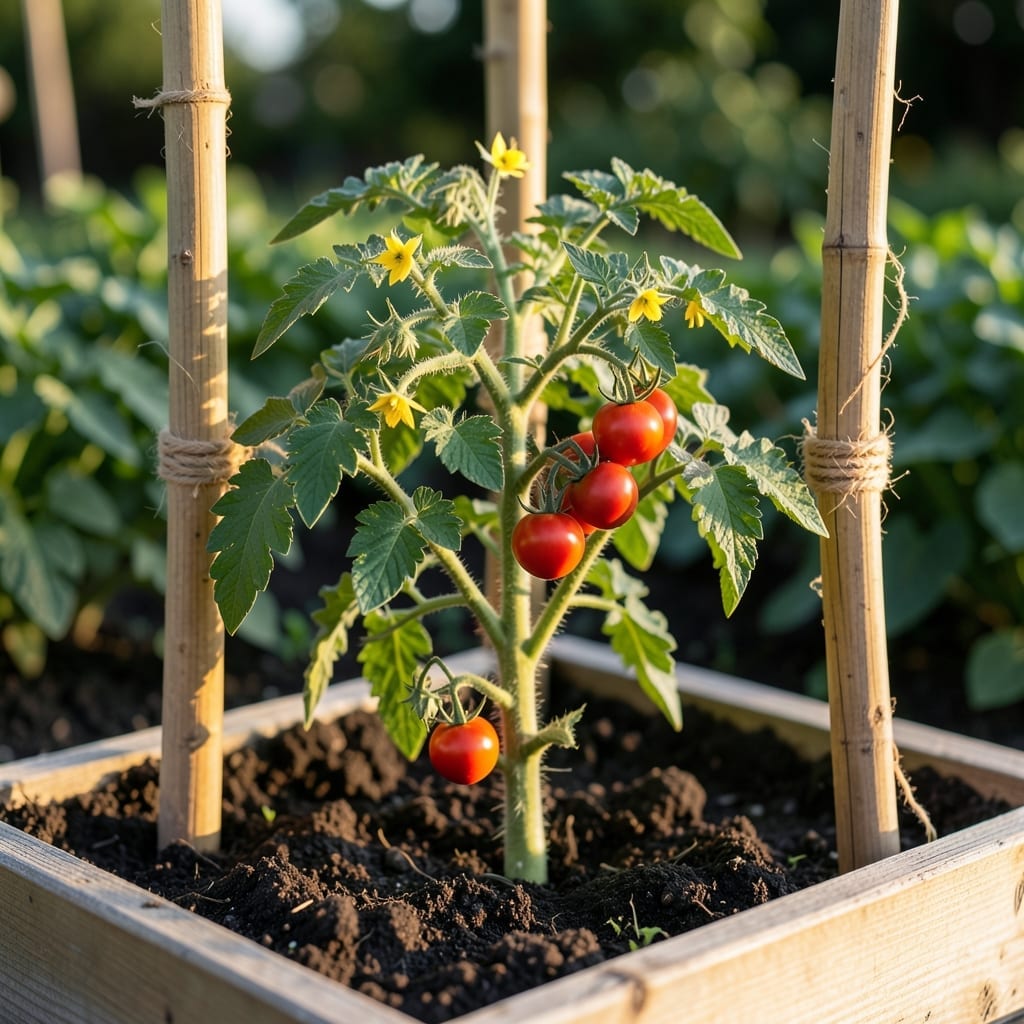
String staking changed my tomato game forever. Those sprawling vines now grow straight up instead of flopping over, and I get more fruit in less space.
It’s simpler than it looks—just soft string, sturdy stakes, and a little patience. I use this method every season because it keeps plants off the ground, prevents rot, and makes harvesting a breeze.
You’ll need about 6 feet of string per plant and stakes tall enough to handle mature height. The setup takes 20 minutes but saves you hours of frustration later.
Works for indeterminate varieties or any tomato that wants to climb. Here’s how to do it right.
Tomatoes are naturally vining plants, but their rapid growth and heavy fruit production can lead to structural challenges. Without proper support, stems break, fruits rot on the ground, and diseases spread more easily. Here’s why staking with string is often necessary:
Tomato plants can grow 1–2 inches per day under ideal conditions. This aggressive upward growth is driven by auxin, a plant hormone that promotes cell elongation. Without support, the weight of leaves and developing fruit causes stems to bend, snap, or sprawl, reducing air circulation and sunlight exposure.
A single tomato vine can produce 10–20 pounds of fruit. The combined weight stresses the stem’s vascular system (xylem and phloem), which transports water and nutrients. Without staking, the plant may topple or suffer from stem girdling, where the stem is crushed under its own load.
When tomatoes lie on the soil, moisture from the ground promotes fungal diseases like early blight and blossom-end rot. Staking with string keeps foliage and fruit elevated, improving airflow and reducing humidity around the plant. This minimizes spore germination and bacterial growth on wet leaves.
Unsupported tomato plants sprawl outward, taking up 3–4 times more garden space. Staking trains vines upward, maximizing vertical space. This is especially critical in small gardens or containers, where horizontal spread is limited.
Staking tomatoes with string can sometimes go wrong, but most problems have simple fixes. Here’s how to address the most common issues—and prevent them next time.
Fix: If your tomato plant is leaning or collapsing, gently tie the main stem to the stake with soft string or cloth strips, creating a loose loop. Avoid tight knots that can cut into the stem as it grows. For immediate support, add a second stake on the opposite side and secure the plant between them.
Prevention: Stake plants early—when they’re about 12 inches tall—so they grow accustomed to the support. Use sturdy stakes (bamboo or metal) that are at least 5-6 feet tall for indeterminate varieties.
Fix: If you notice the string digging into the stem, remove it and re-tie with a softer material, like old T-shirts or stretchy garden tape. Wrap the string around the stake in a figure-eight pattern to distribute pressure.
Prevention: Check ties weekly and loosen them as the plant thickens. Always use wide, flat materials (avoid thin wire or fishing line) to reduce the risk of girdling.
Fix: For drooping branches, use additional horizontal strings between stakes (like a trellis) to cradle the vines. Prune excess suckers to redirect energy to stronger growth.
Prevention: Space stakes no more than 2-3 feet apart for rows, and train vines upward consistently. Water at the base—not the leaves—to keep plants robust and less prone to breakage.
Pro Tip 💡: Rotate stakes slightly after heavy rain or wind to re-tension the string and keep everything snug.
Use soft, stretchy materials like cotton twine or garden tape. Avoid wire or fishing line, which can cut into stems as they grow. Natural fibers like jute also work well and biodegrade over time.
Inspect your string supports weekly. As plants grow thicker, loosen ties to prevent girdling. Re-tie if the stem starts to bend or the string feels too tight.
It’s better to use fresh string each year to avoid disease transfer. If reusing, soak in a 10% bleach solution for 10 minutes, then rinse and dry thoroughly before storing.
For indeterminate varieties, use stakes at least 5-6 feet tall. Determinate types need 3-4 feet. Add extensions if plants outgrow the initial height.