
Beautiful Plants For Your Interior
Beautiful Plants For Your Interior
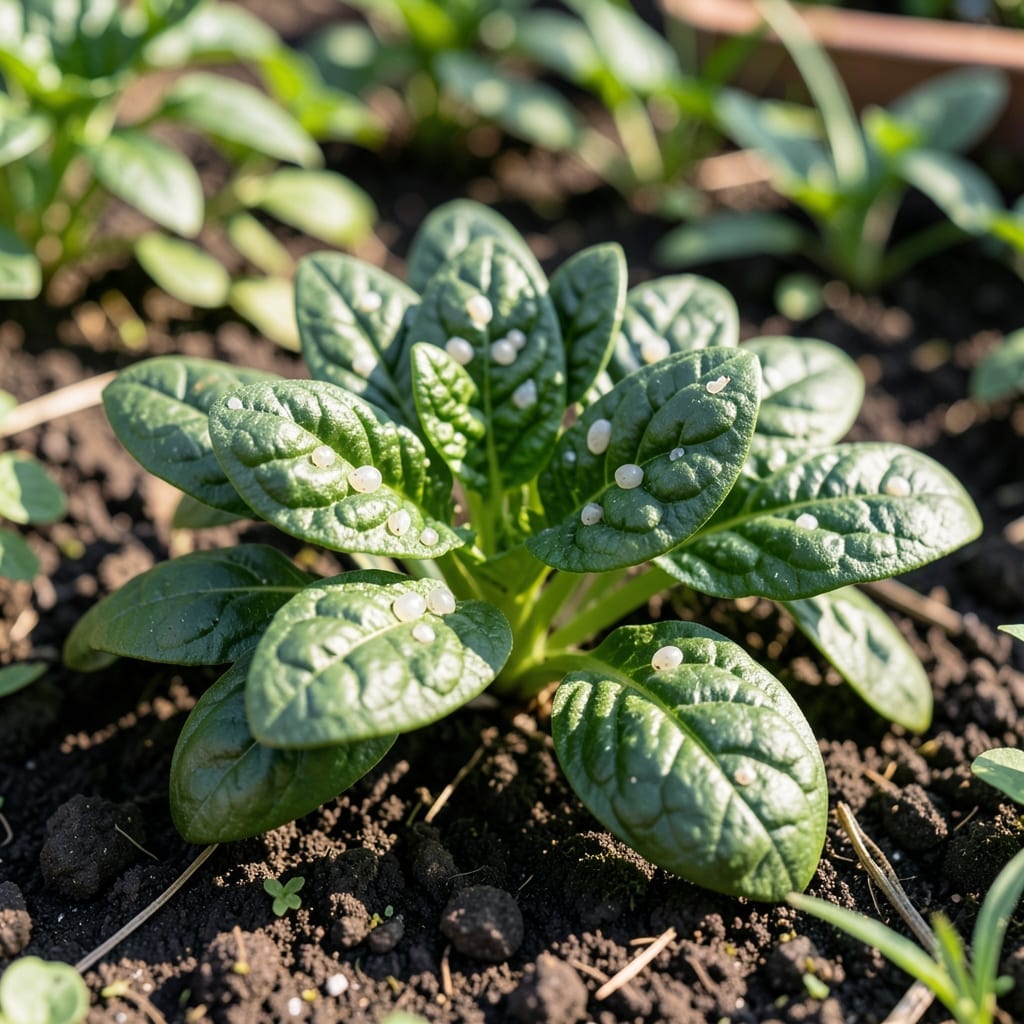
Tiny white dots on spinach leaves usually mean trouble. I first noticed these pinhead-sized eggs last spring and lost half my crop before identifying the culprit—spinach leafminer.
The eggs hatch into larvae that tunnel through leaves, leaving silvery trails and stunted growth. Catching them early prevents widespread damage and keeps your plants productive.
You’ll spot the eggs on the undersides of mature leaves, often clustered near veins. Removing affected leaves immediately stops the cycle without chemicals.
Organic solutions like row covers or beneficial insects work just as well as chemical treatments. Healthy spinach starts with vigilance and quick action.
The presence of spinach leafminer eggs in your garden is a direct result of the pest’s life cycle and environmental conditions that favor their reproduction. Here’s why it happens:
Spinach leafminers (Pegomya hyoscyami) are drawn to plants in the Chenopodiaceae family, including spinach, beets, and Swiss chard. These plants provide the ideal food source for larvae, prompting adult females to lay eggs on the undersides of leaves. The tender leaf tissue ensures a nutritious environment for hatching larvae to tunnel and feed.
Leafminers thrive in warm weather (75–85°F) with low humidity. Dry conditions reduce fungal growth that might otherwise deter egg-laying. Adults are most active during midday, when temperatures are highest, increasing the likelihood of egg deposition on spinach leaves.
Dense plantings or water-stressed spinach emit chemical signals that attract leafminers. Overcrowding limits airflow, creating a microclimate that protects eggs from predators and desiccation. Stressed plants also produce weaker defenses, making them easier targets for infestation.
Without beneficial insects like parasitic wasps (Diglyphus isaea) or ground beetles, leafminer populations can explode. Gardens with limited biodiversity or heavy pesticide use often lack these predators, allowing females to lay eggs undisturbed.
Dealing with spinach leafminer eggs requires quick and targeted action to protect your greens. Here’s how to tackle the issue based on the cause:
If you spot tiny, white spinach leafminer eggs on the undersides of leaves, act fast. Use a soft cloth or damp sponge to gently wipe them off. For larger patches, prune and dispose of affected leaves in a sealed bag to prevent hatching.
If eggs have hatched and larvae are tunneling through leaves, apply neem oil or insecticidal soap to disrupt their lifecycle. Spray in the early morning or late evening for best results, and repeat every 5-7 days until the infestation clears.
Prevent future outbreaks by keeping your garden clean. Remove fallen leaves and debris where leafminers lay eggs. Rotate crops and avoid planting spinach in the same spot consecutively. Row covers can also block adult leafminers from laying new eggs.
Prevention Tips:
Look for tiny white ovals on leaf undersides, often near veins. They’re 0.5mm long and laid singly or in small clusters. A hand lens helps confirm their smooth, glossy appearance.
Yes, if done early. Crush or wipe off eggs before they hatch in 3-5 days. Dispose of affected leaves in sealed bags to prevent larvae from maturing and continuing the cycle.
Neem oil or insecticidal soap works well. Apply at dusk, coating leaf undersides. Reapply every 5-7 days until no new damage appears. Always test on a small area first.
Yes, but trim off affected areas. The tunnels are cosmetic, but heavy infestations can make leaves bitter. Harvest young leaves early to minimize risk.