
Beautiful Plants For Your Interior
Beautiful Plants For Your Interior
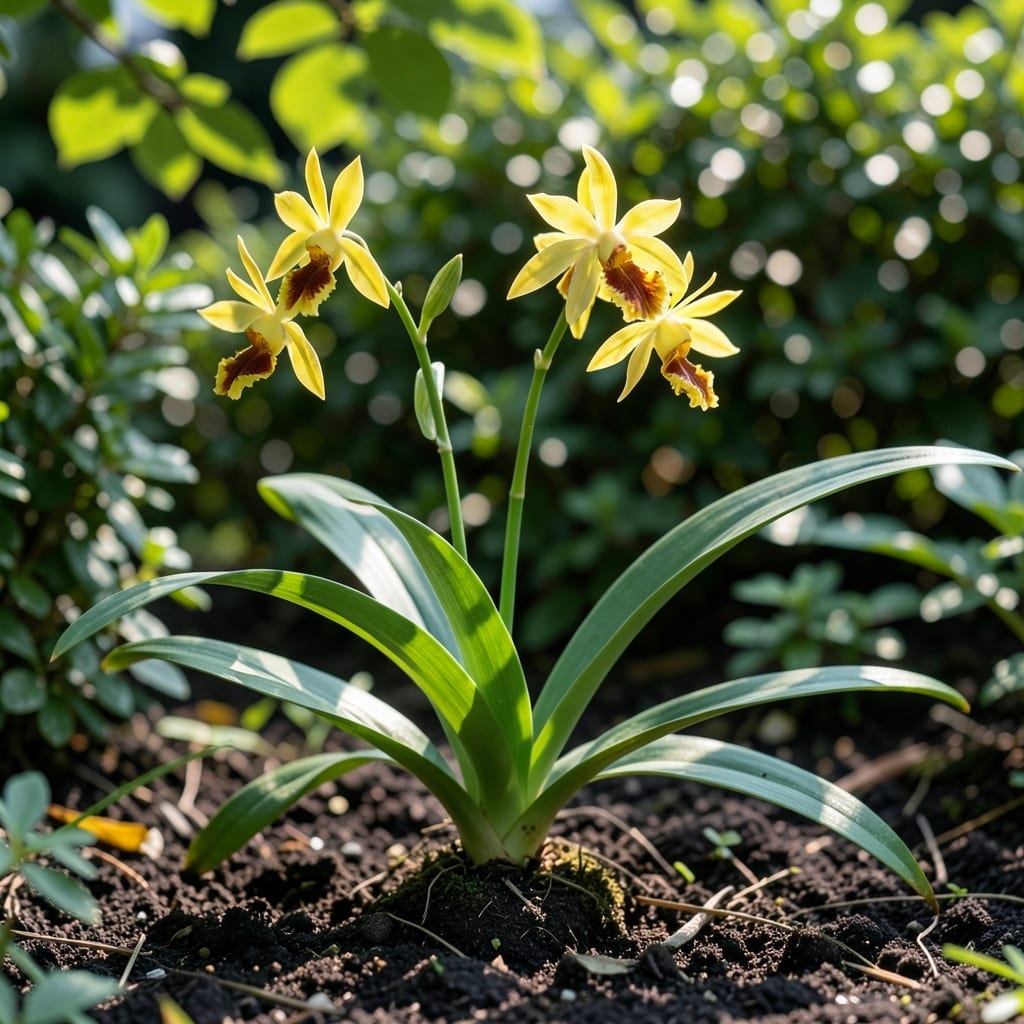
This orchid changed how I think about tropical plants. Spathoglottis ‘Mellow Yellow’ brings bright color to shady spots where most flowers refuse to bloom.
With the right balance of moisture and filtered light, it rewards you with golden blooms for months. The secret is consistent care—no dramatic swings in water or temperature. Even my forgetful watering schedule couldn’t kill it.
📚 In This Guide
Here’s the method I rely on to keep these tropical beauties thriving and blooming year after year.
Place your Spathoglottis in bright, indirect light—an east-facing window is ideal. Direct afternoon sun will scorch the leaves, while too little light prevents blooming. You’ll know the light is perfect when leaves are a rich green, not yellow or dark green.
These orchids tolerate lower light better than most, but you’ll see fewer flowers. If moving plants indoors for winter, supplement with a full-spectrum grow light for 12-14 hours daily to maintain growth.
Water when the top inch of growing medium feels dry to the touch, typically every 5-7 days in warm weather. Use room-temperature water and soak the pot thoroughly, allowing excess to drain completely. Never let the plant sit in standing water.
I check moisture by sticking my finger into the mix—if it feels cool and damp, wait another day. Yellowing leaves often signal overwatering, while wrinkled pseudobulbs indicate underwatering. A well-draining mix prevents most problems.
Fertilize every 2-3 weeks during active growth (spring through fall) with a balanced orchid fertilizer diluted to half strength. Switch to a high-phosphorus formula in late summer to encourage blooming. Always water before fertilizing to prevent root burn.
You’ll see new growth from the base of the plant—this is your cue the fertilizing routine is working. If leaves darken without new growth, reduce fertilizer frequency. I flush the potting mix with plain water monthly to prevent salt buildup.
Maintain 50-70% humidity around your plants. A humidity tray with pebbles works well, or group plants together to create a microclimate. In dry climates, a room humidifier helps significantly.
Good airflow prevents fungal issues. I place a small fan nearby on low speed, ensuring it doesn’t blow directly on the plants. Brown spots on leaves often indicate fungal problems from stagnant air. Open windows occasionally for fresh air exchange.
Repot every 2-3 years or when new growth pushes over the pot edge. Choose a container just 1-2 inches larger in diameter. Use a chunky orchid mix with bark, perlite, and charcoal for drainage.
Spring is the best time for repotting. Gently remove the plant, trim dead roots with sterilized scissors, and position it in the new pot at the same depth. Don’t water for 3-5 days after repotting to allow roots to heal.
Small adjustments make a big difference in keeping these orchids thriving and blooming beautifully.
The Light Factor: In Step 1, bright indirect light is non-negotiable. An east-facing window gives the perfect exposure, but if you’re using a grow light as mentioned, stick to the 12-14 hours daily schedule to mimic natural conditions. Direct sun scorches leaves, while too little light means no flowers.
Watering Wisdom: The finger test in Step 2 works perfectly—stick your finger an inch into the mix. If it feels dry, it’s time to water. In warm weather, this usually means every 5-7 days, but always check the soil first. Overwatering causes yellow leaves, while underwatering shows as wrinkled pseudobulbs.
Fertilizing Technique: For Step 3, always water before fertilizing to prevent root burn. This is especially important with the half-strength orchid fertilizer. The monthly flush with plain water prevents salt buildup, which can damage roots over time.
Repotting Tip: When following Step 5, resist the urge to water immediately after repotting. Those 3-5 days of dry time let roots heal properly. Also, don’t go overboard with pot size—a container just 1-2 inches larger prevents overpotting issues.
Water when the top inch of soil feels dry, typically every 5-7 days in warm climates. Avoid soggy soil to prevent root rot.
This orchid blooms in cycles, often in spring and summer, with vibrant yellow flowers. Proper light and fertilizer encourage frequent blooming.
Watch for aphids, mealybugs, and scale. Treat with neem oil or insecticidal soap if pests appear. Regular inspection keeps plants healthy.
Yes! Place it near a bright, indirect light source, like an east-facing window. Ensure good airflow and humidity for best results.
Overwatering or poor drainage often causes yellowing. Check roots for rot and adjust watering habits. Nutrient deficiencies may also be a factor.