
Beautiful Plants For Your Interior
Beautiful Plants For Your Interior
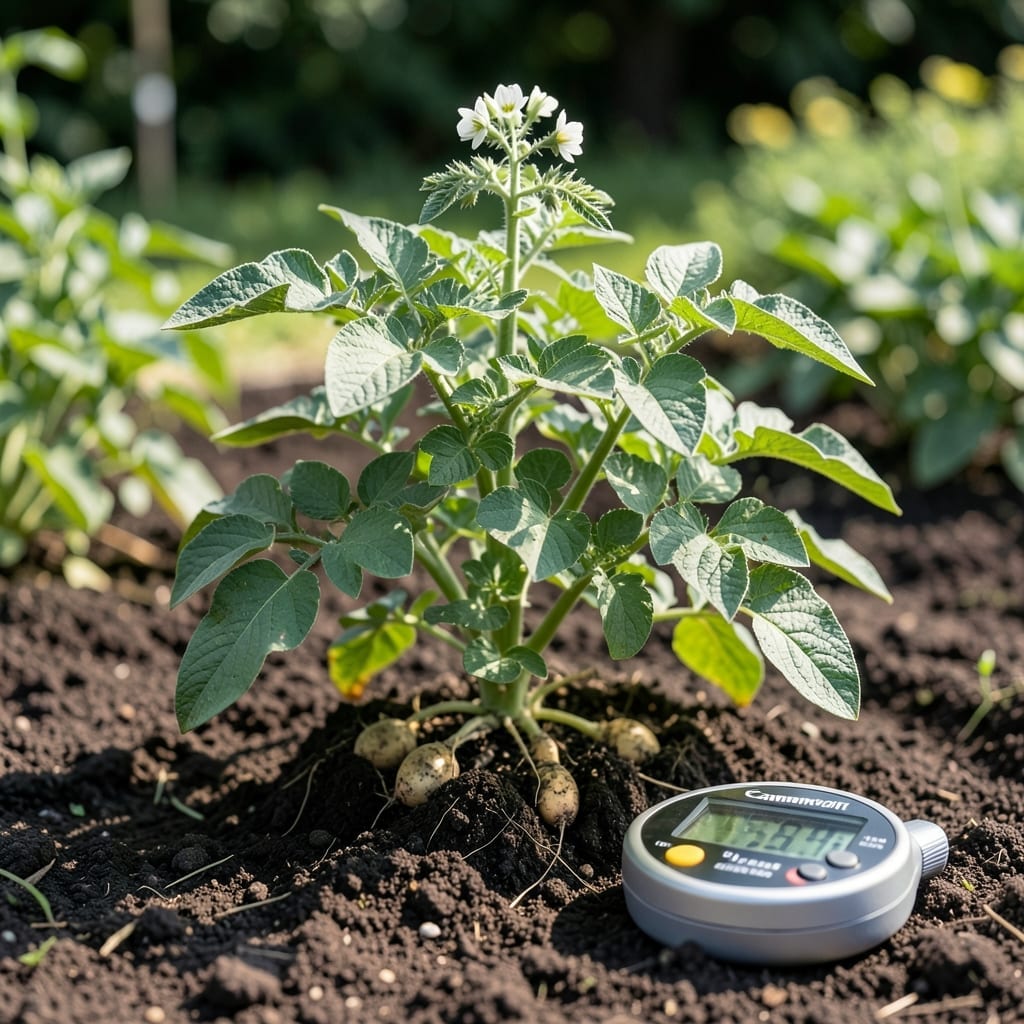
The secret to growing healthy, high-yielding 🥔 potatoes lies beneath the surface—literally. Getting the soil conditions right can mean the difference between a mediocre harvest and a bumper crop.
I’ve seen firsthand how the right balance transforms struggling plants into thriving ones. It’s not just about watering and sunlight—what’s happening underground is the key.
You might be surprised to learn how much this one factor impacts your potato’s growth, flavor, and even its resistance to disease. The good news? It’s easier to adjust than you think.
Let me walk you through what you need to know to set your Potato plants up for success from the very start.
If you want thriving potato plants and a bumper harvest, nailing the soil pH is non-negotiable. Potatoes prefer slightly acidic soil, which helps them absorb essential nutrients like phosphorus and potassium more efficiently. 🌱
The optimal pH range for potatoes is between 5.0 and 6.0. Within this range, your plants will develop strong tuber formation and resist common diseases like scab and blight. This acidity level also deters pests that thrive in neutral or alkaline soils. 🌿
| Requirement | Specification |
|---|---|
| Ideal pH Range | 5.0 – 6.0 |
| Best For | Tuber growth, disease resistance |
| Nutrient Uptake | Phosphorus, potassium, micronutrients |
| Soil Type | Sandy loam, well-draining |
Soil pH affects nutrient availability in the root zone. At a pH below 5.0, essential nutrients like calcium and magnesium become less available, while a pH above 6.5 can lock out iron and manganese. This imbalance leads to stunted growth and poor yields. ✂️
I’ve noticed that potatoes grown in soil outside this range often develop small tubers or suffer from yellowing leaves. In my garden, adjusting the pH to 5.5 resulted in larger, healthier spuds with fewer pest issues. It’s a game-changer for serious growers.
Another key benefit of the right pH is disease prevention. Potatoes are prone to common scab, a bacterial disease that thrives in alkaline soils. Keeping your pH in the acidic range significantly reduces this risk, ensuring smoother, more marketable tubers.
Testing your soil pH is the first step toward optimization. You can use a home test kit or send a sample to a local extension service for a detailed analysis. I recommend testing every 2-3 years, as pH can shift over time due to rainfall and fertilizer use. 💧
If your soil is too alkaline, you can lower the pH by adding elemental sulfur or peat moss. For overly acidic soil, lime is a great amendment. Remember, small adjustments work best—drastic changes can shock your plants and disrupt soil life.
It’s also worth noting that potato varieties can have slightly different pH preferences. For example, Yukon Golds and Red Pontiacs thrive in the 5.0-6.0 range, while some heirloom types may tolerate a slightly wider span. Always check the specific needs of your chosen variety. 🌻
Finally, don’t overlook the role of organic matter in maintaining stable pH. Adding compost or well-rotted manure not only improves soil structure but also helps buffer pH fluctuations. I mix in a 2-inch layer of compost every spring before planting. It’s a simple habit with big rewards.
Testing your soil pH is the first step toward growing healthy potatoes. I recommend using a DIY soil test kit for quick results, or sending a sample to a lab for more precise analysis.
You can find these kits at any garden center for under $20. For best results, test soil from multiple spots in your potato patch.
To lower pH, work in elemental sulfur at a rate of 1 lb per 100 sq ft to reduce pH by 1 unit. For sandy soils, use less sulfur as it reacts faster.
To raise pH, apply dolomitic lime at 5 lbs per 100 sq ft. Always wear gloves when handling these amendments and water thoroughly after application.
Remember that organic matter like compost can help buffer pH changes. I like to add a 2-inch layer of compost before planting potatoes each season.
It’s best to make pH adjustments several weeks before planting. This gives the soil time to stabilize. For existing plants, be cautious with amendments as sudden changes can stress them 🌱