
Beautiful Plants For Your Interior
Beautiful Plants For Your Interior
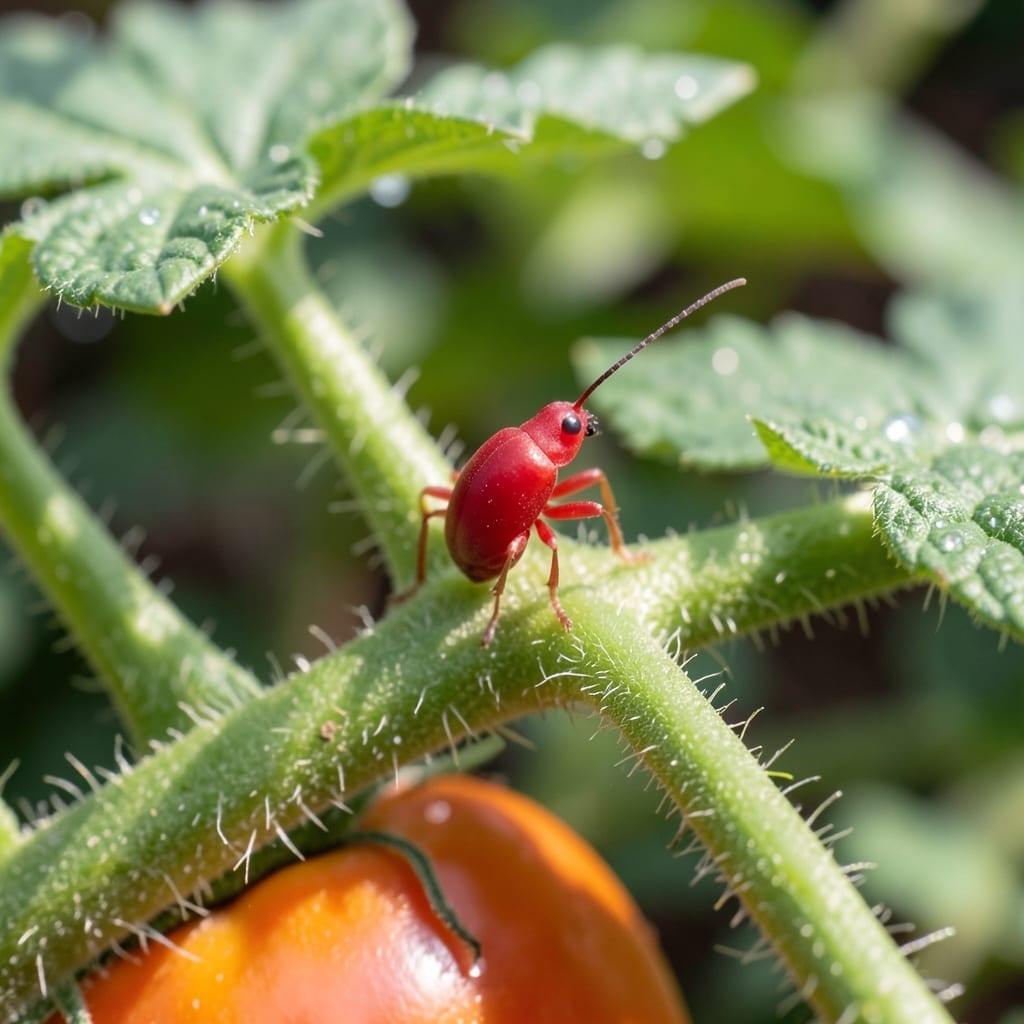
Tiny red invaders on your tomato leaves aren’t just annoying—they’re stealing your harvest. I’ve lost entire crops to these pests before learning their weak spots.
These bugs multiply fast, curling leaves and spreading disease if ignored. The good news? They’re easy to spot early—clustered on new growth and leaf undersides.
You’ll stop the damage within 48 hours using simple sprays or natural predators. No fancy equipment, just consistent action and a sharp eye.
Works for greenhouse plants, patio containers, or backyard rows. Here’s how to reclaim your tomatoes before it’s too late.
Small red bugs on tomato plants often signal an infestation of aphids or spider mites, but the root causes go deeper. Here’s why these pests appear and thrive:
Dense plantings or stagnant air create a humid, sheltered environment that aphids and mites love. Tomatoes spaced too closely restrict airflow, trapping moisture and warmth—ideal conditions for rapid pest reproduction. Action: Thin seedlings early and space plants 18–24 inches apart to improve ventilation.
Over-fertilizing with nitrogen-rich products (e.g., fresh manure or synthetic blends) promotes lush, soft foliage—a buffet for sucking insects like aphids. These pests target tender new growth, which is less resistant to attack. Action: Use balanced organic fertilizers (e.g., 5-5-5) and avoid overfeeding during vegetative stages.
Beneficial insects like ladybugs, lacewings, and parasitic wasps keep aphid populations in check. If your garden lacks biodiversity or uses broad-spectrum pesticides, these predators disappear, allowing pests to multiply unchecked. Action: Plant companion flowers (e.g., marigolds, alyssum) to attract predator species.
Spider mites thrive in hot, dry conditions, especially when tomato plants are water-stressed. Dusty leaves and low humidity accelerate their life cycle, leading to webbing and stippled foliage. Action: Water consistently at the base (avoid overhead spraying) and use mulch to retain soil moisture.
Aphids and mites hitchhike on nursery-bought seedlings, garden tools, or even your clothing. Introducing infected plants or reusing contaminated equipment spreads pests to healthy tomatoes. Action: Inspect transplants carefully and sterilize tools with rubbing alcohol between uses.
Dealing with small red bugs on your tomato plants? Act fast with these targeted fixes for each common cause, plus tips to keep them from coming back.
Use a strong jet of water from your hose to knock aphids off the leaves. Do this early in the day so foliage dries quickly. Repeat every 2–3 days until they’re gone. For stubborn clusters, mix 1 tsp of mild dish soap with 1 quart of water and spray directly on the bugs. Pro tip: 💡 Test the soap spray on a small leaf area first to avoid damage.
A dense canopy traps moisture and hides pests. Remove suckers (the small shoots between the main stem and branches) and trim excess leaves to improve airflow. Space plants at least 18–24 inches apart to reduce hiding spots for bugs. Prevention: ✨ Start with proper spacing when planting to avoid future issues.
Encourage ladybugs, lacewings, and parasitic wasps—aphids’ natural enemies—by planting dill, fennel, or marigolds nearby. Avoid broad-spectrum pesticides, which kill helpful insects too. Prevention: 🎯 Create a diverse garden to attract a balanced ecosystem year-round.
If synthetic pesticides aren’t working (or are making things worse), switch to neem oil or insecticidal soap. Apply in the early morning or late evening to avoid harming bees. Always follow label instructions for mixing and frequency. Pro tip: 🌡️ Neem oil works best when temps are below 90°F to prevent leaf burn.
Prevention
Yes, they can cause serious damage if left unchecked. They suck sap from leaves, causing curling, yellowing, and stunted growth. Severe infestations can even kill young plants.
Encourage natural predators like ladybugs by planting companion flowers. Keep your garden clean and avoid over-fertilizing with nitrogen. Regularly inspect plants for early signs.
A mild dish soap and water spray works well. Mix 1 tsp soap per quart of water and apply directly to the bugs. Always test on a small area first.
Early morning or late evening is ideal. This avoids harming beneficial insects like bees and allows sprays to work without quick evaporation.