
Beautiful Plants For Your Interior
Beautiful Plants For Your Interior
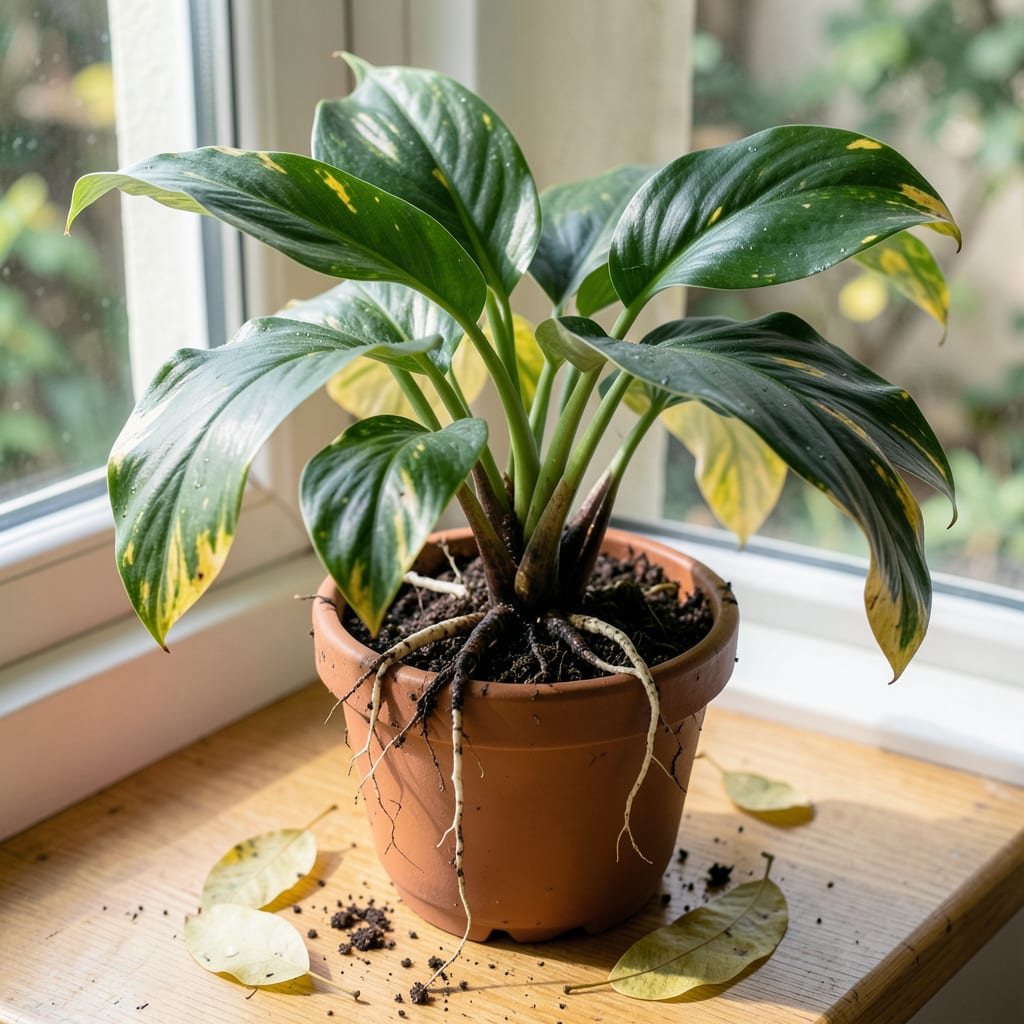
Your peace lily’s yellow leaves and drooping stems might be screaming for help. I’ve seen root rot turn thriving plants into sad, wilting messes in just a few weeks.
This silent killer starts underground, where mushy brown roots replace the firm white ones. The plant can’t drink water properly, so it shows stress through leaf discoloration and stem collapse—even when the soil looks damp.
Here’s the thing—overwatering is usually the culprit, but poor drainage or compacted soil can do the same damage. Catch it early and you can save your plant with a few simple steps.
Prevention is easier than treatment, and I’ll show you exactly how to keep your peace lily healthy and vibrant for years.
Root rot in peace lilies is a common but preventable issue, often tied to environmental and care mistakes. Here’s a breakdown of the primary causes:
Peace lilies thrive in moist soil, but soggy conditions suffocate roots. Excess water fills soil pores, displacing oxygen and creating an anaerobic environment where Pythium, Phytophthora, and other waterborne fungi thrive. These pathogens attack weakened roots, turning them mushy and brown.
Pots without drainage holes or compacted soil trap water at the roots. Even with moderate watering, stagnant moisture accelerates fungal growth. Use well-draining potting mixes with perlite or orchid bark to improve aeration.
Reusing old potting soil or unsterilized garden soil introduces fungal spores. These pathogens lie dormant until excess moisture activates them. Always use fresh, sterile potting mix for peace lilies to minimize risk.
Large containers hold more soil, which retains moisture longer. Roots in oversized pots struggle to absorb water efficiently, increasing the likelihood of rot. Choose pots only 1–2 inches wider than the root ball.
Addressing these factors early can save your plant from irreversible damage. Prevention starts with balanced watering and proper pot selection!
Don’t panic if your peace lily is showing signs of root rot! With the right steps, you can nurse it back to health. Below are targeted solutions for each cause, plus prevention tips to keep your plant thriving.
Stop watering immediately and let the soil dry out. Remove the plant from its pot, trim any black, mushy roots with sterilized scissors, and repot in fresh, well-draining soil. Use a pot with drainage holes, and water only when the top inch of soil feels dry.
Prevention: Stick your finger in the soil before watering—if it’s damp, wait! 💡
If the pot lacks drainage, switch to one with holes. Add a layer of pebbles or perlite at the bottom to improve airflow. For decorative cache pots, empty excess water after each watering.
Prevention: Always pair non-draining pots with a saucer to catch runoff. ✨
For mild cases, drench the roots in a 1:10 hydrogen peroxide-to-water solution to kill pathogens. Severe infections may require a fungicide (like copper-based sprays). Isolate the plant to prevent spreading.
Prevention: Sterilize tools and pots between uses, and avoid overcrowding plants. 🎯
Gently loosen the soil around the roots with a fork, then repot in a light, airy mix (e.g., peat + perlite). Avoid heavy garden soil, which retains too much moisture.
Prevention: Refresh the soil every 1–2 years to prevent compaction. 🌡️
With these fixes, your peace lily should bounce back in no time! Stay consistent with care, and it’ll reward you with lush, vibrant foliage.
Check for yellowing leaves, wilting stems, and a foul odor from the soil. Gently remove the plant and inspect the roots—healthy ones are firm and white, while rotting roots are mushy and brown or black.
Yes, if caught early! Trim affected roots, repot in fresh soil, and adjust watering habits. With proper care, new healthy roots will grow within 4-6 weeks.
Water when the top 1-2 inches of soil feel dry. Typically, this means watering every 7-10 days, but always check the soil first. Overwatering is the leading cause of root rot.
Use a well-draining mix with perlite or orchid bark. Avoid heavy garden soil that retains too much moisture. A good mix ensures roots get both water and oxygen.
