
Beautiful Plants For Your Interior
Beautiful Plants For Your Interior
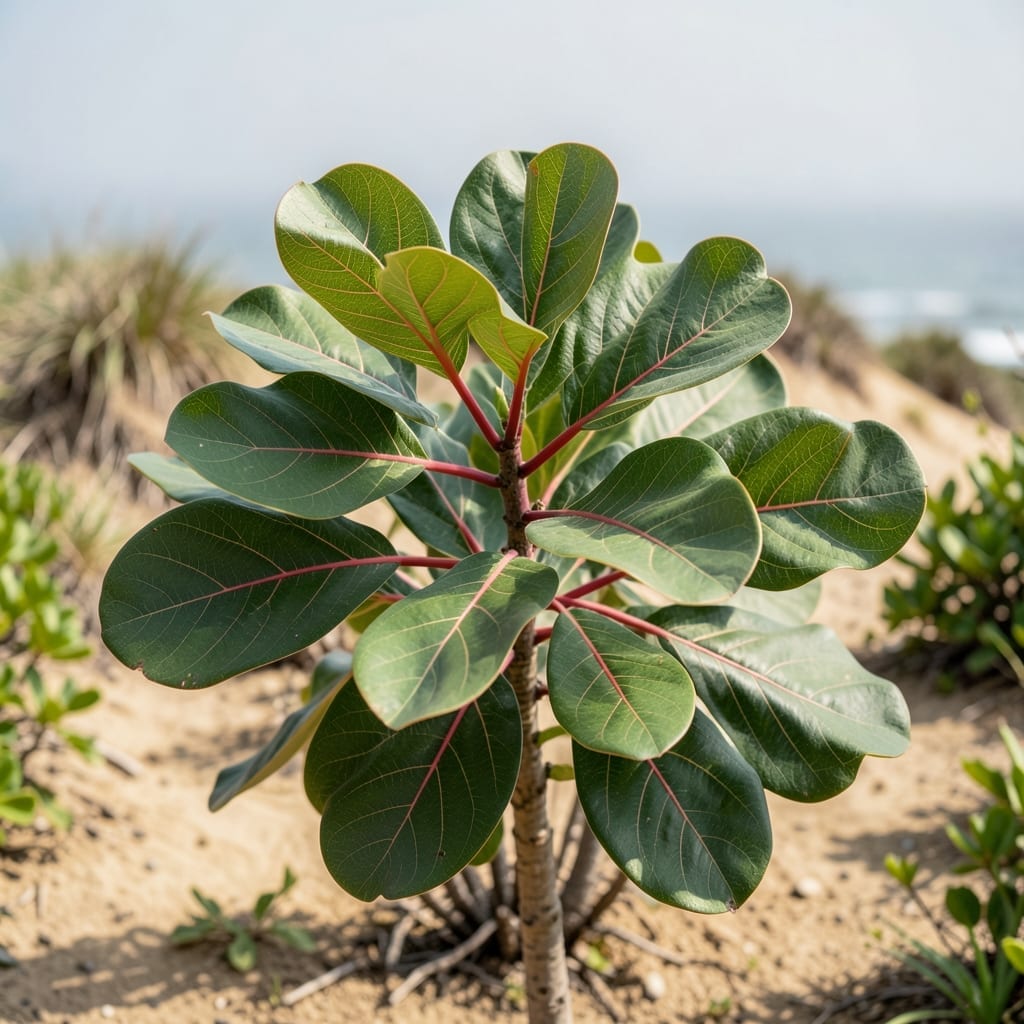
There’s something special about sea grape plants thriving where other plants give up. I’ve watched these tough beauties handle salt spray and sandy soil like it’s nothing.
They’ll give you glossy leaves, privacy screening, and that unmistakable tropical vibe with almost no fuss. Perfect for coastal gardens that need a low-maintenance star that actually loves the conditions.
📚 In This Guide
Here’s my proven method for establishing and maintaining sea grape plants with vibrant foliage.
Choose a location with full sun to partial shade exposure, as sea grape thrives in bright coastal conditions but tolerates some shade. The soil should be well-draining and preferably sandy, mimicking its native beachfront habitat. Avoid low-lying areas where water pools after rain.
Test drainage by digging a 1-foot deep hole, filling it with water, and checking if it drains completely within 2-3 hours. If not, amend the soil with coarse sand or create a raised mound. This plant despises soggy roots more than almost any other condition.
Dig a hole twice as wide as the root ball but no deeper than the container. Position the plant so the top of the root ball sits 1-2 inches above the surrounding soil level to account for natural settling. This slight elevation helps prevent waterlogging during heavy coastal rains.
Backfill with native soil, tampering gently to remove air pockets. Water thoroughly with 2-3 gallons per plant, allowing the water to settle the soil naturally. The initial deep watering encourages roots to grow outward rather than downward.
During the first 4-6 weeks after planting, water deeply 2-3 times per week, ensuring the soil stays consistently moist but never waterlogged. Check soil moisture by inserting your finger 2 inches deep—if it feels dry at that depth, it’s time to water.
Once established, sea grape is extremely drought-tolerant. Reduce watering to once every 10-14 days during dry spells. The leaves will tell you when they need water—they’ll develop a slight wilt in the late afternoon when thirsty, then recover by morning.
Prune in early spring before new growth begins, removing any dead, diseased, or crossing branches. Sea grape responds well to shaping, so don’t hesitate to trim for your desired form. Make cuts at a 45-degree angle just above a leaf node to encourage healthy new growth.
After pruning, step back frequently to assess the plant’s shape. This plant grows quickly in ideal conditions, and what looks like a light trim can become significant after a few weeks of coastal growth. The glossy leaves will darken slightly after pruning as the plant redirects energy.
Watch for scale insects and mealybugs, which are the most common pests. Check the undersides of leaves weekly during the growing season. A strong blast of water often dislodges these pests before they become established.
Sea grape rarely needs fertilization in its native coastal soil. If leaves appear pale or growth is stunted, apply a balanced, slow-release fertilizer in early spring and again in midsummer. Scatter the granules 1 foot away from the trunk and water in thoroughly to prevent root burn.
These insights will help you avoid common pitfalls when cultivating sea grape plants.
Drainage is Non-Negotiable: In Step 1, that 2-3 hours drainage test isn’t just a suggestion—it’s the difference between thriving plants and root rot. I learned this the hard way after losing three plants in a low-lying area that seemed fine at first glance. Always amend with coarse sand if water lingers beyond that timeframe.
Planting Elevation Secret: The 1-2 inches above soil level in Step 2 isn’t arbitrary. This elevation accounts for natural settling while preventing waterlogging during coastal storms. I’ve seen plants suffer when this step was skipped, even in seemingly well-draining soil.
Watering Wisdom: During those critical 4-6 weeks in Step 3, that 2-3 times per week schedule must be balanced with the 2 inches deep moisture check. Overwatering is just as dangerous as underwatering—let your finger be the guide, not the calendar.
Pruning Precision: For Step 4, remember that 45-degree angle cut isn’t just about aesthetics—it prevents water accumulation on the cut surface and encourages proper healing. The glossy leaves darkening afterward is normal, not a sign of distress.
While sea grape leaves are edible, they’re often tough and bitter raw. Lightly cooking or blanching them improves texture and flavor, similar to spinach. Always wash thoroughly to remove salt or sand.
Sea grape plants are drought-tolerant once established. Water deeply 1-2 times per week for young plants, then reduce to weekly or biweekly. Overwatering can lead to root rot, so ensure well-draining soil.
Watch for aphids, scale insects, or fungal issues like leaf spot. Treat pests with neem oil and improve airflow to prevent fungi. Prune damaged leaves promptly to maintain plant health.
Yes! Sea grape leaves work well for dolmas or wraps, offering a slightly brinier taste. Blanch them first to soften. They’re a great alternative if traditional grape leaves aren’t available.
Yellowing leaves often signal overwatering, nutrient deficiencies, or poor drainage. Check soil moisture and adjust watering. A balanced fertilizer can help restore vibrant green foliage.