
Beautiful Plants For Your Interior
Beautiful Plants For Your Interior
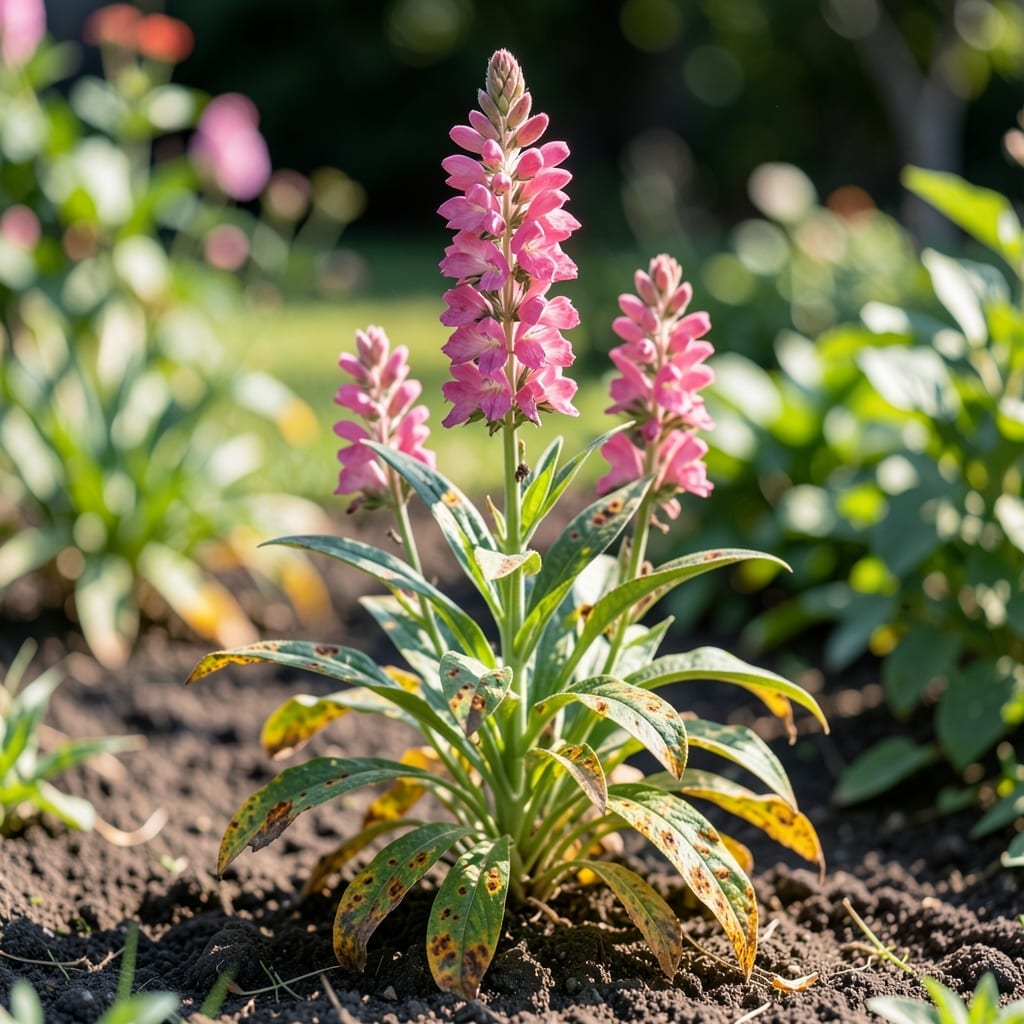
Orange speckles on snapdragon leaves mean trouble. I lost half my stand to rust two seasons ago before learning the early warning signs.
This fungal invader thrives in damp conditions, spreading fast when plants stay wet. The key is catching it before those rust-colored spots multiply and turn yellow.
Good airflow, proper spacing, and morning watering make all the difference. I switched to copper fungicide as a preventative and haven’t seen it since.
Even one infected plant can take down your whole bed. Here’s how to stop it cold.
Rust on snapdragons is a common fungal disease caused by Puccinia antirrhini, but several environmental and cultural factors contribute to its development. Understanding these causes helps gardeners prevent outbreaks and protect their plants.
Rust thrives in damp conditions. Overhead watering, poor drainage, or high humidity create the perfect environment for fungal spores to germinate and spread. Waterlogged soil or prolonged leaf wetness (especially overnight) accelerates infection. Action: Water at the base of plants early in the day to allow foliage to dry quickly.
The fungus proliferates in moderate temperatures (60–75°F) with high humidity. Cool nights and warm days, common in spring and fall, encourage spore production. Action: Monitor weather forecasts and avoid planting snapdragons in shaded, poorly ventilated areas where moisture lingers.
Dense plantings or crowded garden beds restrict airflow, trapping moisture around leaves. This stagnation allows rust spores to settle and infect. Action: Space snapdragons 12–18 inches apart and prune nearby foliage to improve ventilation.
Rust spores can overwinter in soil or on gardening tools, reinfecting plants the following season. Infected plant debris left in the garden also harbors the fungus. Action: Sterilize tools with rubbing alcohol and remove fallen leaves or debris promptly.
Tackling rust on snapdragons starts with identifying the cause and applying targeted fixes. Below are practical solutions for common issues, paired with prevention tips to keep your plants thriving.
If excess moisture is the culprit, adjust your watering habits. Water early in the morning so foliage dries quickly, and ensure pots have drainage holes. For garden beds, amend soil with compost to improve drainage. Prevention tip: Space plants 12–18 inches apart to boost airflow. 💡
Prune infected leaves and stems immediately—dispose of them in the trash (not compost) to prevent spread. Apply a copper-based fungicide or neem oil spray every 7–10 days until the issue clears. Prevention tip: Sterilize pruning tools with rubbing alcohol between cuts to avoid cross-contamination. ✨
Boost snapdragons’ natural defenses with balanced fertilizer (10-10-10) and avoid high-nitrogen feeds, which promote tender growth. Mulch with straw to reduce soil-borne spores splashing onto leaves. Prevention tip: Rotate crops yearly to disrupt fungal life cycles. 🎯
In high-humidity areas, water at the base of plants to keep leaves dry. Use drip irrigation or soaker hoses for precision. If rust persists, consider growing snapdragons in containers where you can control moisture levels. Prevention tip: Thin out dense foliage to improve air circulation. 🌡️
Consistency is key—monitor plants weekly and act at the first sign of rust for the best results!
Look for small, orange-yellow spots on the upper leaf surfaces. These will darken and enlarge over 7-10 days. Check undersides for matching pustules.
No, never compost rust-infected plant material. The spores can survive and spread to new plants. Always dispose of in sealed bags with household trash.
If over 50% of foliage is affected, remove the plant entirely. Early cases can be treated by pruning infected parts and applying fungicide.
Water at the base of plants before 10 AM. This allows leaves to dry quickly in the sun, reducing spore germination chances.