
Beautiful Plants For Your Interior
Beautiful Plants For Your Interior
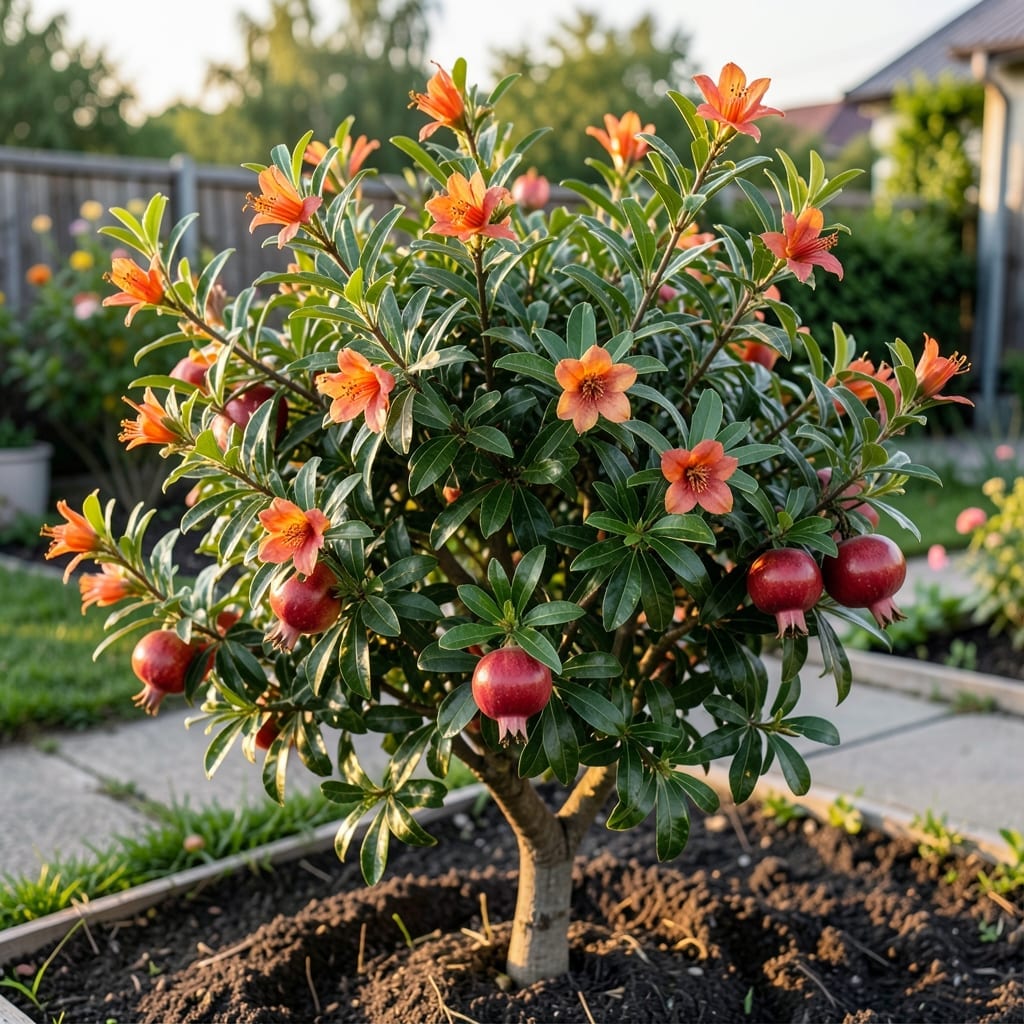
The Russian Pomegranate Tree 🍊 is a cold-hardy variety that thrives where other pomegranates fail, but its mature size often surprises gardeners. Understanding its height and spread is key to proper spacing and landscape planning.
This resilient tree can reach 8-12 feet tall with a similar spread, making it perfect for smaller gardens. Its compact size doesn’t sacrifice beauty or fruit production, offering both ornamental value and delicious harvests.
I’ve seen many gardeners misjudge the space these trees need, leading to crowded landscapes. Proper planning ensures your Russian Pomegranate Tree has room to flourish.
Let me walk you through what to expect as your tree grows and how to manage its dimensions for the best results in your garden.


When I first planted my Russian pomegranate tree, I didn’t realize how quickly it would grow. This cold-hardy variety typically reaches a mature height of 8-12 feet, with a spread of 8-10 feet at full maturity. It’s perfect for smaller gardens where space is limited.
In the first year, expect your tree to grow 2-3 feet tall, and by year three, it can reach 6-8 feet. The growth rate depends on factors like soil quality, sunlight exposure, and watering consistency. I’ve found that well-draining soil and full sun encourage the best growth.
| Growth Stage | Height | Spread |
|---|---|---|
| Year 1 | 2-3 ft | 1-2 ft |
| Year 3 | 6-8 ft | 5-6 ft |
| Mature | 8-12 ft | 8-10 ft |
Climate plays a big role in your tree’s size. In colder zones (7-8), the Russian pomegranate may stay on the smaller end of the range. However, in warmer zones (9-11), it can reach the upper limits of its height and spread. I’ve seen trees in USDA Zone 9 grow taller than those in Zone 7.
Pruning is another factor that affects size. Regular pruning helps control the height and shape of the tree. I prune mine in late winter to remove dead wood and encourage new growth. This keeps the tree manageable and promotes better fruit production.
Soil conditions also influence growth. The Russian pomegranate thrives in loamy, well-draining soil with a slightly acidic to neutral pH. If your soil is heavy clay, amending it with compost can improve drainage and encourage healthier growth.
Watering is key, especially during the first few years. I recommend deep watering once a week for young trees. Once established, the Russian pomegranate is fairly drought-tolerant, but consistent moisture leads to better growth and fruit set.
Don’t forget about sunlight! This tree needs full sun (at least 6-8 hours of direct sunlight daily) to reach its full potential. In shadier spots, the tree may grow taller as it stretches for light, but it will produce fewer fruits.
If you’re planting multiple trees, space them 10-12 feet apart to allow for their mature spread. This ensures good air circulation, which reduces the risk of pests and diseases. I planted mine with plenty of room, and it’s made a big difference in their health.
Finally, remember that the Russian pomegranate is a deciduous tree, so it will lose its leaves in the winter. But don’t worry—it will bounce back in the spring with vibrant new growth. With the right care, your tree will reach its mature size and reward you with beautiful red-orange fruits for years to come.
🌳I love how pruning shapes a Russian pomegranate tree. With the right cuts, you can control height and manage spread to fit any garden space. This cold-hardy tree responds well to pruning, making it versatile for landscapes.
Regular pruning keeps your tree at a desired size while promoting healthy growth and better fruit production. I recommend pruning in late winter before new growth starts.
I find that annual pruning keeps my Russian pomegranate at a manageable 8-10 feet tall. Without pruning, it can reach 12 feet or more, which may be too large for small yards.
For dwarf varieties, light pruning maintains a compact 6-8 foot size. Always sterilize your tools between cuts to prevent disease spread.
The best time to prune is when the tree is dormant in late winter. This minimizes stress and gives the tree time to heal before spring growth.
Remember, less is more with pruning. Never remove more than 25% of the canopy in one season to avoid shocking the tree.
With consistent care, your Russian pomegranate will maintain its ideal size while producing abundant fruit for years to come ✂️