
Beautiful Plants For Your Interior
Beautiful Plants For Your Interior
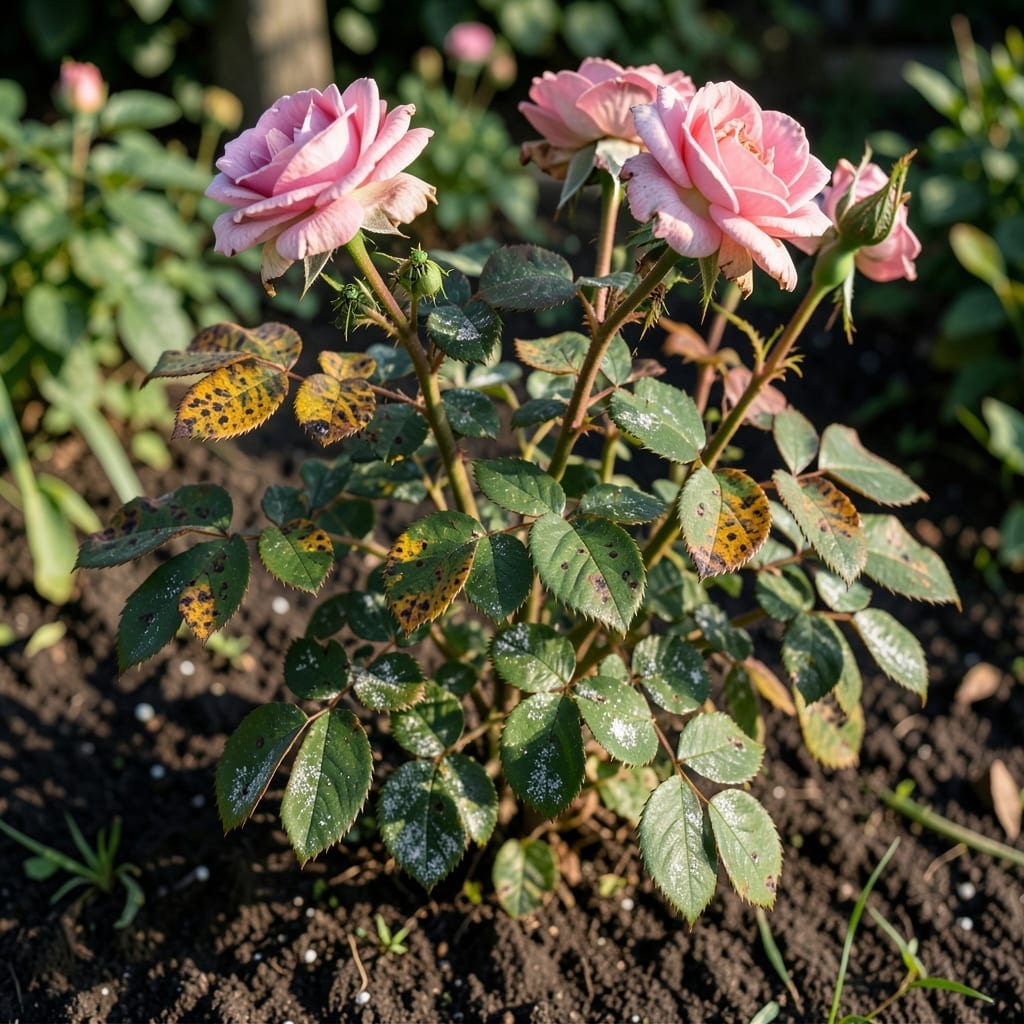
Spotted leaves on your roses aren’t just ugly—they’re a warning sign. 🌹 I learned the hard way that ignoring those first black spots means saying goodbye to your entire bush by midsummer. Early detection is everything.
Most rose diseases announce themselves with distinct patterns: yellow halos around spots, white powder on leaves, or stems that turn black overnight. I now check my plants daily during wet seasons, and it’s saved me from disaster more than once.
What you’ll find here are the visual clues that separate powdery mildew from black spot from rust. Each has its own look, its own season, and most importantly, its own solution. No guesswork, just clear identification.
Between you and me, the best treatment starts before symptoms appear. Proper spacing, morning watering, and cleaning up fallen leaves can prevent 90% of rose diseases before they start.
Understanding why rose diseases occur is the first step toward prevention. These issues typically stem from environmental, biological, or cultural factors that weaken the plant or create ideal conditions for pathogens. Below are the primary causes, explained scientifically yet actionably.
Roses are sensitive to excess moisture, which promotes fungal and bacterial growth. Powdery mildew and black spot, for example, thrive in humid conditions with poor air circulation. Conversely, drought stress weakens the plant’s defenses, making it more susceptible to infections. Temperature extremes—either too hot or too cold—can also compromise the plant’s immune system.
Fungal, bacterial, and viral pathogens are the direct culprits behind many rose diseases. Fungi like Diplocarpon rosae (the cause of black spot) spread through water splashes or contaminated tools. Bacteria, such as Xanthomonas or Pseudomonas, enter through wounds or natural openings, leading to spots, cankers, or wilting. Viruses, though less common, can stunt growth and distort leaves, often spread by aphids or infected grafting tools.
Improper care is a major contributor to rose diseases. Overcrowding restricts airflow, creating a breeding ground for fungi. Improper pruning (e.g., using dull or unsterilized tools) can introduce pathogens. Over-fertilization, especially with high-nitrogen formulas, leads to soft, succulent growth that’s more vulnerable to pests and diseases. Similarly, poor soil drainage causes root rot by suffocating the roots in waterlogged conditions.
Once you’ve identified the issue, these targeted fixes can nurse your roses back to health and keep problems from returning.
Black spots with feathery edges are classic black spot fungus. Left untreated, it spreads quickly and can defoliate your plant. Remove infected leaves immediately and treat with fungicide.
That’s powdery mildew, a fungus that thrives in humid conditions. Improve air circulation and apply a baking soda spray to stop it.
Excess moisture creates the perfect environment for fungal growth. Water at the base in the morning to keep foliage dry.
Space plants for airflow, water early, and remove fallen leaves. Mulching helps prevent soil-borne spores from splashing up.