
Beautiful Plants For Your Interior
Beautiful Plants For Your Interior
Yellowing leaves and mushy stems mean trouble for your snake plant. I’ve nursed dozens back from the brink, and the fix always starts with understanding what went wrong below the soil.
Overwatering suffocates roots while underwatering leaves them crispy—both look alarmingly similar at first. The key is checking the soil 2 inches down before reaching for the watering can. Most problems start with good intentions and too much love.
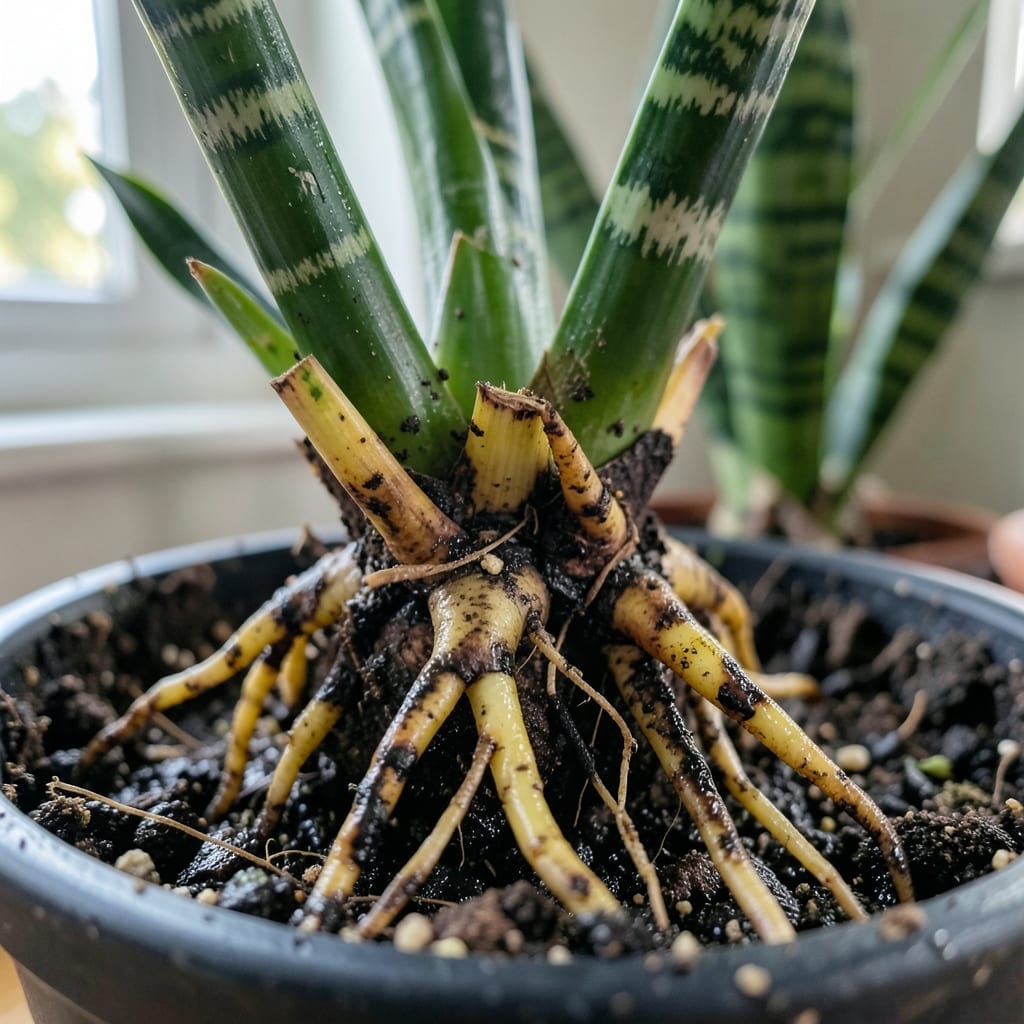
Healthy roots are firm and white, not brown and squishy. Once you spot the difference, you’ll catch issues early. Recovery takes patience, but I’ve saved plants that looked beyond hope with the right approach.
This works for any snake plant variety, from compact Sansevieria trifasciata to towering moonshine. Here’s how to get them thriving again.
Root rot in snake plants (Dracaena trifasciata) is primarily caused by improper watering practices and poor drainage. Here’s a breakdown of the key culprits:
Snake plants are drought-tolerant succulents. When overwatered, their roots sit in soggy soil, depriving them of oxygen and creating an ideal environment for Phytophthora and Pythium fungi. These pathogens thrive in waterlogged conditions, leading to root decay. Always use well-draining soil and pots with drainage holes to prevent water from pooling.
While rare, chronic underwatering can also stress the plant, weakening its roots and making them susceptible to secondary infections. Extremely dry soil causes roots to shrink and die back, which can mimic early-stage rot. However, this is less common than overwatering and usually accompanied by dry, crispy leaves.
Heavy, clay-like soils or those with excessive organic matter retain too much moisture, suffocating the roots. Snake plants need a fast-draining mix (e.g., cactus/succulent soil with perlite or sand) to allow excess water to escape quickly.
Reviving a struggling snake plant starts with identifying whether it’s underwatered or overwatered. Here’s how to tackle each issue and keep your plant thriving.
Prevention: Water only when the top 1-2 inches of soil are dry, and always use pots with drainage holes.
Prevention: Stick to a consistent watering schedule (every 2-8 weeks, depending on light and humidity) and avoid letting the soil stay bone-dry for too long. Pro tip ✨: Use a moisture meter to take the guesswork out of watering.
Water every 2-8 weeks, depending on light and humidity. Always check the soil 2 inches down—if dry, it’s time. These plants prefer neglect over attention!
Yellowing often signals overwatering. Check the roots—if mushy and brown, it’s root rot. Underwatering causes dry, crispy leaves instead. Act fast to save your plant.
Yes! Trim affected roots, repot in fresh, well-draining soil, and hold off on watering for 1-2 weeks. Many bounce back with proper care and patience.
Use a fast-draining mix like cactus/succulent soil with perlite or sand. Avoid heavy, water-retentive soils—they suffocate roots.