
Beautiful Plants For Your Interior
Beautiful Plants For Your Interior
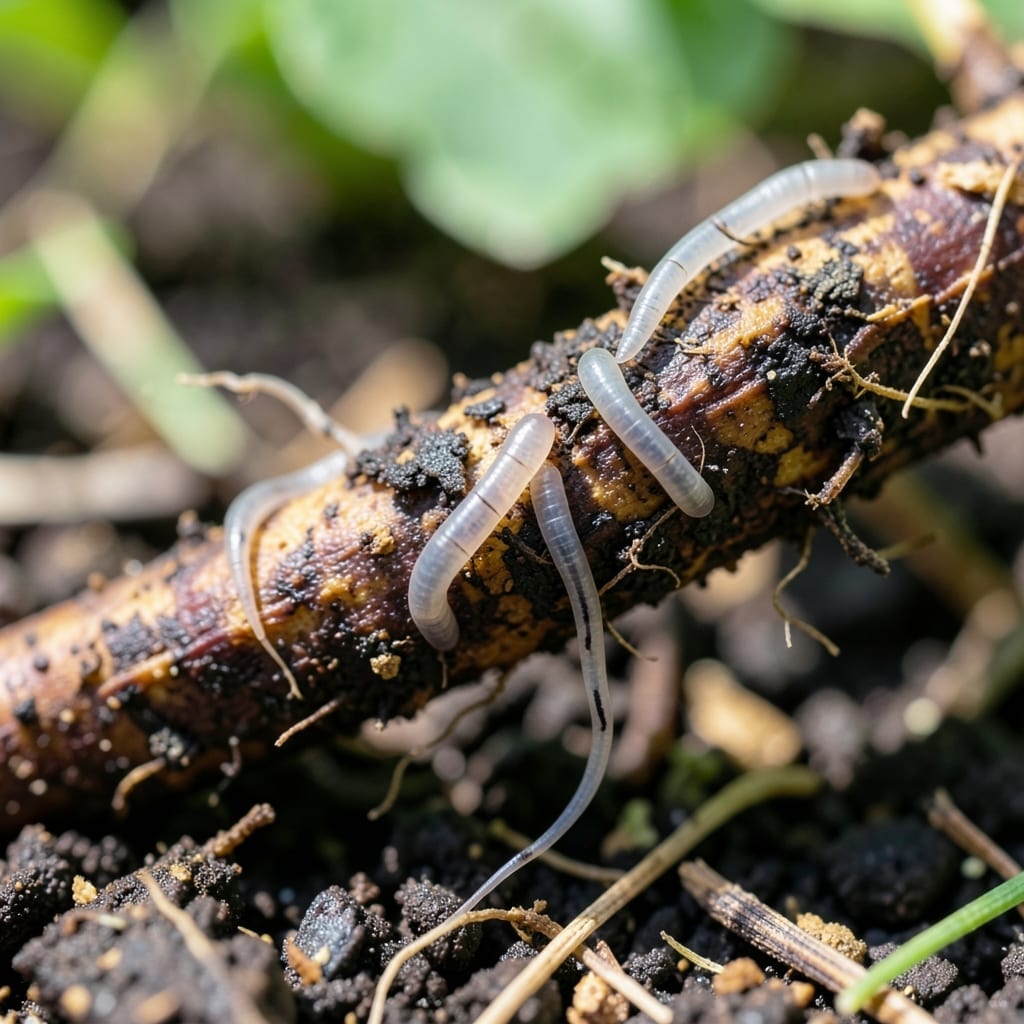
That sinking feeling when healthy plants suddenly wilt for no obvious reason. Root rot nematodes are silent saboteurs, attacking underground before you notice the damage above soil level.
I learned the hard way that yellowing leaves and stunted growth often point to these microscopic pests. The key is catching them early through simple soil testing—before they multiply and spread to your entire garden.
Organic solutions like beneficial nematodes and solarization work surprisingly well. For severe cases, targeted chemical treatments can save your plants. The difference between a thriving garden and a lost season often comes down to early detection.
Works for vegetable beds, ornamentals, and container plants. Here’s how to protect your soil and your investment.
Understanding why root rot nematodes thrive helps you stop them before they wreak havoc. Here are the primary culprits behind their destructive spread:
Excess moisture is a nematode’s best friend. Saturated soil reduces oxygen levels, stressing plant roots and creating the perfect anaerobic environment for nematodes to multiply. Poorly draining pots or heavy clay soils trap water, accelerating root decay and giving nematodes easy access to weakened tissue.
Plants already stressed by nutrient deficiencies, physical damage, or other diseases are more susceptible. Nematodes target injured or decaying roots, using them as entry points to spread. Over-fertilization can also burn roots, making them vulnerable to infestation.
Nematodes hitch rides on infected soil, garden tools, or even water sources. Reusing potting mix, sharing tools between plants, or using untreated compost can introduce these pests directly to healthy roots. Sterilization of tools and soil is critical to breaking their lifecycle.
Root rot nematodes thrive in temperatures between 70–85°F (21–29°C) with high humidity. These conditions speed up their reproduction and movement through the soil. Greenhouses or tightly packed plantings without airflow create ideal breeding grounds.
Tackling root rot nematodes starts with targeted solutions for each underlying cause. Below are practical fixes paired with prevention tips to keep your soil healthy long-term.
Amend heavy or compacted soil with organic matter like compost or peat moss to boost drainage. For container plants, ensure pots have drainage holes and use a well-draining potting mix. Prevention tip: Raise garden beds in low-lying areas to avoid waterlogging. 💡
Let the top 1-2 inches of soil dry out between waterings. Use a moisture meter or the finger test to check soil dampness. For lawns, water deeply but less frequently to encourage deep root growth. Prevention tip: Water early in the day to allow excess moisture to evaporate. 🌡️
Introduce beneficial nematodes (e.g., Steinernema or Heterorhabditis species) to target and reduce harmful nematode populations. Apply them to moist soil in the evening for best results. Prevention tip: Rotate crops annually to disrupt nematode life cycles. ✨
Strengthen plants with balanced fertilization (avoid excess nitrogen) and proper spacing to improve air circulation. Remove and destroy severely infected plants to prevent spread. Prevention tip: Solarize soil before planting by covering it with clear plastic for 4-6 weeks to kill nematodes. 🎯
Conduct a soil test to check pH and nutrient levels. Adjust with lime (to raise pH) or sulfur (to lower pH) as needed. Add organic amendments like bone meal or kelp to restore balance. Prevention tip: Test soil annually to catch issues early. 📊
Look for wilting, yellowing leaves, or stunted growth despite proper care. Roots may appear discolored or mushy. A soil test will confirm their presence.
No, beneficial nematodes specifically target harmful soil pests. They’re safe for plants, pets, and humans. Apply in the evening to moist soil for best results.
Cover soil with clear plastic for 4-6 weeks during hot weather. This heats the soil to 120°F (49°C) or higher, killing nematodes and other pests.
No, discard it to prevent spreading. Sterilize containers with a 10% bleach solution before reuse. Always use fresh, sterile potting mix.