
Beautiful Plants For Your Interior
Beautiful Plants For Your Interior
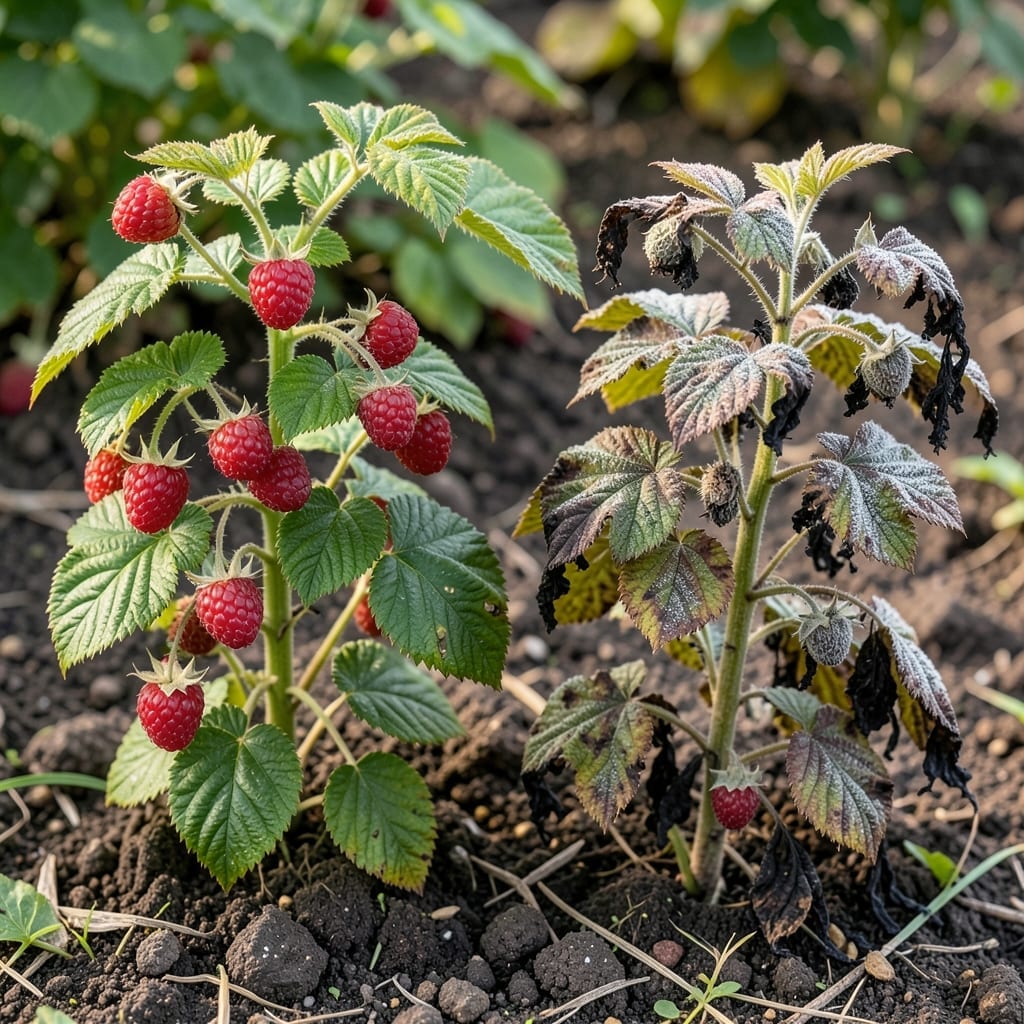
Spotted yellow leaves or purple blotches on your raspberry canes mean trouble. I’ve lost entire patches to diseases I didn’t catch early enough, but recognizing the visual warning signs changes everything.
This guide shows you exactly what to look for—from powdery mildew’s white coating to anthracnose’s purple lesions. Each disease has a distinct appearance, and early identification means the difference between saving your crop and starting over.
You’ll learn which symptoms require immediate action and which can be managed with simple adjustments. Most issues clear up with better airflow, proper pruning, or a targeted organic spray.
Works for all raspberry varieties, whether you’re growing in rows or containers. Here’s how to spot problems before they spread.
Understanding the root causes of raspberry diseases helps you prevent them before they spread. Here’s a breakdown of the most common triggers, along with the science behind them:
Many raspberry diseases, like anthracnose and powdery mildew, are caused by fungal pathogens that flourish in damp environments. Overhead irrigation, poor air circulation, or prolonged rain create the perfect breeding ground for spores to germinate and infect plants. Fungi such as Elsinoë veneta (anthracnose) release spores that adhere to wet leaves, entering through natural openings or wounds.
Viruses like raspberry mosaic or tomato ringspot often hitch a ride on pests such as aphids, leafhoppers, or nematodes. These insects pierce plant cells while feeding, injecting viruses directly into the raspberry’s vascular system. Once inside, the virus replicates, disrupting cellular functions and leading to stunted growth, yellowing, or mottled leaves.
Raspberries growing in nutrient-deficient or waterlogged soil are more susceptible to diseases like root rot (Phytophthora spp.). Compacted or poorly drained soil limits root oxygen uptake, stressing the plant and reducing its ability to fend off pathogens. Additionally, imbalanced pH levels (too acidic or alkaline) can lock out essential nutrients, further compromising immunity.
Planting raspberries too closely together restricts airflow, creating a humid microclimate that encourages fungal and bacterial growth. Diseases like botrytis fruit rot (Botrytis cinerea) spread rapidly in dense canopies, as spores easily travel from infected to healthy plants via wind or splashing water.
Pruning, harvesting, or even strong winds can create wounds on stems and leaves, providing entry points for bacteria and fungi. For example, fire blight (Erwinia amylovora) enters through cuts or frost damage, quickly colonizing the plant’s tissues and causing wilting and dieback.
Dealing with raspberry diseases doesn’t have to be overwhelming. Below are targeted solutions for common issues, paired with prevention tips to keep your plants thriving. 🌿
Fix: Remove and burn infected canes immediately to prevent spread. Apply a copper-based fungicide or neem oil (mix 2 tbsp per gallon of water) every 7–10 days until symptoms subside. For severe cases, use sulfur-based sprays in early spring.
Prevention:
Fix: Remove and destroy infected plants—viruses have no cure. Control aphids (common carriers) with insecticidal soap (1 tbsp per quart of water) or introduce ladybugs as natural predators.
Prevention:
Fix: Dig up affected plants and trim black, mushy roots. Repot in fresh, well-draining soil mixed with compost. Reduce watering until the plant recovers.
Prevention:
Pro Tip: Always start with certified disease-free stock from reputable nurseries to avoid introducing problems. ✨
Look for white powdery residue, purple spots, or grayish mold on leaves and canes. Powdery mildew appears as a white film, while anthracnose causes sunken purple lesions. Early spots may be small but spread quickly in wet conditions.
Yes, some fungal spores and viruses can infect nearby plants like blackberries or roses. Always remove and destroy infected canes immediately to prevent cross-contamination. Keep tools clean between uses.
Improve airflow by spacing plants 2-3 feet apart and pruning regularly. Water at the base in the morning, and use mulch to reduce soil splash. Plant resistant varieties like ‘Heritage’ for added protection.