
Beautiful Plants For Your Interior
Beautiful Plants For Your Interior
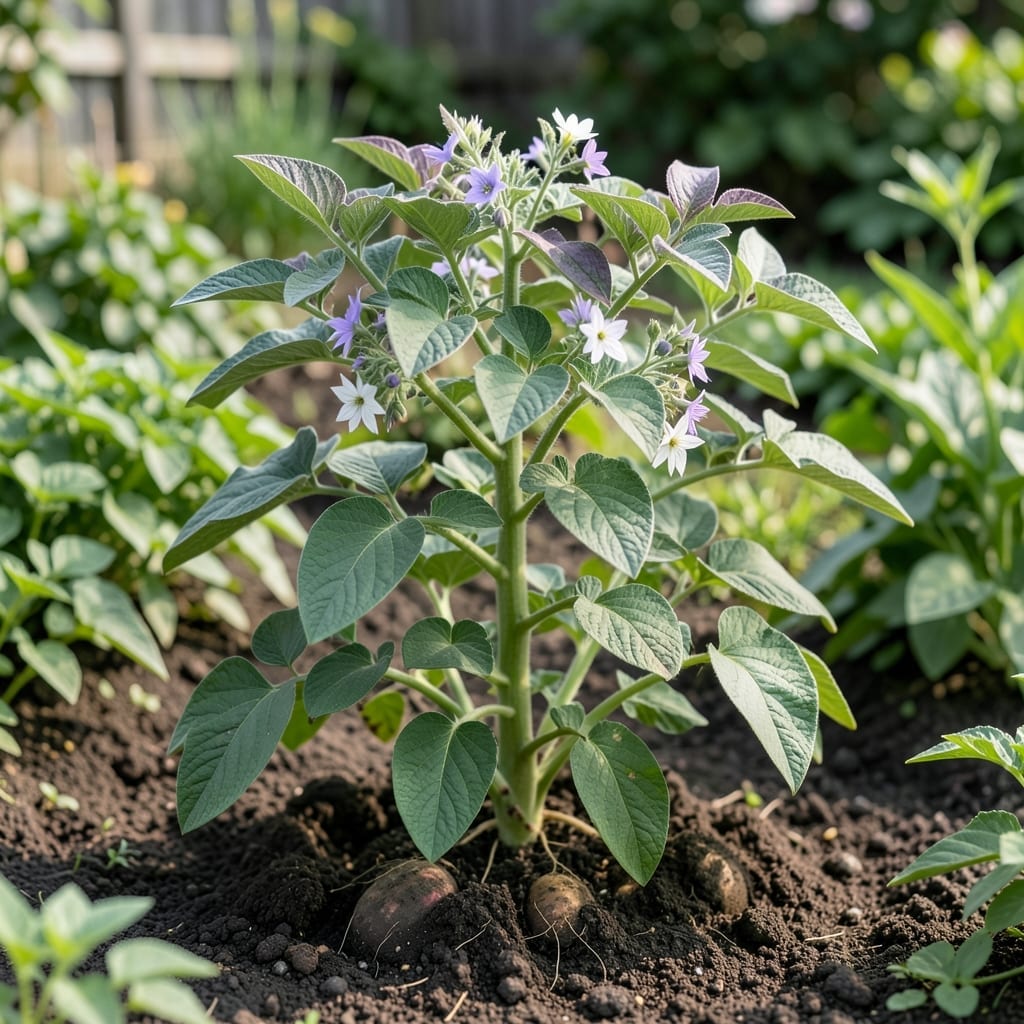
Those purple leaves on your potato plants aren’t just odd—they’re a red flag. I’ve seen this happen when nights dip below 50°F or when the soil’s missing phosphorus.
Here’s the thing—this color change can also signal glycoalkaloid buildup, which isn’t safe for pets or people. We’ll figure out what’s causing it and how to fix it before it spreads.
📚 In This Guide
These practical insights will help you confidently manage purple foliage in your garden.
Visual Identification: In Step 1, pay close attention to the pattern of purple coloration. Uniform purple across all leaves typically indicates a natural variety, while spotty or mottled purple often signals stress or disease. I always compare several leaves before making a determination.
Safety First: For Step 3, don’t underestimate the importance of physical barriers. Even well-trained pets may be tempted by foliage, and it’s better to prevent access entirely. Chicken wire works well, but make sure it’s securely fastened at ground level to prevent digging underneath.
Hilling Technique: During Step 4, when hilling soil every 2-3 weeks, use a gentle hand to avoid damaging stems. I find that hilling in the evening when plants are less stressed works best, and it’s crucial to cover all exposed tubers to prevent greening.
Storage Conditions: In Step 5, maintaining that 45-50°F temperature range is critical. I use a root cellar or dark basement corner with good ventilation. Remember that refrigeration is worse than room temperature storage for potatoes, as it can actually increase toxin development.
No, purple potato leaves contain toxic glycoalkaloids like solanine, which can cause nausea, vomiting, or worse if ingested. Always avoid eating any part of the potato plant except the tubers.
No, they’re toxic to pets too! Glycoalkaloids in the leaves can lead to digestive upset, lethargy, or even neurological issues. Keep leaves away from curious pets and compost them securely.
Contact your vet or a pet poison hotline immediately. Monitor for symptoms like vomiting or weakness, and bring a sample of the plant for identification.
Wear gloves, remove leaves, and dispose of them in sealed yard waste bags. Avoid composting if pets have access, as toxins may persist.
Yes! Use non-toxic mulches like straw or pine needles. For compost, stick to safe greens like vegetable scraps or grass clippings.