
Beautiful Plants For Your Interior
Beautiful Plants For Your Interior
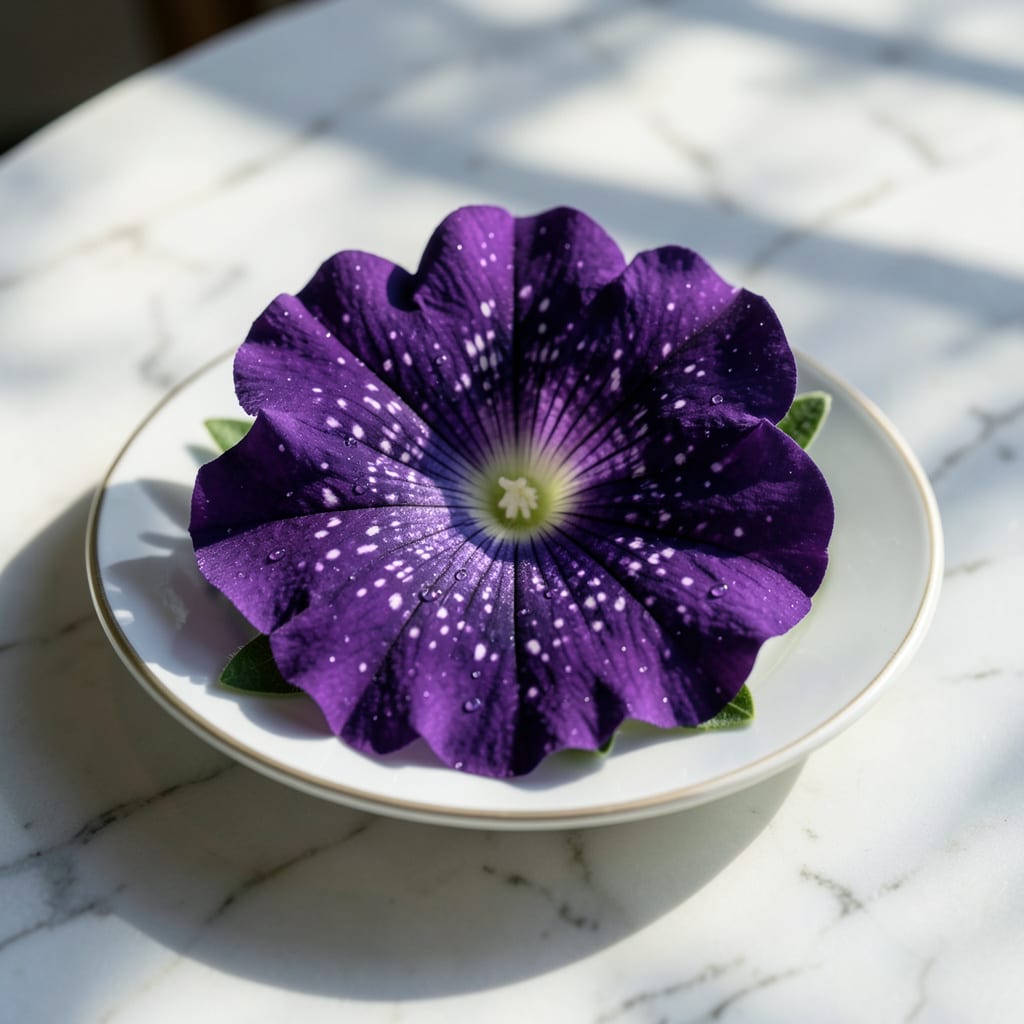
That first purple-and-white petunia bloom stopped me in my tracks. The contrast is that striking—deep violet with crisp white spots that look almost painted on.
They thrive in full sun with weekly watering, and the more you deadhead, the more those bicolor blooms keep coming. 6-8 hours of sunlight brings out the richest colors, and they’ll spill over containers or bed edges with barely any effort.
📚 In This Guide
Here’s how I grow these show-stopping bicolor petunias for maximum impact in any garden space.
Choose a spot with full sun exposure—at least 6-8 hours of direct sunlight daily. Purple petunias with white spots thrive in bright conditions, and insufficient light leads to leggy growth and fewer blooms. I always test my location by observing the sun’s path throughout the day.
Ensure the soil drains well. Petunias hate soggy roots, so avoid low-lying areas where water pools. If your garden soil is heavy clay, consider planting in raised beds or containers. The ideal spot has loose, fertile soil that allows roots to breathe and water to drain quickly.
Work the soil to a depth of 12-15 inches to loosen it and remove any debris or weeds. I mix in 2-3 inches of compost to improve fertility and drainage. This gives the petunias a nutrient-rich foundation for strong root development and vibrant blooms.
Check the soil pH—petunias prefer slightly acidic to neutral soil, around 6.0 to 7.0. If your soil is too alkaline, amend it with sulfur or peat moss. A simple soil test kit from any garden center will give you an accurate reading in minutes.
Dig holes that are slightly larger than the root ball of your petunia plants. Space them 10-12 inches apart to allow for air circulation and growth. Crowding plants leads to disease and weak stems, so resist the urge to pack them in too tightly.
Gently remove the plant from its container and loosen the roots if they’re tightly bound. Place it in the hole so the top of the root ball is level with the surrounding soil. Backfill with soil and press lightly to eliminate air pockets. Water thoroughly after planting to settle the soil around the roots.
Water your petunias deeply once or twice a week, depending on rainfall and temperature. The goal is to keep the soil evenly moist but not waterlogged. I check by sticking my finger 1 inch into the soil—if it feels dry, it’s time to water.
Begin fertilizing 2-3 weeks after planting with a balanced, water-soluble fertilizer. Apply it every 7-10 days during the growing season to encourage continuous blooming. Deadhead spent flowers regularly to redirect the plant’s energy into producing new blooms and maintaining that striking purple-and-white coloration.
Pinch back the tips of young plants when they reach 4-6 inches tall to encourage bushier growth. This simple step results in more branches and, ultimately, more flowers. Use clean, sharp shears to avoid tearing the stems.
Throughout the season, trim back any leggy or overgrown stems to keep the plant compact and full. If you notice the blooms becoming sparse or the colors fading, it might be a sign of heat stress—provide afternoon shade during extreme heat waves to protect the flowers.
These insights will help you avoid common pitfalls and grow stunning bicolor petunias.
Sunlight Essential: Those 6-8 hours of direct sunlight daily in Step 1 aren’t optional. I learned this the hard way when my first batch grew tall and spindly with few blooms. If your garden doesn’t get full sun, consider containers you can move to chase the sunlight throughout the day.
Soil Depth Matters: When working the soil to 12-15 inches in Step 2, don’t cut corners. Shallow preparation leads to weak root systems. Confession: I skipped this once and my petunias struggled to establish. The deeper you loosen the soil, the better their foundation for growth.
Spacing Secret: The 10-12 inch spacing in Step 3 might seem generous, but resist the urge to crowd. I packed plants too tightly my first year and ended up with disease issues. Proper spacing allows air circulation that keeps your petunias healthy and vibrant.
Watering Wisdom: That 1 inch soil check in Step 4 is your best guide. Petunias hate both drought and soggy conditions. Between us, I ruined a few plants by overwatering before I learned to trust the finger test rather than a fixed schedule.
White spots on purple petunias are often caused by natural variegation, a genetic trait in bicolor varieties. However, they can also result from fungal infections like powdery mildew or pest damage. Check for irregular patterns or leaf health to identify the cause.
Plant them in spring after the last frost, when soil temperatures reach 60–70°F. They thrive in warm weather and need full sun (6+ hours daily) for vibrant blooms. In cooler climates, start seeds indoors 8–10 weeks before the last frost.
Absolutely! They’re perfect for containers. Use well-draining potting mix and ensure the pot has drainage holes. Water regularly but avoid soggy soil. Containers allow you to move them for optimal sunlight exposure.
Yellow leaves often signal overwatering, nutrient deficiency, or poor drainage. Reduce watering if the soil is soggy, and fertilize with a balanced, water-soluble plant food every 2–3 weeks. Prune affected leaves to encourage new growth.
