
Beautiful Plants For Your Interior
Beautiful Plants For Your Interior
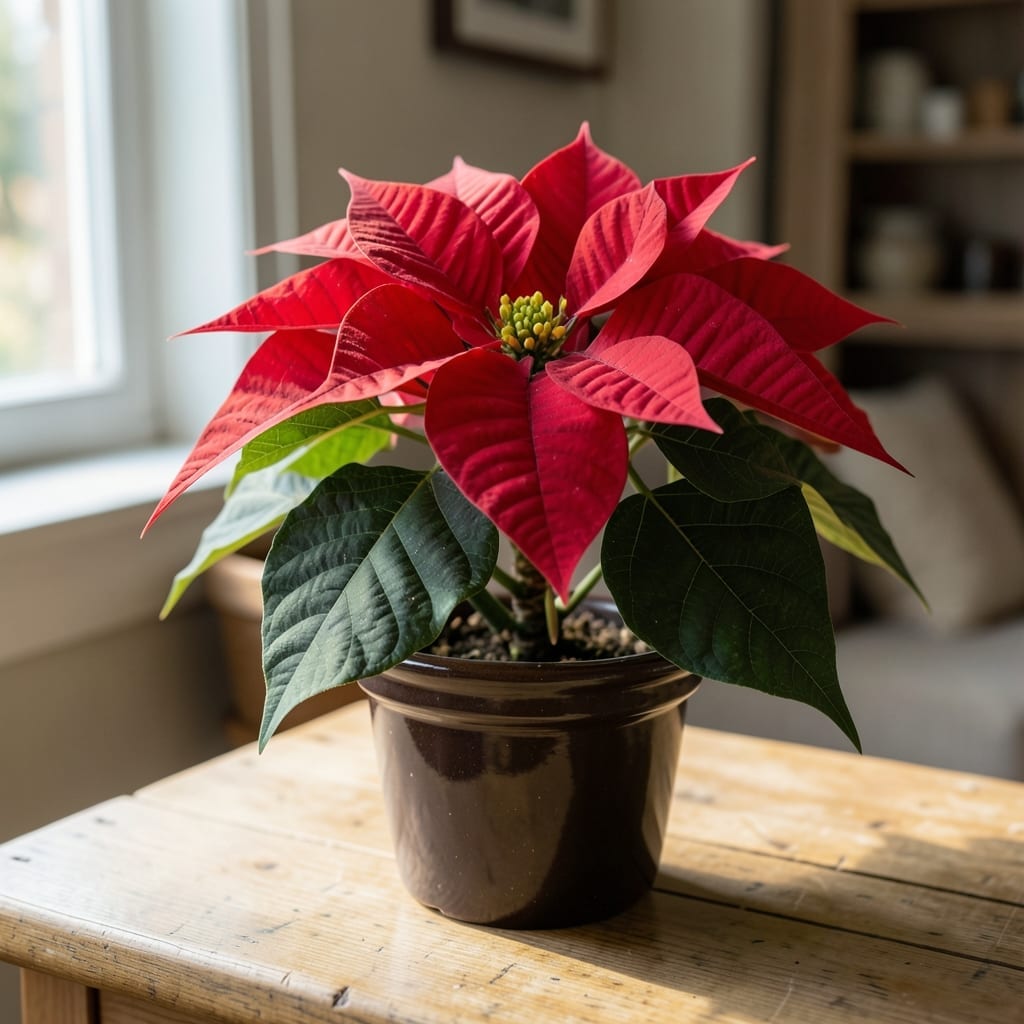
Poinsettia leaves curling always means your plant is stressed. I’ve seen this happen with both new holiday gifts and long-time favorites, and it’s always fixable with the right approach.
The usual suspects are overwatering, temperature swings, or pests hiding under leaves. Most people jump to conclusions about water, but 90% of curling comes from environmental issues instead of thirst.
You’ll notice the leaves regain their flat, vibrant shape within 2-3 days of correcting the problem. The fix is often simpler than you think—just adjusting placement or care routine.
Works for store-bought plants, regifted ones, or your own that suddenly started looking sad. Here’s how to diagnose and treat it fast.
Poinsettia leaves curl as a stress response to environmental or care-related issues. Below are the most common causes, explained with actionable insights.
Poinsettias thrive in 60–70°F (15–21°C) during the day and slightly cooler at night. Exposure to drafts, heaters, or cold windows disrupts cellular function, causing leaves to curl inward to conserve moisture. Even brief exposure to temperatures below 50°F (10°C) can trigger stress responses.
Overwatering leads to root rot, which restricts water and nutrient uptake, forcing leaves to curl as a survival mechanism. Conversely, underwatering causes dehydration, prompting leaves to curl to reduce surface area and slow water loss. Aim for moist but well-drained soil—water when the top inch feels dry.
Poinsettias are tropical plants that prefer 40–60% humidity. Dry indoor air (common in winter) causes leaf edges to curl and brown. Grouping plants, using a humidifier, or placing a tray of water nearby can restore balance.
A lack of magnesium or calcium can distort leaf growth, leading to curling. Yellowing between veins (interveinal chlorosis) often signals magnesium deficiency. Use a balanced, water-soluble fertilizer (e.g., 20-20-20) every 2–4 weeks during active growth.
Spider mites, aphids, and whiteflies suck sap from leaves, causing dehydration and curling. Check leaf undersides for webbing or tiny insects. Treat with insecticidal soap or neem oil at first signs of infestation.
Revive your poinsettia with these targeted fixes for each underlying cause. Act fast to restore its vibrant, healthy foliage!
Move your plant to a stable environment between 65–75°F (18–24°C). Avoid drafts from windows, heaters, or AC vents. If the air is too dry, place a humidity tray nearby or use a room humidifier.
Prevention: Keep poinsettias away from cold drafts and direct heat sources. Maintain consistent indoor temperatures.
Underwatering: Water thoroughly when the top inch of soil feels dry. Ensure the pot has drainage holes to prevent soggy roots.
Overwatering: Let the soil dry slightly between waterings. If root rot is suspected, trim affected roots and repot in fresh, well-draining soil.
Prevention: Use a moisture meter or the finger test to gauge soil dryness. Always empty the saucer after watering.
Inspect the plant for spider mites, aphids, or whiteflies. Wipe leaves with a damp cloth and treat with neem oil or insecticidal soap. Repeat every 5–7 days until pests are gone.
Prevention: Regularly check the undersides of leaves. Quarantine new plants for 2 weeks before introducing them to others.
Feed your poinsettia with a balanced, water-soluble fertilizer (10-10-10 or 20-20-20) every 2–4 weeks during the growing season. Avoid over-fertilizing, which can cause leaf burn.
Prevention: Use a slow-release fertilizer at the start of the growing season to provide steady nutrients.
Ensure your poinsettia gets bright, indirect light for at least 6 hours daily. If leaves curl from too much direct sun, move it to a slightly shadier spot. For low light, supplement with a grow light.
Prevention: Rotate the plant occasionally for even light exposure. Avoid sudden changes in light conditions.
💡 Pro Tip: After addressing the issue, monitor your poinsettia for a few days. Healthy leaves should start to uncurl within a week if the fix was successful!
Most poinsettias show improvement within 2-3 days of correcting the problem. Healthy leaves typically uncurl completely within a week if the underlying cause is addressed properly.
Yes, dry indoor air can absolutely cause curling. These tropical plants prefer 40-60% humidity. A simple pebble tray with water or a humidifier can prevent this issue.
Overwatering is the leading cause of stress. Many assume curling means thirst, but soggy roots can’t absorb nutrients. Always check soil moisture before watering.
Not usually. Unless the plant has been stressed for weeks, most poinsettias recover fully. Focus on consistent care and the foliage should bounce back.