
Beautiful Plants For Your Interior
Beautiful Plants For Your Interior
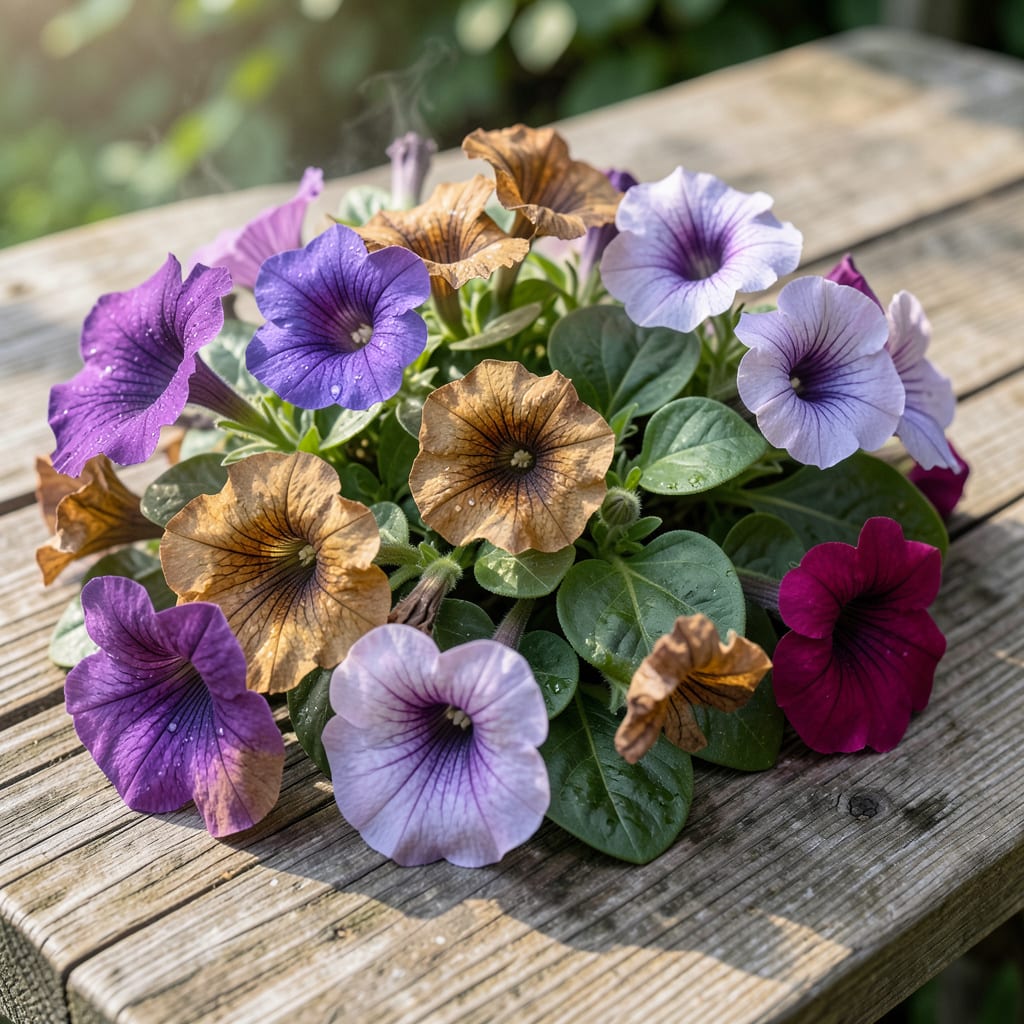
Brown petunia leaves ruin the show fast. I’ve rescued more than a few sad-looking plants by figuring out exactly what went wrong.
Usually it’s one of four culprits: too much water, too little, hungry fungi, or sneaky pests. The good news? Each leaves distinct clues if you know where to look.
spot the signs early and you can turn things around in a week or less. No fancy equipment needed—just sharp eyes and a few simple fixes.
Here’s how to play plant detective and bring your petunias back to their vibrant, flower-covered best.
Brown leaves on your petunias are a sign of stress, and several factors can trigger this issue. Here’s a breakdown of the most common causes, explained with clarity to help you diagnose and fix the problem.
Petunias thrive in full sun, but excessive heat or intense afternoon sun can scorch their leaves, turning them brown and crispy. This happens because the plant loses water faster than it can absorb it, leading to heat stress. High temperatures (above 90°F/32°C) can also inhibit chlorophyll production, causing discoloration.
Inconsistent watering is a top culprit. Too little water causes the edges of leaves to turn brown and dry as the plant wilts. Conversely, overwatering leads to root rot, which prevents the roots from absorbing nutrients, starving the leaves of essential moisture and turning them brown. Petunias prefer moist but well-drained soil.
Sap-sucking pests like aphids, spider mites, or whiteflies can cause brown spots or edges on leaves. These pests pierce the plant tissue to feed, damaging cells and introducing toxins that lead to browning. A severe infestation can also weaken the plant, making it more susceptible to diseases.
Fungal infections such as botrytis blight (gray mold) or alternaria leaf spot often manifest as brown or black spots on leaves. These diseases thrive in humid, poorly ventilated conditions. Fungi attack the plant tissues, causing them to die and turn brown. Overhead watering can exacerbate the problem by keeping foliage wet.
A lack of essential nutrients, particularly magnesium, potassium, or nitrogen, can cause leaves to brown. For example, magnesium deficiency often appears as brown patches between the veins of older leaves. Poor soil quality or improper fertilization can lead to these imbalances.
Here’s how to nurse your petunias back to health based on the most likely issues.
If dry soil is the culprit, give your petunias a long, slow drink at the base to encourage deep root growth. Water early in the morning to reduce evaporation. Prevention tip: 💡 Add a 2-inch layer of mulch around plants to retain moisture and keep roots cool.
Stop watering immediately and let the soil dry out. Trim affected leaves to redirect energy. For container plants, ensure pots have drainage holes. Prevention tip: ✨ Use a well-draining potting mix with perlite or sand to avoid soggy roots.
Blast aphids or spider mites off with a strong stream of water. For stubborn pests, spray leaves with a mix of 1 tsp neem oil and 1 quart of water every 5–7 days. Prevention tip: 🎯 Encourage beneficial insects like ladybugs by planting companion flowers such as marigolds.
Prune brown, spotted leaves with clean scissors and disinfect tools between cuts using rubbing alcohol. Apply a copper-based fungicide or a baking soda solution (1 tbsp baking soda, 1 quart water, 1 tsp dish soap). Prevention tip: 🌿 Space plants 12–18 inches apart for better air circulation.
Use a balanced, water-soluble fertilizer (10-10-10) every 2–3 weeks during the growing season. Yellowing leaves may signal a magnesium deficiency—try a foliar spray of Epsom salt (1 tbsp per gallon of water). Prevention tip: 📊 Test soil annually and amend with compost for long-term health.
Check the soil 2 inches deep—if it’s bone dry, underwatering is likely. Leaves will feel crispy and curl at the edges.
Yes, removing damaged foliage redirects energy to healthy growth. Use clean scissors and disinfect between cuts to prevent spreading disease.
Petunias in intense afternoon sun (above 90°F) can scorch. Provide shade cloth during peak heat or move container plants.
Prune affected leaves immediately, then apply a copper fungicide. Improve airflow by spacing plants 12-18 inches apart.
