
Beautiful Plants For Your Interior
Beautiful Plants For Your Interior
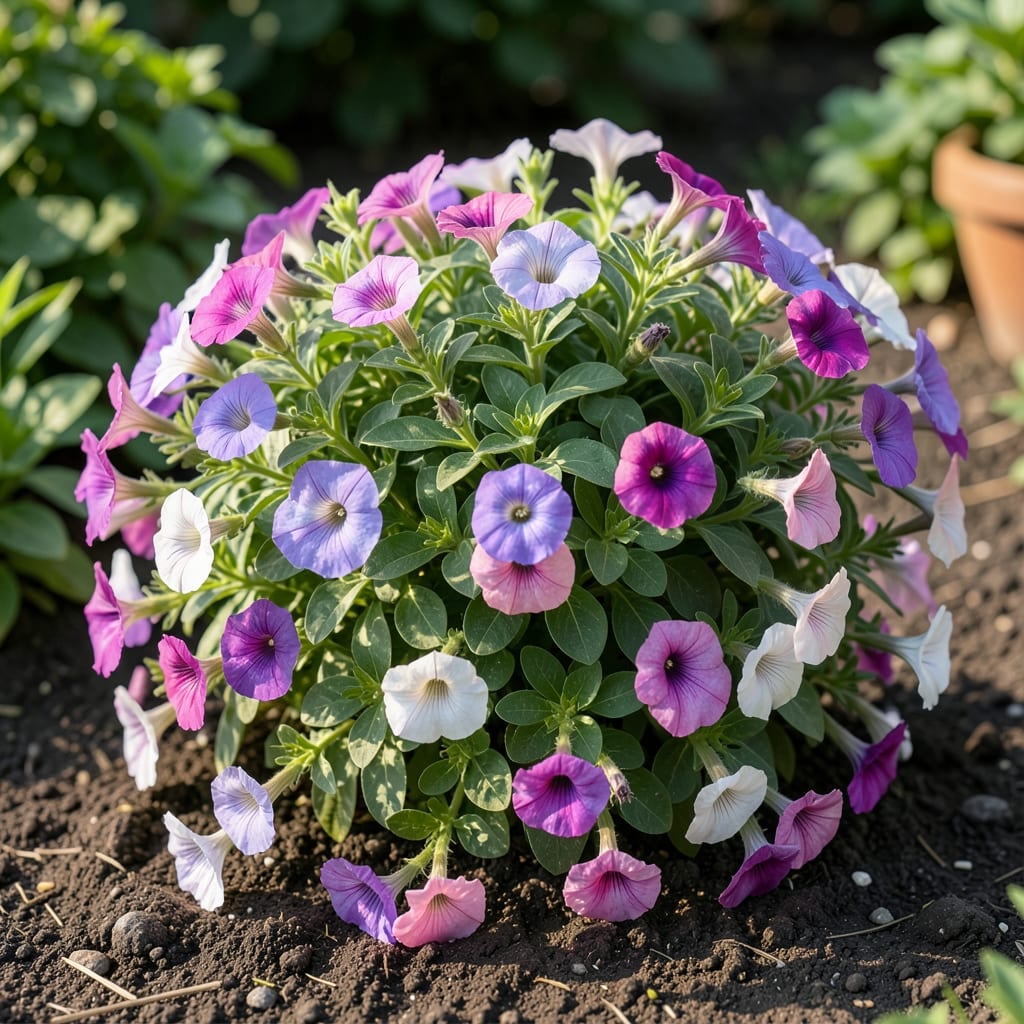
I discovered these cascading beauties after my hanging baskets looked sad for years. 🌿 Petunia Easy Wave changed everything with its foolproof growth and relentless blooms that spill over containers like a colorful waterfall.
You’ll get non-stop flowers from spring to frost with minimal effort—just regular watering and occasional trimming. Perfect for baskets, window boxes, or ground cover where you want dramatic, low-maintenance color.
📚 In This Guide
Here’s the simple method I use for vibrant, cascading blooms that last all season long.
Select a spot with full sun—at least 6-8 hours of direct sunlight daily. These petunias thrive in heat but will tolerate partial shade, though blooms may be less prolific. I’ve found hanging baskets or window boxes work best to showcase their trailing habit.
Ensure your containers have drainage holes to prevent waterlogging, which can rot the roots. A 12-14 inch diameter pot accommodates 3-4 plants comfortably, giving them room to sprawl without competing for nutrients.
Use a well-draining potting mix with added perlite or vermiculite for aeration. Petunia Easy Wave prefers slightly acidic to neutral soil (pH 6.0-7.0). I always mix in a slow-release fertilizer at planting to give them a strong start.
Gently remove the plants from their nursery pots and loosen the roots if they’re root-bound. Plant them at the same depth they were growing in their original container. Space them 10-12 inches apart to allow for their vigorous growth.
Water deeply after planting until it drains from the bottom of the container. This ensures the root ball is fully saturated and helps the plants settle into their new home. I check the soil daily—when the top inch feels dry, it’s time to water again.
Establish a consistent watering schedule, especially in hot weather. These petunias are drought-tolerant but perform best with regular moisture. Avoid wetting the foliage to reduce the risk of fungal diseases.
Feed your Petunia Easy Wave every 1-2 weeks with a balanced, water-soluble fertilizer to encourage prolific flowering. I use a 10-10-10 or 20-20-20 formula, diluted to half strength to avoid burning the roots.
Deadhead spent blooms regularly to promote new flower production. This step is quick and easy—just pinch off the faded flowers. Real talk: this small effort keeps your plants looking tidy and encourages nonstop color.
If the plants start looking leggy or straggly, give them a light trim. Cut back the stems by one-third to encourage branching and a fuller appearance. I do this mid-season to rejuvenate the plants and keep them blooming vigorously.
This is the moment that matters: pruning stimulates new growth and more flowers. Don’t skip this (I learned the hard way)—your petunias will reward you with a fresh burst of cascading color.
The details that separate good from great in your cascading blooms.
Sunlight Strategy: That 6-8 hours of full sun isn’t just a suggestion—it’s the difference between lackluster and jaw-dropping color. I learned this the hard way when my first basket got only morning light and produced half the blooms. If your space gets partial shade, position these where they’ll get the most intense midday sun.
Container Selection Tip: Don’t skimp on pot size. A 12-14 inch diameter container for 3-4 plants gives roots room to stretch without competing. Smaller pots mean more frequent watering and potential nutrient deficiency. Confession: I once crammed 4 plants into a 10-inch pot and spent all summer battling wilted leaves.
Watering Wisdom: The “top inch dry” rule from Step 3 is your best friend. Stick your finger in the soil daily—when that top layer feels like a dry sponge, it’s time to water deeply. These are drought-tolerant, but consistent moisture keeps them blooming like crazy. Here’s what nobody tells you—morning watering prevents fungal issues from evening dampness.
Pruning Pro Tip: That one-third trim in Step 5 feels drastic, but it’s magic for bushier growth. I do mine in late June when the first flush of blooms starts to fade. Use clean, sharp shears and don’t be shy—your petunias will bounce back with twice the flowers in just two weeks.
Water deeply when the top inch of soil feels dry, typically every 2-3 days in hot weather. Avoid overhead watering to prevent fungal diseases. Consistent moisture keeps blooms vibrant.
Plant after the last frost when soil temps reach 60°F (15°C). In warm climates, they can thrive year-round. For containers, start early indoors 6-8 weeks before the last frost.
Try Superbells® calibrachoa or Surfinia petunias for similar trailing habits. Wave petunias (non-Easy) also offer cascading color but may need more deadheading.
Check for insufficient sunlight (needs 6+ hours daily), over-fertilization (use balanced, water-soluble fertilizer), or heat stress. Trim leggy growth to encourage new flowers.
Prune back by 1/3 to promote bushier growth. Pinch off spent blooms regularly. Ensure they’re not overcrowded—space plants 12-18 inches apart for optimal air circulation.