
Beautiful Plants For Your Interior
Beautiful Plants For Your Interior
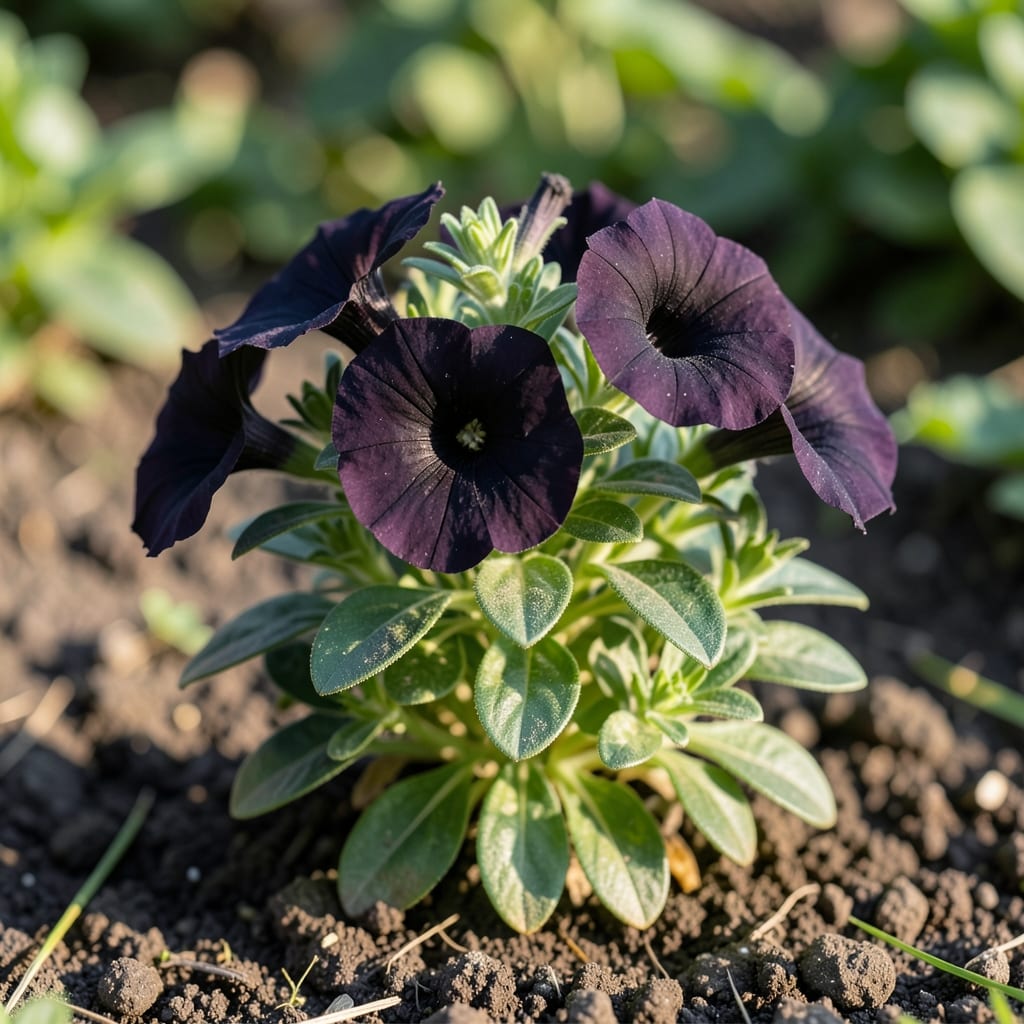
That first glimpse of Petunia Black Satin in full bloom stopped me mid-step. The deep purple blooms look like liquid velvet, catching the light in a way that makes other flowers seem dull by comparison.
These plants thrive in full sun with well-draining soil, and they’ll reward you with non-stop color from spring until frost. The key is consistent moisture without waterlogged roots. Get this right and they’ll spill over containers like a dark, luxurious waterfall.
📚 In This Guide
Here’s the method I use to grow these stunning, dark blooms that look like black velvet.
Select a spot with full sun to partial shade, though Black Satin petunias thrive best in 6+ hours of direct sunlight daily. I always plant after the last frost when soil temperatures reach 60°F or warmer. These flowers are heat-tolerant but won’t survive freezing conditions.
If starting from seeds, begin indoors 8-10 weeks before the last frost. The seeds are tiny, so handle them carefully. You’ll see germination in 7-14 days at 70-75°F with consistent moisture. Transplant outdoors only after hardening off the seedlings.
Black Satin petunias prefer well-draining soil with a slightly acidic to neutral pH (6.0-7.0). Work 2-3 inches of compost into the top 6-8 inches of soil to improve fertility and drainage. I avoid heavy clay soils, which can cause root rot.
For containers, use a high-quality potting mix with added perlite for drainage. These petunias do well in hanging baskets, window boxes, or garden beds. Space plants 10-12 inches apart to allow for their spreading habit. Crowding leads to poor air circulation and disease.
Water deeply at the base of the plant when the top inch of soil feels dry, usually every 2-3 days in hot weather. Avoid overhead watering to prevent fungal issues. Black Satin petunias are somewhat drought-tolerant but bloom best with consistent moisture.
Feed every 7-10 days with a balanced, water-soluble fertilizer (10-10-10 or 20-20-20). I use half-strength fertilizer to avoid burning the plants. Deadhead spent blooms regularly to encourage continuous flowering. You’ll notice new buds forming within a week of removal.
Pinch back the growing tips when plants are 4-6 inches tall to promote bushier growth. This may feel counterintuitive, but it forces the plant to branch out. Use clean, sharp scissors or pruners to make a clean cut just above a leaf node.
Trim back leggy stems by one-third mid-season to rejuvenate the plant. This encourages fresh growth and more blooms. Watch for pests like aphids or whiteflies, which are attracted to the lush foliage. A strong spray of water often dislodges them, or use insecticidal soap if needed.
In frost-free zones, Black Satin petunias can act as perennials with proper care. In colder areas, bring potted plants indoors before the first frost. Place them in a sunny window and reduce watering. You’ll see slower growth, but they’ll bounce back in spring.
If overwintering, trim plants back by half and check for pests before bringing inside. Resume regular care in early spring, and you’ll have a head start on the growing season. These petunias often bloom even more abundantly in their second year.
Small adjustments make a huge difference with these dramatic blooms.
Sunlight Essentials: Those 6-8 hours of direct sunlight daily aren’t just a suggestion—they’re critical for developing that signature deep, velvety color. I learned this the hard way when my first batch came out pale and lackluster. A south-facing spot is ideal, but any location with consistent morning-to-afternoon sun works.
Container Choice: Don’t skimp on container depth. The 8-10 inch minimum ensures proper root development, which directly impacts bloom quality. Hanging baskets work beautifully for the trailing habit, but if using pots, remember they need 12-18 inches of spread per plant to thrive without competition.
Watering Wisdom: The finger test never fails—stick your finger 1 inch into the soil and water only when it feels dry. Overwatering leads to soggy roots and fungal issues, while consistent moisture encourages those lush blooms. Early morning watering gives foliage time to dry, preventing disease.
Pruning Timing: When your plants hit 6-8 inches tall, that’s your cue to pinch back the stems. This simple step transforms leggy growth into bushy, flower-laden plants. And if you notice things getting scraggly mid-season, a light trim will bring back that full, vibrant look within 7-10 days.
Keep soil moist but well-drained, and place in full sun (6+ hours daily). Fertilize weekly with a balanced liquid feed. Deadhead spent blooms to encourage continuous flowering.
Plant after the last frost in spring when soil temps reach 60°F. In warm climates, they can also be grown as fall annuals. Avoid extreme heat or cold for best results.
Yes! Try ‘Black Velvet’ or ‘Phantom’ petunias for deep, dark blooms. For contrast, pair with white or bright-colored petunias like ‘Easy Wave White’.
Check for insufficient sunlight, over-fertilization (especially high nitrogen), or poor drainage. Ensure consistent watering and trim leggy stems to promote new growth and flowers.
Absolutely! Use a well-draining potting mix and containers with drainage holes. They thrive in hanging baskets or pots—just water frequently, as containers dry out faster.