
Beautiful Plants For Your Interior
Beautiful Plants For Your Interior
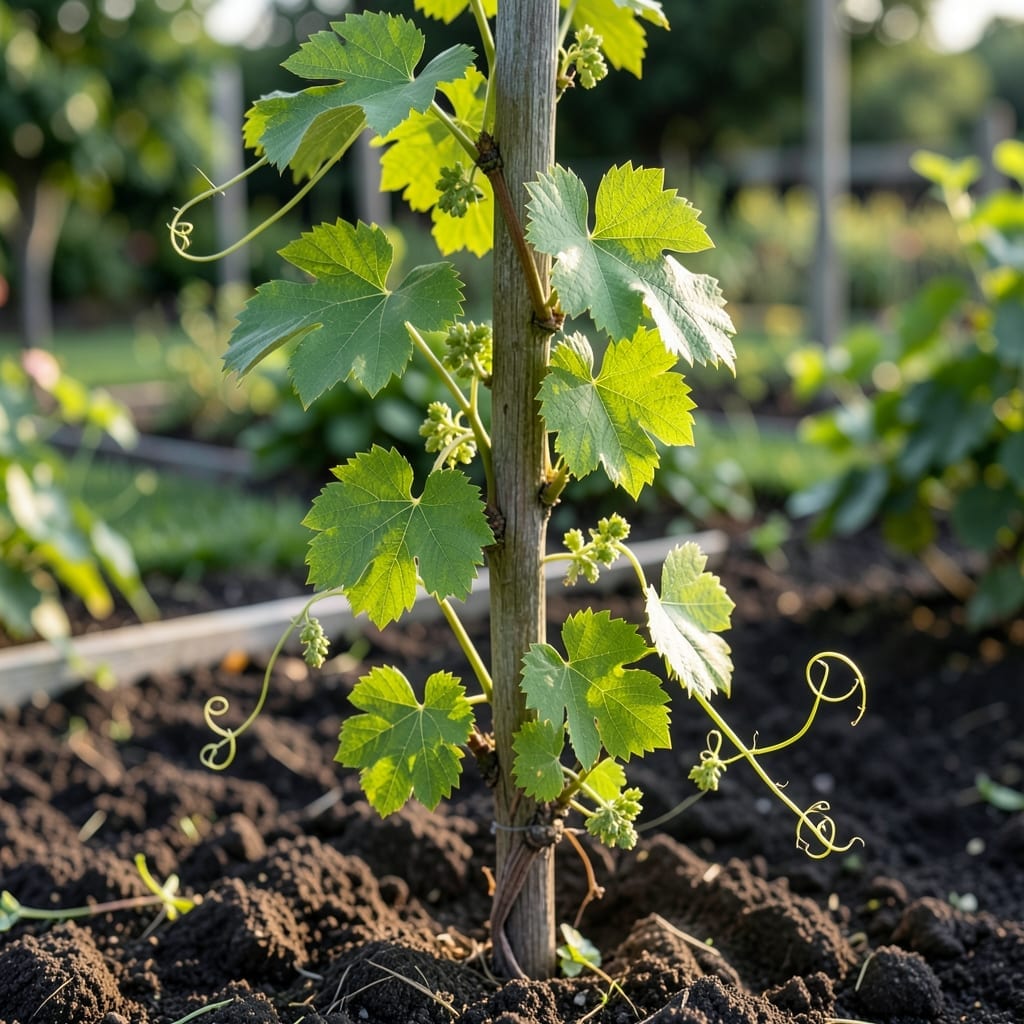
Tiny leaves on your grapevines can signal trouble or just natural growth. I’ve seen both scenarios in my own vineyard, and the difference often comes down to timing and care.
With the right approach, you’ll spot the early signs that separate healthy development from stress. The fix might be as simple as adjusting water or checking for hidden pests.
📚 In This Guide
Here’s the method I use to ensure vibrant, healthy vines with proper leaf development.
Choose disease-resistant varieties suited to your USDA hardiness zone. For small leaves, consider Concord or Thompson Seedless, which naturally produce compact foliage. I always check local extension office recommendations—what thrives in your neighbor’s vineyard often works in yours.
Test your soil pH first; grapes prefer 6.0-6.5. If it’s off, amend with lime to raise pH or sulfur to lower it. This prevents nutrient lockout that stunts leaf growth. A simple home test kit gives accurate enough results for this purpose.
Set young vines 6-8 feet apart in rows spaced 8-10 feet apart. This air circulation prevents fungal diseases that shrink leaves. I dig holes twice as wide as the root ball but no deeper—planting too deep suffocates roots and delays establishment.
Install a sturdy trellis or arbor at planting. Grapes need support from day one; waiting until vines are established leads to broken canes and stressed plants. Use 12-gauge wire for horizontal supports—it holds up under heavy foliage and fruit loads.
In late winter, remove 70-90% of last year’s growth, leaving only 2-4 buds per cane. This seems drastic but forces the vine to focus energy on strong, healthy shoots rather than weak, sparse foliage. I use clean, sharp bypass pruners to avoid tearing the wood.
During the growing season, thin out excess shoots when they’re 6-12 inches long. Remove all but the most vigorous one or two per node. This improves air flow and light penetration, which keeps leaves small but abundant and disease-free.
Water deeply once a week during the first year, tapering off after establishment. Grapes hate wet feet, so let the top 2-3 inches of soil dry between waterings. I use drip irrigation to keep foliage dry and prevent fungal issues that can shrink leaves.
Apply a balanced 10-10-10 fertilizer in early spring, then switch to low-nitrogen formula after bud break. Too much nitrogen produces excessive leafy growth at the expense of fruit and can lead to oversized, weak leaves. Always water before and after fertilizing to prevent root burn.
Watch for yellowing between leaf veins—that’s a classic sign of iron deficiency in high-pH soils. A foliar spray of chelated iron corrects this quickly without affecting leaf size.
The details that separate good vines from exceptional ones come down to a few key practices.
Soil pH Precision: The 6.0-6.5 pH range mentioned in Step 1 isn’t just a suggestion—it’s critical for nutrient uptake. I learned this the hard way after watching my leaves yellow despite regular fertilizing. A home test kit costs pennies compared to the time you’ll waste troubleshooting deficiency symptoms. If your soil tests outside this range, amend with lime or sulfur as directed; don’t guess at the amounts.
The Support System: Step 2’s spacing guidelines of 6-8 feet apart in rows 8-10 feet apart exist for a reason. I once planted vines too close to save space, only to watch fungal diseases spread like wildfire through the crowded foliage. And that 12-gauge wire for supports? It’s worth the investment—thinner wire bends under the weight of mature vines, and you’ll regret it when you’re trying to retrain broken canes.
Pruning Courage: The 70-90% removal of last year’s growth in Step 3 feels counterintuitive, but it’s the secret to those compact, healthy leaves. My first year, I chickened out and only removed 50%. The result? Weak, sparse foliage and a disappointing harvest. Trust the process—leaving just 2-4 buds per cane forces the vine to channel all its energy into strong, productive growth.
Watering Wisdom: Grapes truly despise wet feet. In Step 4, when it says to let the top 2-3 inches of soil dry between waterings, it means it. I switched to drip irrigation after losing several young vines to root rot from overhead watering. The added bonus? Dry foliage means fewer fungal issues that can shrink those carefully cultivated leaves.
Small grape leaves often result from nutrient deficiencies (especially nitrogen or zinc), poor soil drainage, or pest infestations like mites or leafhoppers. Environmental stress, such as drought or excessive shade, can also stunt leaf growth.
Address the issue early in the growing season (spring to early summer) for best results. Test soil for deficiencies and apply amendments or treatments as soon as symptoms appear to prevent further damage.
Yes! Compost improves soil fertility and structure, providing essential nutrients. Work it into the soil around the base of the vine, but pair it with targeted fertilizers if a specific deficiency (e.g., iron) is confirmed.
Neem oil or insecticidal soap can control pests naturally. For nutrient issues, organic options like fish emulsion (nitrogen) or kelp extract (micronutrients) are effective and eco-friendly.
Maintain healthy soil with regular testing, ensure proper irrigation, and prune vines to improve airflow. Monitor for pests and diseases early to catch problems before they affect leaf size.