
Beautiful Plants For Your Interior
Beautiful Plants For Your Interior
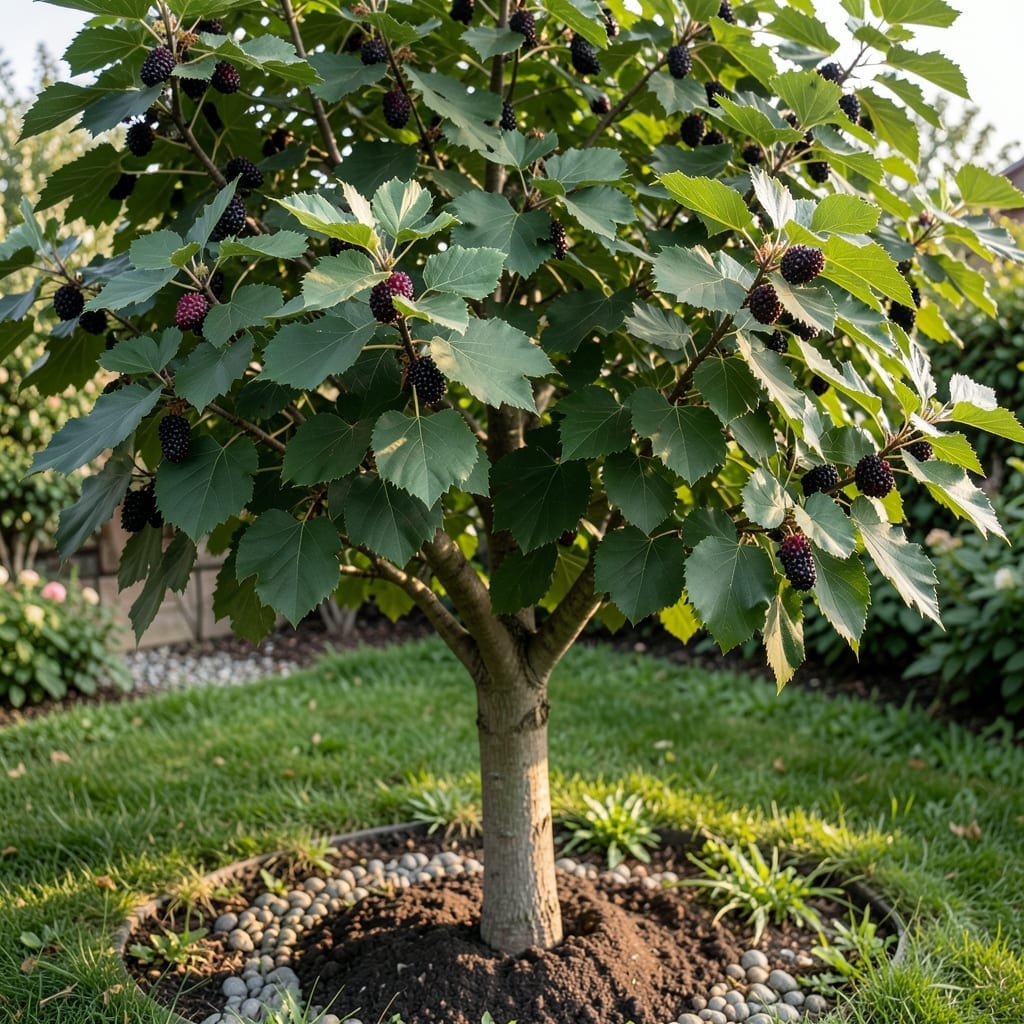
Growing mulberry trees in Pakistan changed how I think about drought-tolerant plants. The leaves thrive in our hot, dry climate with minimal fuss, and the shade they provide is a bonus.
Well-draining soil and occasional watering keep them happy. You’ll get lush foliage perfect for tea or silkworms, plus a tree that handles Pakistan’s tough conditions like a pro.
📚 In This Guide
Here’s how to create the perfect growing conditions for lush, productive mulberry trees.
Find a spot receiving full sun to partial shade, as Pakistan mulberry thrives with at least 6-8 hours of direct sunlight daily. The location should be sheltered from strong winds that can damage young leaves and stems. I always recommend planting on the south or southwest side of buildings for optimal sun exposure.
Ensure the area has good air circulation to prevent fungal diseases. You’ll notice better leaf quality and tree vigor when air moves freely around the canopy. Avoid low-lying spots where cold air or water might pool, as both can stress the plants.
Pakistan mulberry prefers well-draining, loamy soil with a pH between 6.0 and 7.0. Test your soil’s drainage by digging a 1-foot hole, filling it with water, and checking how quickly it drains. If water remains after 4 hours, amend with organic matter to improve drainage.
Incorporate compost or aged manure into the planting area to boost fertility. The soil should feel crumbly and rich, not heavy or compacted. This preparation ensures roots establish quickly and leaves develop their characteristic vibrant green color.
Real talk: If your soil is sandy, mix in some clay to help retain moisture. Conversely, for clay-heavy soil, add coarse sand or perlite to improve drainage.
Dig a hole twice as wide and just as deep as the root ball. Place the tree in the hole, ensuring the soil line on the stem matches the surrounding ground level. Planting too deep can suffocate roots and lead to poor growth.
Space trees 10-15 feet apart to accommodate their mature size. You’ll see optimal growth when trees have room to develop without competing for resources. After planting, water deeply to settle the soil around the roots and eliminate air pockets.
Water young trees 2-3 times weekly for the first month, then taper to once weekly as they establish. The soil should remain consistently moist but never waterlogged. You’ll know it’s time to water when the top 1-2 inches of soil feels dry to the touch.
Mulch around the base with 2-3 inches of organic material to retain moisture and regulate soil temperature. Keep mulch 6 inches away from the trunk to prevent rot. This simple step makes a noticeable difference in leaf size and overall tree health.
Pakistan mulberry tolerates temperatures between 25°F and 100°F but grows best in 60-80°F ranges. In hotter climates, provide afternoon shade to prevent leaf scorch. You’ll see leaves wilting or turning brown at the edges when heat stress occurs.
In colder regions, plant in a sheltered location or use frost cloth during unexpected cold snaps. The tree’s hardiness improves as it matures, but young plants need protection. Watch for new growth in spring as your confirmation the tree has successfully overwintered.
Took me a few seasons to learn these the hard way, but they make all the difference.
Sunlight Optimization: The 6-8 hours of daily sunlight isn’t just a suggestion—it’s critical for leaf production. Plant on the south or southwest side of buildings as mentioned in Step 1, but also consider using reflective mulches to maximize light exposure during shorter days.
Soil Test Hack: That drainage test in Step 2 with the 1-foot hole and 4-hour check is brilliant. If water remains after exactly 4 hours, don’t just add compost—mix in perlite or coarse sand to create the well-draining, loamy texture these trees crave. The pH between 6.0 and 7.0 is non-negotiable for vibrant leaf color.
Watering Wisdom: Young trees need that 2-3 times weekly watering for the first month, but here’s what nobody tells you—check the soil depth. The top 1-2 inches should be dry before watering, but below that should stay consistently moist. Overwatering is just as dangerous as underwatering for these trees.
Climate Protection: In Step 5, the 25°F to 100°F range is the survival zone, but optimal growth happens between 60-80°F. In hotter climates, afternoon shade isn’t optional—leaf scorch will ruin your harvest. In colder areas, that frost cloth recommendation could save your young trees from winter damage.
Mulberry thrives in warm, temperate climates with moderate rainfall. Pakistan’s subtropical regions, like Punjab and Sindh, are ideal, with temperatures between 68°F to 86°F (20°C to 30°C). Avoid extreme cold or drought for optimal growth.
Plant mulberry saplings in early spring (February to March) or during the monsoon season (July to August). This timing ensures adequate water supply and mild temperatures, promoting strong root development.
Mulberry is adaptable but prefers well-drained, loamy soil with a pH of 6.0 to 7.0. Poor soil can be improved with organic matter like compost. Sandy or clay-heavy soils may require amendments for better growth.
Common pests include silkworm caterpillars, aphids, and whiteflies. Regular monitoring and organic pesticides like neem oil can help control infestations without harming the plants.
Water young mulberry plants weekly, ensuring the soil stays moist but not waterlogged. Mature trees are drought-resistant but benefit from deep watering during dry spells, especially in Pakistan’s hot summers.