
Beautiful Plants For Your Interior
Beautiful Plants For Your Interior
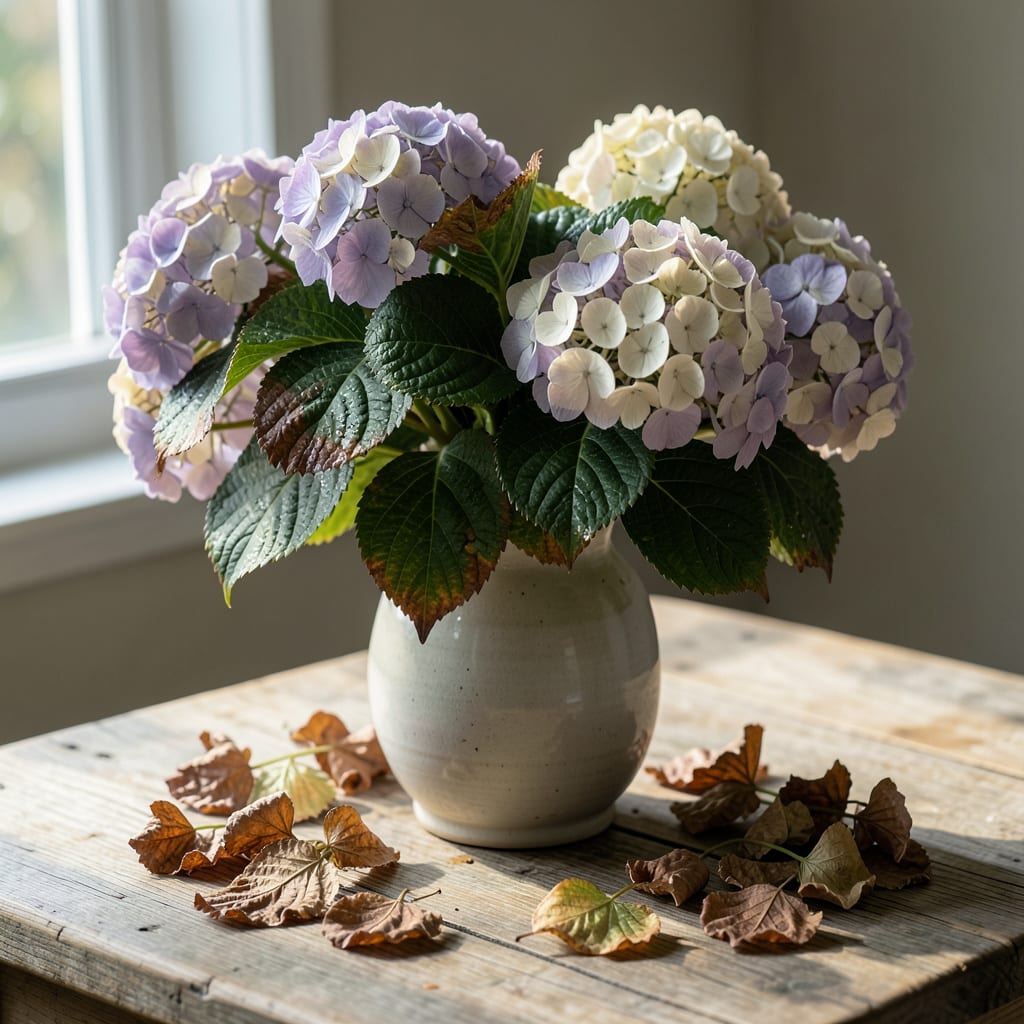
Your hydrangea’s brown, wilting leaves aren’t a death sentence. I’ve saved dozens from the same crisis with a few simple adjustments.
Most cases come down to water stress—either too much or too little. The leaves turn crispy at the edges first, then brown, if the roots can’t keep up. Soil that’s bone-dry or soggy is usually the culprit.
Check the soil 2 inches down. If it’s dry, water deeply. If it’s waterlogged, ease up and improve drainage. A little afternoon shade helps, too.
With the right tweaks, those leaves will perk up in 24-48 hours. Your hydrangea’s next bloom cycle depends on fixing this now.
Hydrangea leaves wilting and turning brown often signal underlying stress. Here are the most frequent causes:
Hydrangeas thrive in consistently moist (but not soggy) soil. Underwatering causes leaves to wilt and crisp as cells lose turgor pressure. Meanwhile, overwatering suffocates roots, leading to root rot and brown, drooping foliage. Check soil moisture 1-2 inches deep—water when dry, but ensure proper drainage.
Excessive heat or direct afternoon sun scorch leaves, causing edges to turn brown and crisp. Hydrangeas prefer partial shade, especially in hot climates. Mulch around the base to retain moisture and regulate soil temperature.
Pathogens like Cercospora or Anthracnose thrive in wet conditions, creating brown spots or wilting. Improve air circulation, avoid overhead watering, and remove infected leaves promptly to prevent spread.
Deficiencies in magnesium or iron can cause yellowing and browning, while excess fertilizer may burn roots. Test soil pH (ideal: 5.2–6.2 for most hydrangeas) and adjust with amendments like lime or sulfur as needed.
Sap-sucking pests (e.g., aphids, spider mites) weaken leaves, leading to wilting and discoloration. Inspect undersides of leaves and treat with insecticidal soap or neem oil if infested.
Here’s how to nurse your hydrangeas back to health, tailored to each underlying issue:
Give your hydrangea a slow, deep soak at the base (1–2 inches of water per week). Water in the early morning to reduce evaporation. Prevention tip: 💡 Mulch with 2–3 inches of organic matter (like pine bark) to retain moisture and keep roots cool.
Stop watering immediately and let the soil dry slightly. If the plant is in a pot, ensure it has drainage holes. For garden hydrangeas, amending heavy clay soil with compost or sand can help. Prevention tip: ✨ Stick your finger 1 inch into the soil—only water if it feels dry.
Move potted hydrangeas to a spot with dappled sunlight or morning sun only. For in-ground plants, use a shade cloth (30–50%) during peak afternoon hours. Prevention tip: 🎯 Plant hydrangeas where they’ll get partial shade, especially in hot climates.
Blast aphids or spider mites off with a strong stream of water. For stubborn pests, apply neem oil or insecticidal soap (follow label instructions). Prevention tip: 🌡️ Encourage beneficial insects like ladybugs by planting companion flowers (e.g., marigolds).
Remove all affected leaves (dispose in the trash, not compost) and avoid overhead watering. Apply a copper-based fungicide if the issue persists. Prevention tip: ✨ Space plants 3–4 feet apart for better airflow.
With these fixes, your hydrangea’s leaves should perk up in 1–2 weeks!
Water deeply 2-3 times per week in hot weather, less in cooler months. Always check soil 1-2 inches down—water only when dry.
Yes! Afternoon sun can scorch leaves. Move to partial shade or use 30-50% shade cloth during peak hours.
Remove damaged leaves to redirect energy. Focus on fixing the root cause (water, light, or pests). New growth will appear in 1-2 weeks.
Not always. Yellowing often indicates nutrient deficiency, while brown crispy leaves usually mean water stress or sunburn. Test soil pH for clarity.
